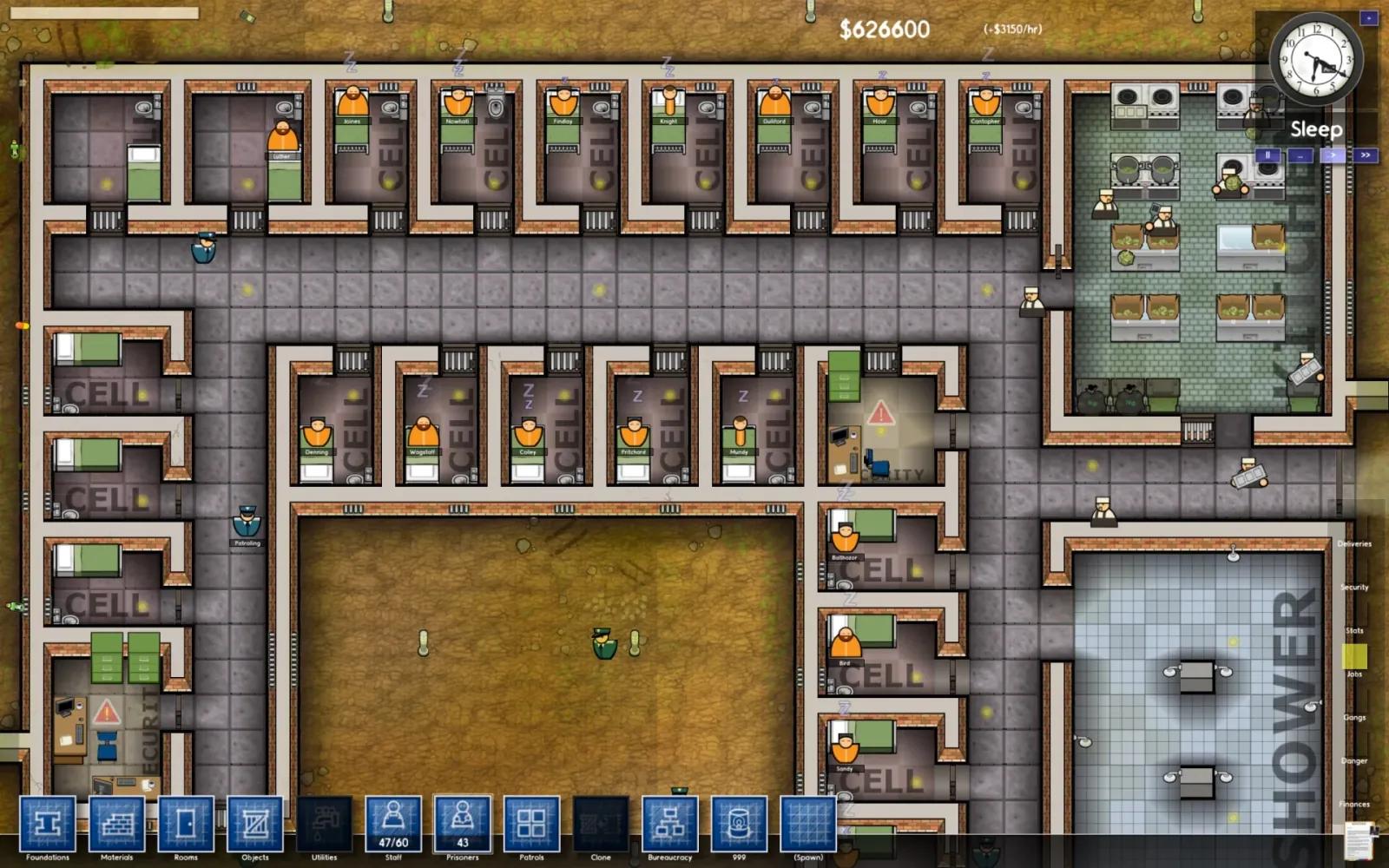
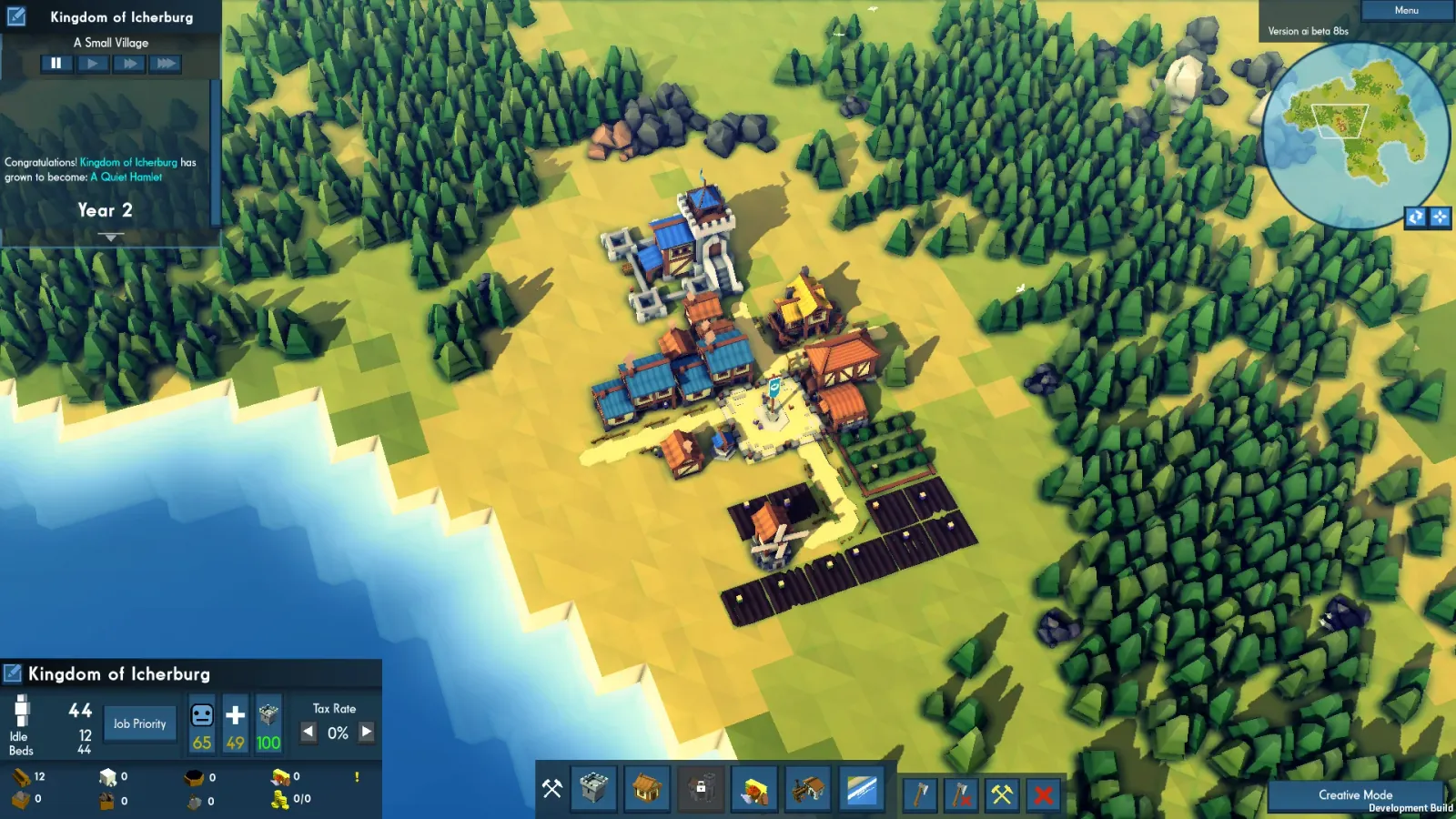
Players plan an entire state economy: mines, factories, housing, power, heating and every road, rail and vehicle that connects them.
Why it may be useful
Nothing moves here without a vehicle, a route and somewhere to put the load, so you build a real physical intuition for why supply chains are shaped the way they are, an intuition that maps onto actual logistics.
Keep in mind
It simulates the machinery of a planned economy, not the politics or the human cost of the states it borrows from.
Written 2026-09-15 · editorial assessment, not a measured effect · how we rate →
What the game is
Workers & Resources: Soviet Republic is an economy and city builder by 3Division, published by Hooded Horse. It spent five years in early access and reached full release in 2024. It runs on Windows only and is sold at a mid-range price with no season pass.
It looks like a city builder and behaves like a logistics simulator. In most games of the genre, placing a factory next to a mine is enough. Here it is not: the ore has to be dug by an excavator, loaded onto a truck you bought, driven along a road you laid, through a junction you designed, to a storage yard with enough capacity, and only then into the factory. More than thirty commodities move this way, by truck, train, ship and aircraft. Gravel, concrete and prefabricated panels have to reach a construction site before a building exists at all.
Above that sits the planned economy: you set production, decide what to sell to the Eastern or Western market and at what price, and choose between building your own supply chain from raw ore or importing the finished good with hard currency. Below it sits the population. Citizens are tracked as individuals from childhood, need food, clothing, work, education and entertainment, and have loyalty and happiness that affect crime and how much they actually produce.
What you actually do
A session starts with something not arriving. The clothing shop is empty, so you follow the chain back: the shop has no truck assigned, or the truck has no driver, or the fabric plant stopped because cotton is sitting at a railway station with nothing to unload it. Each answer is a purchase and a piece of infrastructure. Winter arrives and the heating plant needs coal that competes with the power station for the same trains. Getting better means designing for throughput rather than for looks: sizing a storage yard to the delivery interval, putting a loading station where two lines meet, and noticing that the bottleneck is almost never where the shortage shows up.
What it exercises
Traces a shortage backward through several steps to the real constraint
Sizes storage and transport capacity against a rate of consumption
Designs a route or junction for the traffic it will actually carry
Compares building a supply chain against importing the finished good
Plans infrastructure years before the demand it is meant to serve
Why we rate it Moderate Worksheet score 66 / 100
FitHow much real knowledge or skill does the play itself make you use?65weight 45%
Sixty-five sits below what this game's density would suggest at first glance, and that is deliberate: the game refuses to move a single item without a vehicle, a route, a loading point and somewhere to put it, which is a strong fit between subject and play. It is held below the top tier because much of that density is management overhead rather than reasoning, and a player can succeed by throwing money at a problem instead of understanding it.
TransferWill what you practise here work outside the game?52weight 30%
What a player takes away is a physical intuition for why things are where they are, why a warehouse sits beside a rail spur, why a shortage in a shop is rarely a problem with the shop. That maps directly onto real supply chains and onto reading an infrastructure argument, a genuine and fairly rare kind of transfer. At 52 it is held back by the Soviet framing and by the game's own invented economic numbers.
PracticeDoes the game make you use that skill again and again, as it gets harder?85weight 25%
A republic takes tens of hours and the same chain of reasoning repeats every time a new industry is added, with seasons and population growth changing the constraints underneath. At 85 this is one of the highest practice scores in the catalog: players return to old saves for years, and the sandbox has no ending to run out of.
What the evidence says
Editorial onlyNobody outside our desk has checked this. It is our reading of how the game plays.
The evidence level is Editorial only. What is confirmed comes from the Steam listing: the 3Division and Hooded Horse credits, the 2024 full release after early access from 2019, the price, the Windows-only platform, the thirty-plus commodities and the truck, train, ship and aircraft logistics, the planned-economy controls with Eastern and Western trade, and the individual citizen simulation with loyalty affecting crime and productivity. No study of the game was found and none is claimed. The meaningfulness case is an editorial reading of a simulation that refuses to abstract logistics away, not a measured effect on anyone's grasp of economics.
Editorial assessment - not a measured scientific effect.
Fit
65/100
Transfer
52/100
Practice
85/100
Why it makes the cut
A commercial city and economy builder with sandbox and campaign play, sold entirely on the depth of its simulation.
Editorial only
This is an editorial reading of the Steam listing and the logistics systems the game exposes; no study of Workers & Resources exists and no classroom or program use has been documented.
Prices are US store listings in USD, last refreshed 2026-09-25; regional prices and sales differ.
Age guidance
Ages 16+
Topics
History & society, Logic & strategy
Play styles
Single-player, Strategy, Simulation, Sandbox
Tags
Planned economy · Logistics · Supply chains
The game refuses to abstract logistics away, so understanding a supply chain is the only way to play it, and that reasoning carries directly into how real infrastructure and distribution actually work.