Players run one state for four centuries, managing trade routes, alliances, provinces and religious and administrative reform.
Why it may be useful
Running a state for four centuries makes you reason about trade networks, administrative capacity and long-term investment, real historical-geography habits. But history here is a skin over a competitive board that rewards expansion above all else.
Keep in mind
Colonization and conquest are scored as expansion, and the map hides the people the expansion happened to.
Written 2026-09-15 · editorial assessment, not a measured effect · how we rate →
What the game is
Europa Universalis IV is a grand strategy game from Paradox Development Studio, out since 2013 on Windows, macOS and Linux. You pick one country on a map of the world in 1444 and run it until 1821. There is no campaign and no ending to reach: the game hands you a state, a treasury, some neighbors who dislike you, and four centuries of clock.
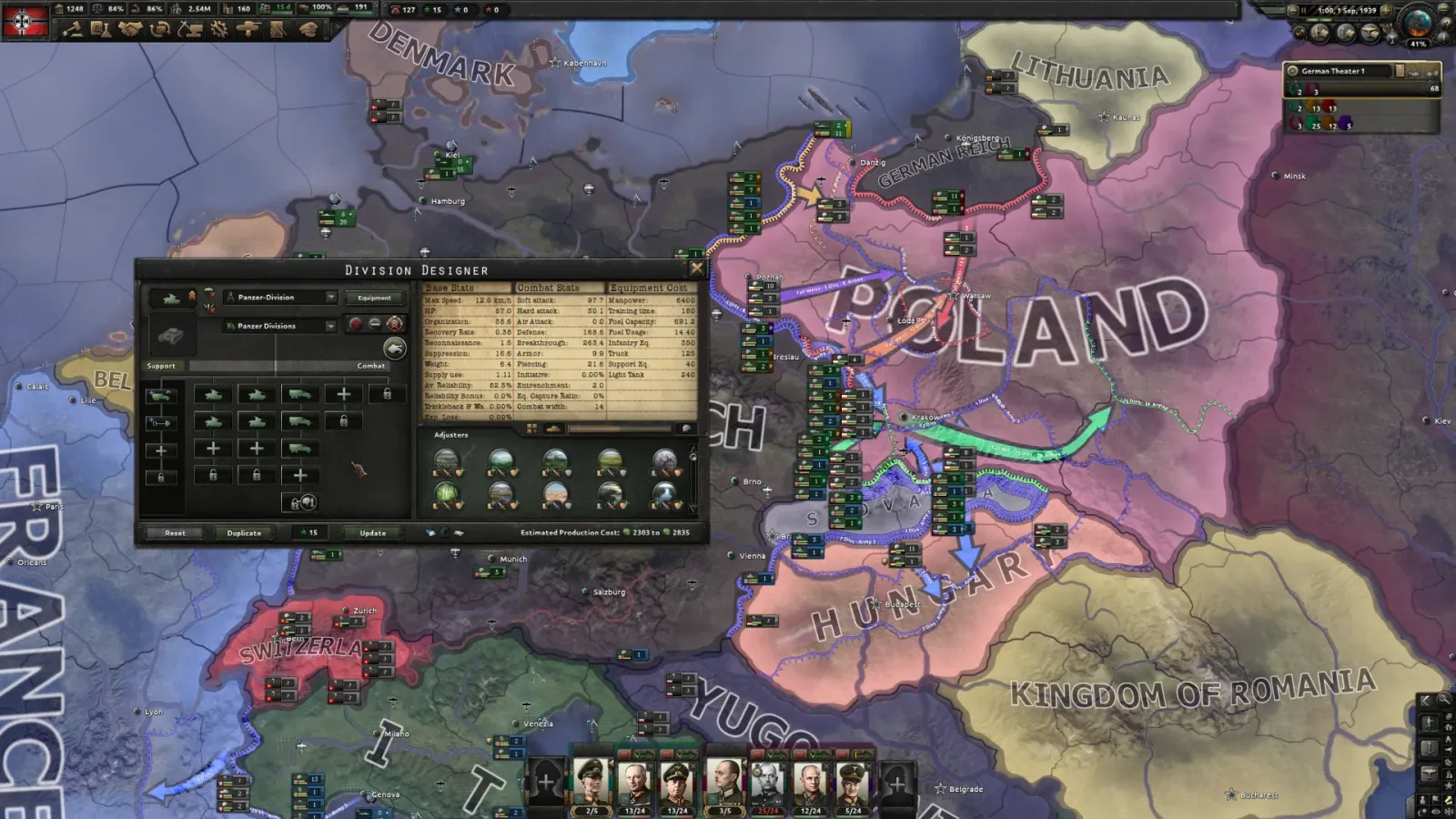
The screen is a political map with a stack of panels over it. One shows your provinces and what each produces, one shows the trade network as a web of nodes pulling value toward whoever has the ships and the merchants there, one shows your monarch's three pools of monarch power that pay for technology, ideas, reforms and the absorption of conquered land. Time runs continuously at a speed you set and you pause it constantly.
Paradox has kept the game in development for over a decade, and the result is unusual: the base game is one purchase, and more than thirty paid expansions and content packs sit on top of it, or a monthly subscription that bundles them all. What a new player actually gets for the shelf price is a narrower game than the one the community talks about.
What you actually do
A session is a chain of small decisions with long shadows. You notice that your income is flat, trace it to a trade node where a rival's merchants are pulling value away, and decide whether to answer with ships, with a diplomatic marriage, or by conquering a port two wars from now. Meanwhile a rebellion needs suppressing, a technology is due, and a neighbor's ruler has died without an heir. Wars are declared for a stated reason, fought as stacks of units moving across provinces, and ended at a negotiating table where you spend the war's outcome on land, money or humiliation. Getting better looks like planning three rulers ahead and knowing which wars are not worth their cost.
What it exercises
Reads a network diagram and finds where value is leaking out of it
Budgets a scarce currency across competing long-term investments
Predicts how a third party reacts before committing to a conflict
Holds a plan across centuries instead of abandoning it after a setback
Locates places, trade goods and polities on a world map from memory
Why we rate it Moderate Worksheet score 60 / 100
FitHow much real knowledge or skill does the play itself make you use?55weight 45%
Fit is 55, down from where the trade and administrative systems alone would put it. Reasoning about a trade network and the cost of holding territory is real and unavoidable here. But history is mostly a skin over a competitive board: the map rewards expansion above all else, and the game asks you to optimize an empire rather than understand the period it is set in.
TransferWill what you practise here work outside the game?45weight 30%
Transfer is 45. Players come away with a working mental map of the early-modern world, which trade goods came from where, and why a state needs administration before it needs more land, which is real historical geography attached to something handled directly. It stays low-middle because much of that reasoning is tied to this game's own invented currencies of monarch power, rather than transferring cleanly to how history or policy actually work.
PracticeDoes the game make you use that skill again and again, as it gets harder?85weight 25%
Practice is 85, the strongest of the three. A single campaign spans four hundred in-game years and thousands of decisions of the same shape, and a new campaign with a different country reopens the same reasoning against a different problem. Very few games return to their core judgment this often, which is why this stays near the top of the scale even as the other two numbers pull the whole down.
What the evidence says
Editorial onlyNobody outside our desk has checked this. It is our reading of how the game plays.
The evidence level is Editorial only. What is confirmed comes from the official Paradox page and the Steam listing: the 1444 to 1821 span, the trade-node and monarch-power systems, the 2013 release, the price, the platforms, and the expansion and subscription structure. No study of Europa Universalis IV was found and none is claimed. The reasoning behind the rating is editorial: what a player does over and over, trace value through a network, price a long-term investment, predict how a third party will react, is a real and recurring cognitive habit, but it is not evidence of any measured effect on how well someone understands actual history.
Editorial assessment - not a measured scientific effect.
Fit
55/100
Transfer
45/100
Practice
85/100
Why it makes the cut
The systems are a competitive strategy game first, and the history is the material they are made from.
Editorial only
Editorial only, drawn from the official Paradox game page and the Steam listing; no study of Europa Universalis IV or of grand-strategy games generally exists.
Prices are US store listings in USD, last refreshed 2026-09-25; regional prices and sales differ.
More than thirty paid expansions and content packs exist alongside the base game, and a monthly subscription bundles all of them.
Age guidance
Ages 13+ · ESRB T
Topics
History & society, Logic & strategy
Play styles
Single-player, Multiplayer, Strategy, Simulation
Tags
1444–1821 · Grand strategy · Trade networks
It sits in the middle because the trade and administrative systems are real mechanics, but the history is a skin over a board that rewards optimizing an empire rather than understanding one.