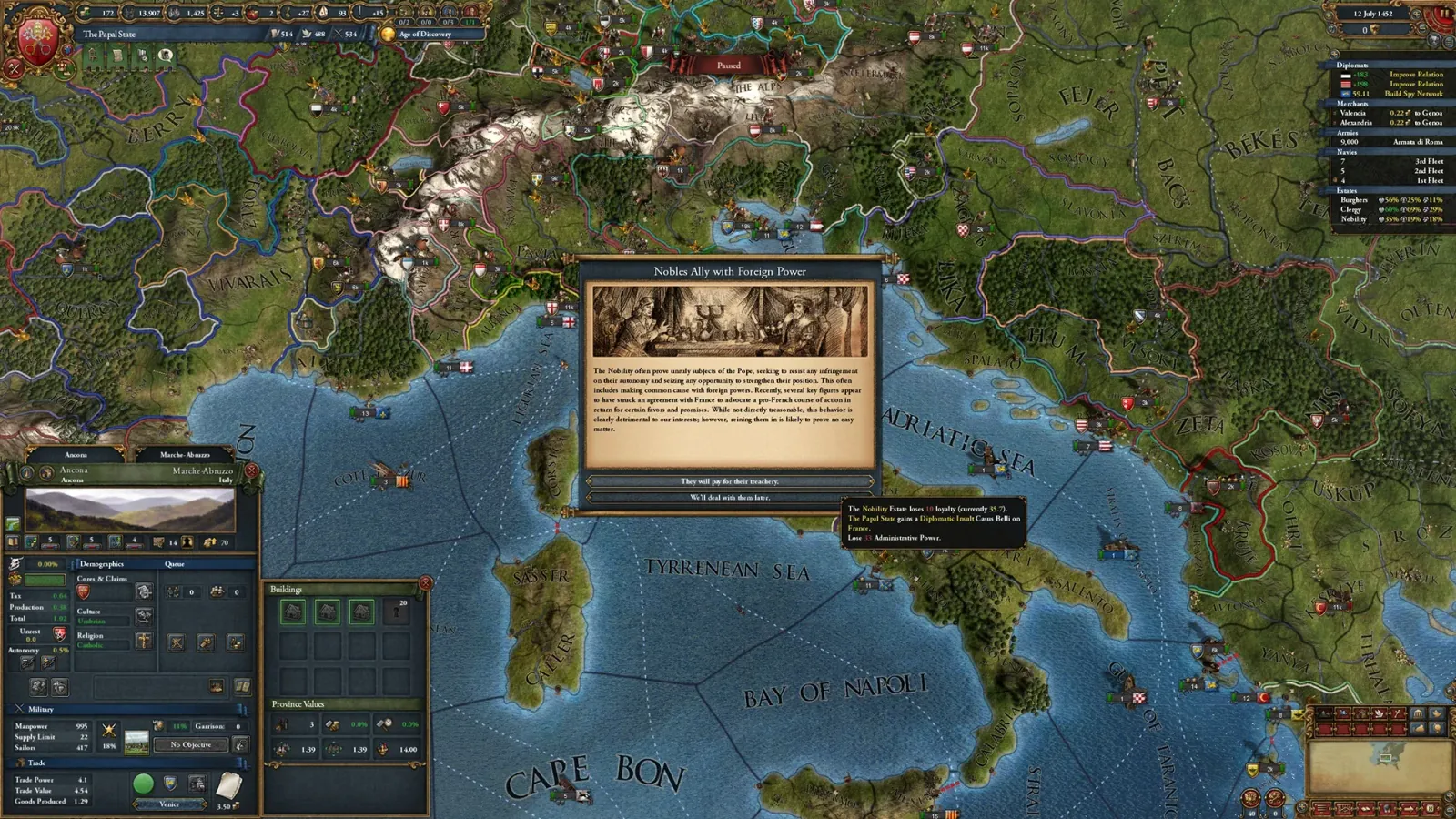
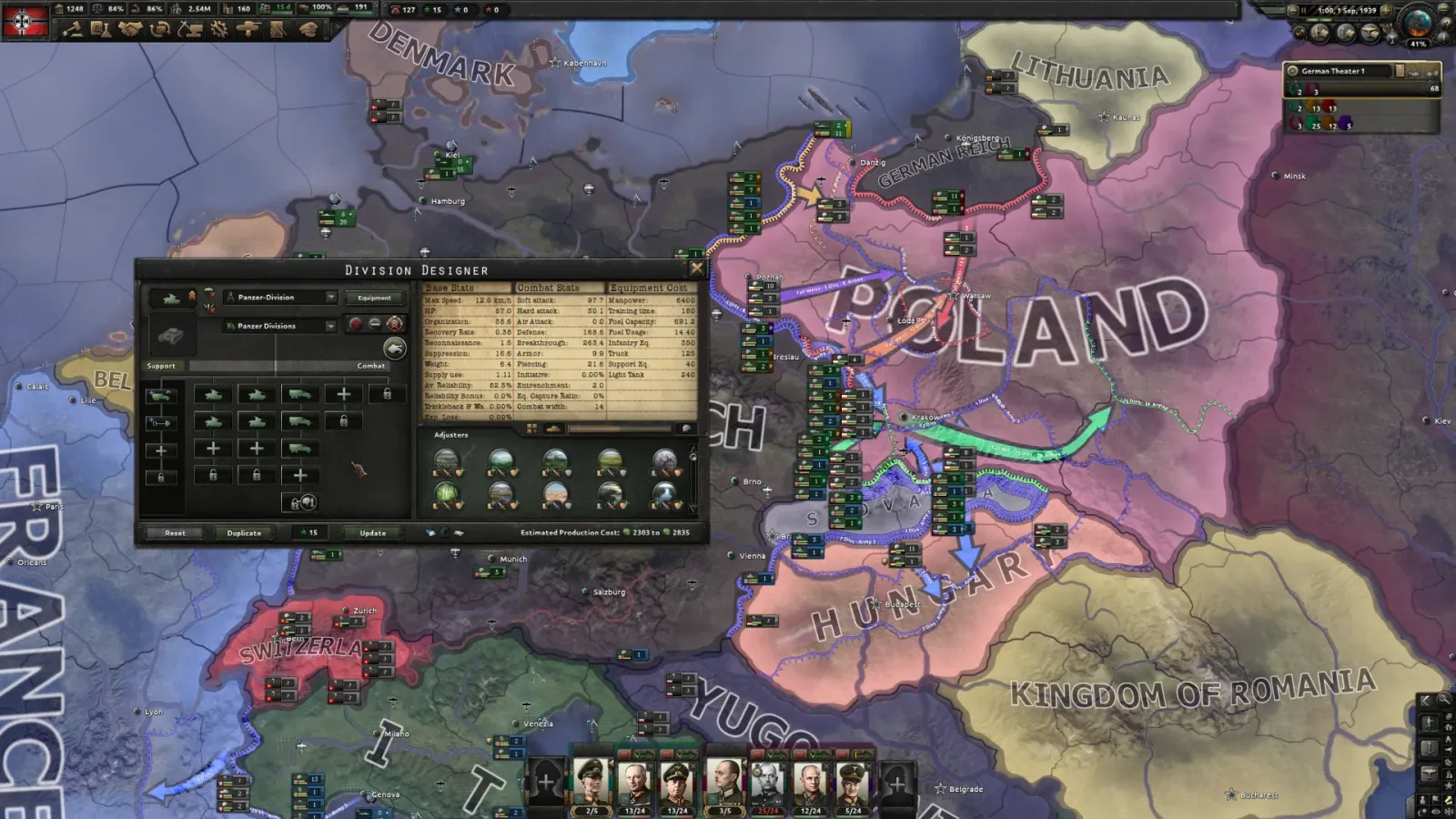
Players settle cities, balance production and growth, negotiate with rivals, pursue cultural or scientific goals, and adapt long-range strategy around terrain and competing powers.
Why it may be useful
Every turn forces a trade-off between things you want under a constraint you cannot escape, which builds real practice at long-range planning and opportunity cost. The history wrapped around it is a costume: expect a planning workout, not a history lesson.
Used in teaching
1 documented case ↓A public high school in Maine, United States (teacher Ryan Botting)
Keep in mind
Its civilizations, leaders, and histories are broad game abstractions rather than reliable history teaching.
Written 2026-09-15 · editorial assessment, not a measured effect · how we rate →
What the game is
Civilization VI is a turn-based strategy game that runs from the founding of a first city to a space program. Firaxis Games made it and 2K published it in October 2016. You pick a historical leader, settle a city on a hex map you have never seen before, and take turns for as long as it takes, which for a full game is many hours.
Each turn you move units, choose what a city builds, pick the next technology and the next civic, and answer whatever the other leaders want. Cities spread across the map as districts placed on their own hexes, so where you put a harbor or a campus matters. Two trees run in parallel, one for science and one for culture and government, and the civics tree unlocks policies you slot into your government. Every leader follows an agenda that decides who likes you. There are five ways to win, and the game carries an ESRB E10+ rating.
What you actually do
You spend most turns choosing between things you want equally. Build a granary now or a library, research the technology that helps this war or the one that pays off in fifty turns, keep a promise to a neighbor or take the city you could take. Nothing is settled in a single turn: a choice made in the ancient era shows up two hours later as a city that cannot feed itself or an army that arrives too late. The map does much of the work, because a river, a mountain range, or a coastline changes which of your plans is even possible. Getting better means abandoning a plan sooner and noticing when the shape of the game has changed.
What it exercises
Chooses between an immediate gain and a larger one much later
Adapts a long plan when the map or a rival makes it impossible
Reads an opponent's stated priorities and predicts their behavior
Tracks several parallel systems across dozens of turns
Judges when a war costs more than it can win
Why we rate it Moderate Worksheet score 56 / 100
FitHow much real knowledge or skill does the play itself make you use?50weight 45%
Scored 50. Every turn is a trade-off among things you want, under a constraint you cannot escape, and there is no way to succeed without weighing them. But the reasoning runs entirely on the game's own systems, invented resource curves and district bonuses rather than anything a historian, economist or strategist would recognize as real material, so you are working a puzzle shaped like history rather than history itself.
TransferWill what you practise here work outside the game?42weight 30%
Scored 42. Long-horizon planning and reading an opponent's stated priorities are broadly useful habits, and this game drills them for hours, leaving a rough map of world geography behind. It stays in the lower band because the history is a costume: the systems do not describe how any real society actually developed, so what travels is a general planning habit, not knowledge you could use.
PracticeDoes the game make you use that skill again and again, as it gets harder?85weight 25%
Scored 85, the highest of the three. A full game is hundreds of turns, and a player who enjoys it will play hundreds of hours across many games on a different map each time, so the weighing of options never becomes memorized. The reasoning keeps being asked for at rising difficulty as an empire grows, and only session length limits how much of it you can fit in.
Where it has been used in teaching
Documented cases of this game being used with learners. Each one links to its source.
Teacher's accountA public high school in Maine, United States (teacher Ryan Botting) · Secondary school · 2021
High school teacher Ryan Botting runs his world history class around multiplayer sessions of Civilization VI, giving students era-specific historical objectives and then discussing real events as case studies; he reports test scores matching high-achieving traditional classes and re-engaged low-effort students.
Practice-backedNo published study, but people who answer for the outcome use it: schools, clinics, museums, research labs.
This is Practice-backed. A public high school teacher in Maine, Ryan Botting, has built his world history class around multiplayer Civilization VI sessions, giving students era-specific historical objectives and then discussing real events as case studies; he reports test scores matching high-achieving traditional classes and re-engaged low-effort students. That is one documented classroom account, not a controlled study, and it describes one teacher's design rather than a validated curriculum. The Steam listing, checked in August 2026, confirms the developer, release date, language list and the systems the game runs.
Editorial assessment - not a measured scientific effect.
Fit
50/100
Transfer
42/100
Practice
85/100
Why it makes the cut
It is obviously a real desirable game first, with durable mainstream relevance.
Practice-backed
Practice-backed: a Maine public high school teacher has run his world history class around multiplayer Civilization VI sessions with era-specific objectives, reporting test scores matching high-achieving classes. That is one documented classroom account, not a controlled study.
Trade-offs under constraint are the whole of play, and hundreds of turns give real practice at weighing them, but the history is a costume laid over the civilization's own invented systems.