What the game is
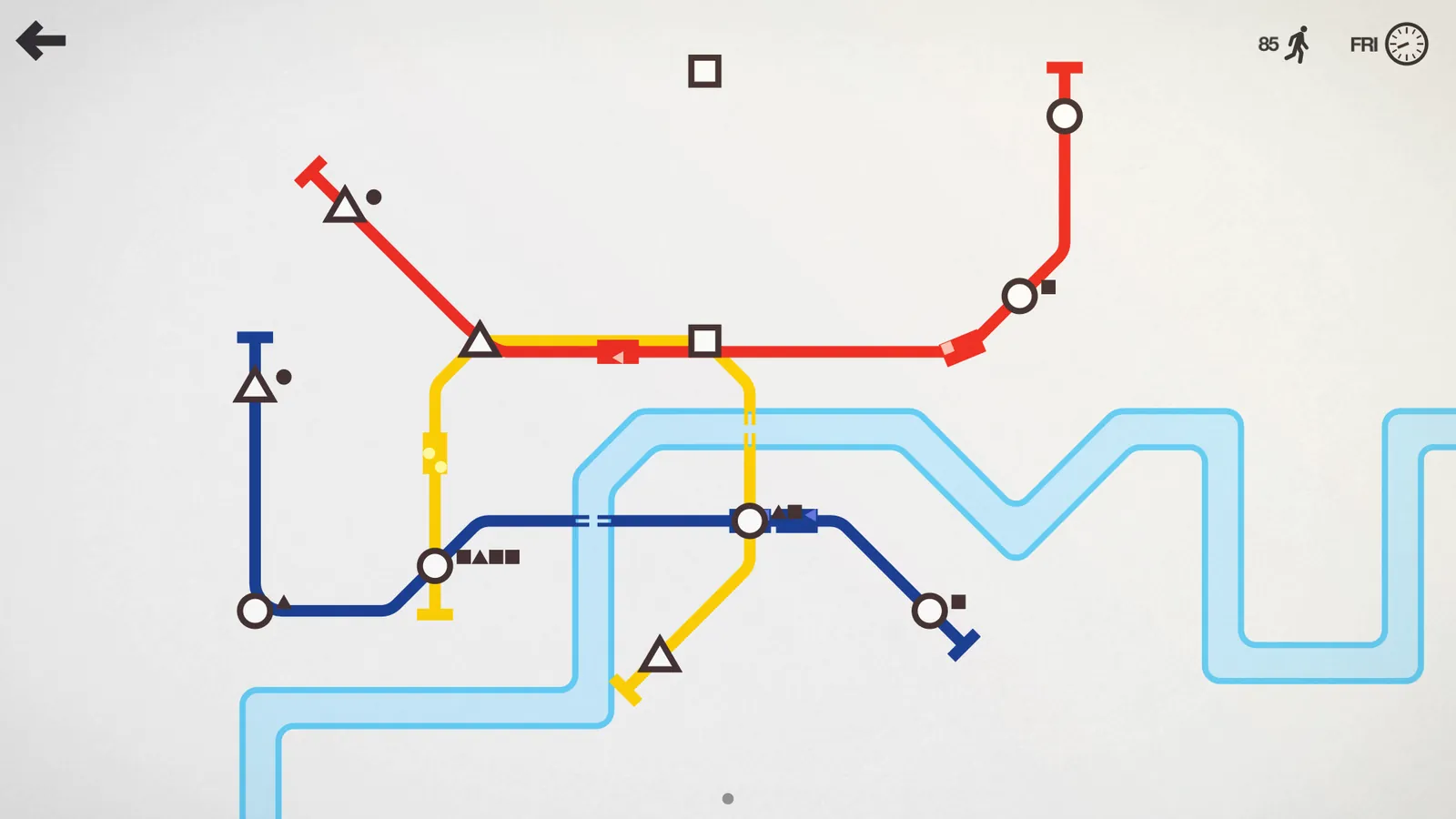
Mini Motorways is the road-traffic companion to Mini Metro, made by the same studio, Dinosaur Polo Club, and released on Steam in July 2021. The look is the same clean, near-wordless one: a pale map, a few colored houses, a few colored destinations, and roads you draw by dragging. The city grows on its own while you play, and it never stops growing.
Maps are drawn from cities around the world, Warsaw, Dubai and Zurich among them, each with its own water, hills and awkward corners. Modes range from Normal, which ends when a destination is overwhelmed, through Endless and Creative, which remove the pressure, to Expert, where roads are permanent and upgrades are scarce. Daily and weekly challenges give everyone the same map and a leaderboard.
It costs a few euros on Steam and appears on the App Store through Apple Arcade rather than as a separate purchase. Several color palettes ship with it, including colorblind and night modes. Steam confirms interface support for English, French, German, Spanish and Brazilian Portuguese, and the App Store lists English plus thirteen more.
What you actually do
Cars leave colored houses and drive to the matching-colored destination. Your only tool is road: you drag a line of it from a house toward the place its cars need to reach, and you have a limited supply of road pieces to spend. Every so often the game offers a choice of upgrades, a motorway, a bridge, a roundabout, a set of traffic lights, and you pick one, knowing the rest will not return this week.
The tension is that the map keeps adding houses and destinations while you are still fixing the last problem. A junction that worked fine becomes a queue; a roundabout that fixed one street starves another. So you spend the game pulling up roads you built five minutes ago and rerouting around your own decisions. Getting better looks like separating flows early rather than patching a jam, and noticing which upgrade buys the most relief.
What it exercises
- Spots where a queue is forming and traces it back to the junction causing it
- Chooses between limited upgrades knowing the rejected ones will not return soon
- Separates competing flows instead of routing everything through one shared road
- Rebuilds part of a working system to keep the whole of it moving
- Plans under real-time pressure without freezing on the perfect answer
Why we rate it Moderate Worksheet score 57 / 100
FitHow much real knowledge or skill does the play itself make you use?55weight 45%
Fit is scored 55 because trade-off thinking is nearly the only thing you do: every road spends a limited resource and changes the flow somewhere else, so the reasoning happens on every single input. It sits below the strongest systems games in this catalog because the real-time pressure sometimes rewards a fast reaction over a thought-out plan.
TransferWill what you practise here work outside the game?45weight 30%
Transfer is scored 45 because what carries out is a feel for flow and for local fixes with global consequences, which is genuinely useful and genuinely vague. It sits below the mechanic score on purpose: nothing here maps onto real road planning, which involves cost, land, safety and the people who live along a route, and none of that appears in the model.
PracticeDoes the game make you use that skill again and again, as it gets harder?75weight 25%
Practice is scored 75 because a run is short and the same reasoning repeats in every one, and the daily and weekly challenges give a fresh map with a fresh constraint. Each city's geography forces a different shape of solution, so the practice does not collapse into one memorized opening, though the underlying moves stay fairly similar across runs.
What the evidence says
Editorial onlyNobody outside our desk has checked this. It is our reading of how the game plays.
The evidence level is Editorial only. The Steam page and the App Store listing confirm the developer, the July 2021 release, the price, the modes, the upgrade types, the color and night palettes, the language support and the Apple Arcade route on mobile. No study of Mini Motorways exists in the sources checked, and none on traffic games generally. The claim that it makes flow and trade-offs visible is a reading of a very transparent design, not a measured outcome, and that figure is held down deliberately because the model omits everything that makes real transport planning hard.