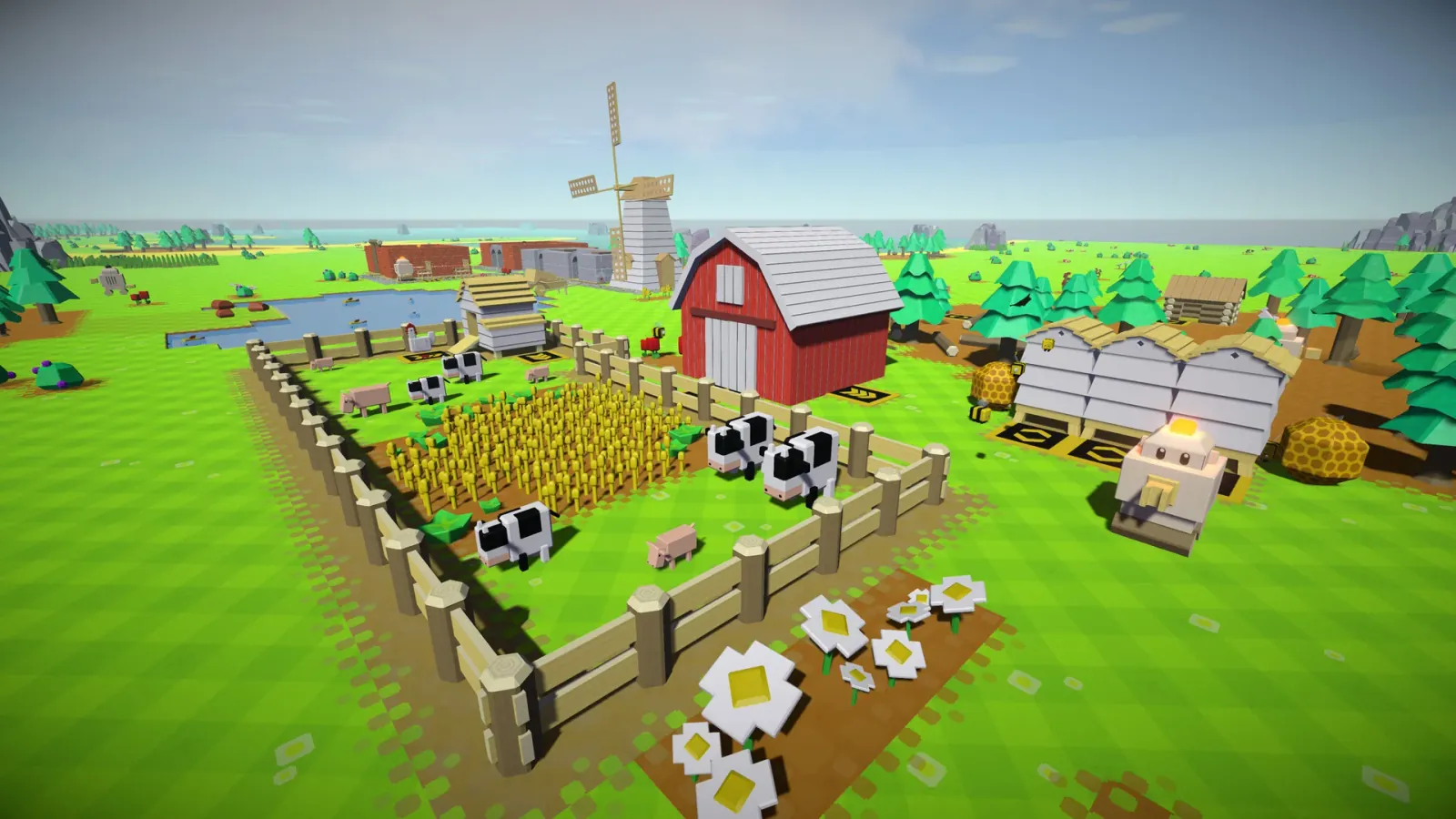
Players place restoration machines, create biomes, manage energy and moisture constraints, attract wildlife, and then recycle their infrastructure before leaving.
Why it may be useful
Terra Nil asks you to read how power, moisture, soil and terrain constrain each other before you can green a map, which builds a real habit of systems reasoning. Its ecology is a puzzle rule set, not a model of real restoration.
Keep in mind
Its ecosystems are designed puzzles, not scientific models; they simplify ecology, politics, and the material costs of real restoration work.
Written 2026-09-15 · editorial assessment, not a measured effect · how we rate →
What the game is
Terra Nil is a strategy game by the South African studio Free Lives with Clockwork Acorn, published by Devolver Digital in March 2023. It is on PC, Nintendo Switch and iPhone and iPad, is played alone, and takes an hour or two per map.
Free Lives call it a reverse city builder, and that is exact. You arrive on a dead landscape with a small amount of energy and no way to make more until something works. You build something to generate power, then machines that detoxify the soil and bring water to it, and from there grassland, forests, wetlands, beaches and reefs, each of which needs specific ground and moisture conditions.
Once the ecosystem meets its targets, animals return, and then the last phase begins: dismantle everything you built, recycle it, and leave nothing behind. The maps are procedurally generated, so a solution learned on one river valley does not transfer directly to the next.
What you actually do
Every building costs money you do not have much of, and income comes only from making the land greener, so the game is a chain of tight budgets. You place a generator where it will actually work, put the next machine inside its power radius, and check whether the resulting patch of soil is wet enough for the biome you want. Get the order wrong and you strand a building with nothing to power it.
The final phase is the twist. Every structure has to be collected by a recycling vehicle that needs its own route, so a layout that was efficient to build can be awkward to remove. Getting better means planning the retreat while you are still expanding.
What it exercises
Places a structure by checking what it needs and what it will reach.
Sequences work so that each step makes the next one possible.
Reads terrain for slope, water and soil before committing to a plan.
Plans how something will be taken apart while building it.
Adapts a known solution to a map with different terrain.
Why we rate it Low Worksheet score 41 / 100
FitHow much real knowledge or skill does the play itself make you use?40weight 45%
Forty. Reading how power, moisture, soil and terrain constrain each other is real systems reasoning, but ecology here functions as scenery for a building puzzle rather than a subject you actually work with: the biome rules are invented constraints tuned for play, not a model anyone would recognize as restoration science.
TransferWill what you practise here work outside the game?32weight 30%
Thirty-two. What carries out of the game is a general habit of reading linked constraints before acting, which is a real but generic skill and not specific to ecology. The biome rules are the game's own invention, so nothing about habitats, soil chemistry or real restoration travels with a player, however good they get at the puzzle.
PracticeDoes the game make you use that skill again and again, as it gets harder?55weight 25%
Fifty-five. Each map repeats the same read-plan-place-recycle cycle, and the procedurally generated terrain does encourage replaying, but the difficulty does not really escalate from map to map: once a player has learned the pattern, later maps repeat the same reasoning at the same level rather than pushing it further.
What the evidence says
Editorial onlyNobody outside our desk has checked this. It is our reading of how the game plays.
Editorial only: our judgment based on the mechanics. The official site and the Steam, Nintendo and App Store listings confirm the developers, the publisher, the March 2023 release, the platforms, the seventeen listed languages, the procedural maps, and the described structure of building, greening and then recycling everything. None of them supports a claim about learning, and no study of this game exists. The point about noticing interdependence describes what solving a map requires, and the ecological content should be treated as designed puzzle rules rather than science.
Editorial assessment - not a measured scientific effect.
Fit
40/100
Transfer
32/100
Practice
55/100
Why it makes the cut
The satisfying building, optimization, and cleanup loops would still be appealing without any environmental frame.
Editorial only
This is our reading of the mechanics, based on the official site and the Steam, Nintendo and App Store listings; none of them measures learning, and no study of this game exists.
Prices are US store listings in USD, last refreshed 2026-09-25; regional prices and sales differ.
The official site currently advertises Nintendo Switch, PC, and Netflix play; Steam and Nintendo confirm current PC and console support.
Steam lists the release on 2023-03-28 and current English user reception checked on 2026-08-20.
App Store age context is 4+ and some platform listings frame the content as mild; the proposed Meaningful Games age is higher because later regions demand layered planning and reading of linked systems.
Reading how power, moisture and terrain constrain each other is a genuine systems skill, but the ecology behind it is invented, so what travels is the habit of noticing links, not knowledge of real restoration.