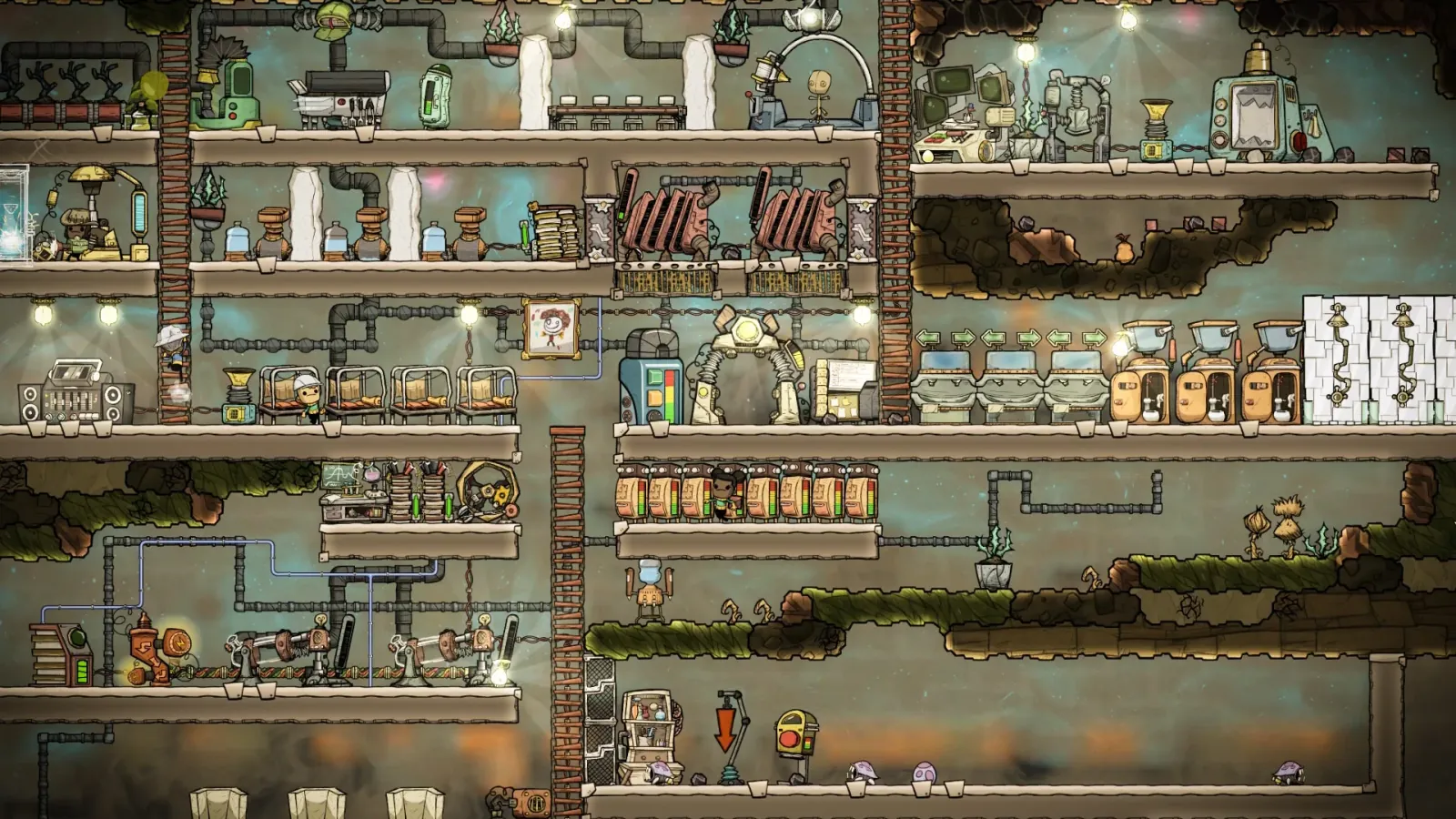
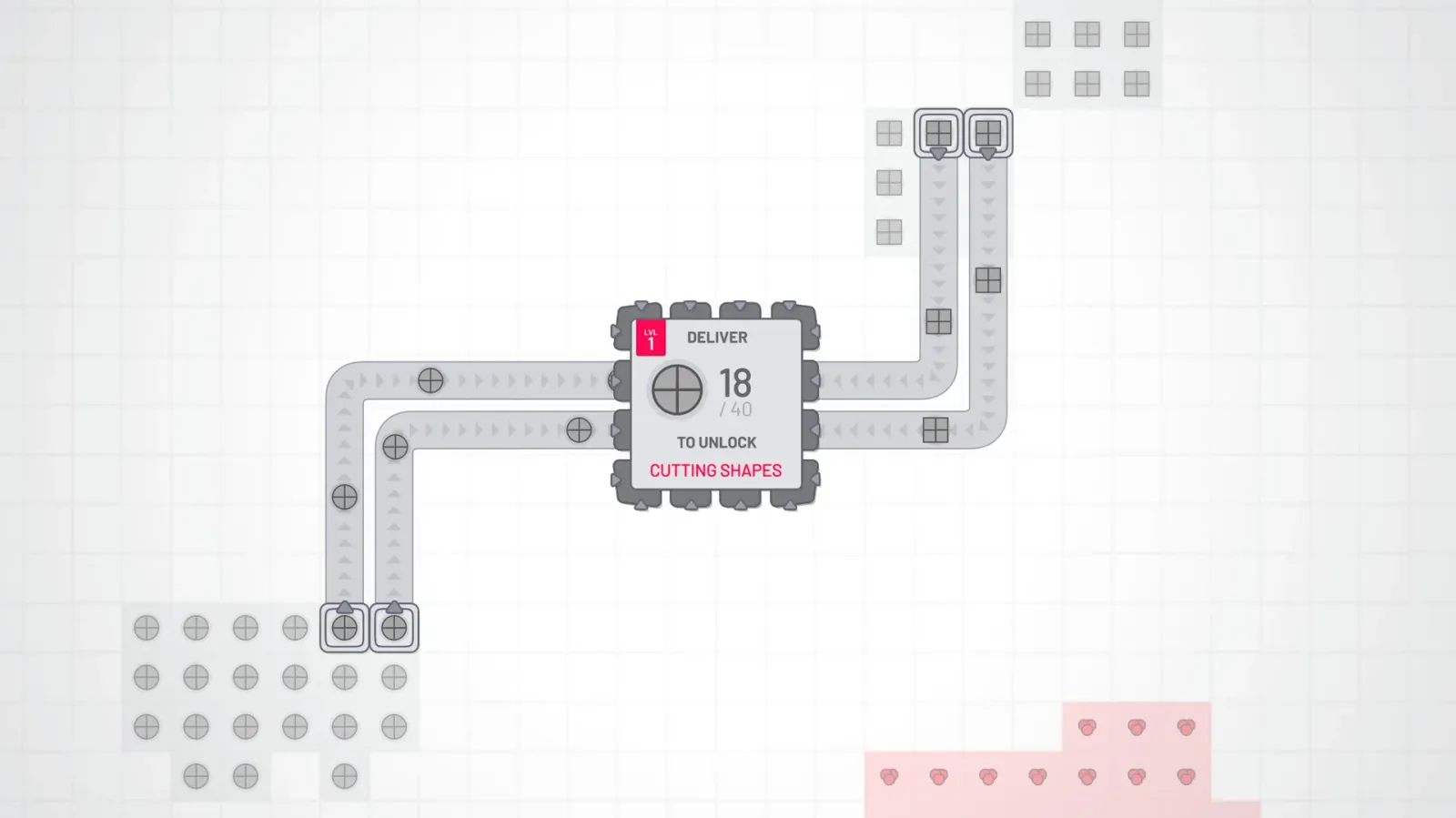
Players gather resources, craft new tools, build bots, record task sequences for them, and gradually automate a settlement until the colony can support more complex needs.
Why it may be useful
You record a task by demonstration, then generalize and debug the routine until it survives situations you did not show it. A colony beyond a small size cannot run without this, so decomposition and debugging are genuinely rehearsed, if under an invented, unnamed system.
Keep in mind
Its programming model is a playful metaphor rather than a faithful representation of real software work, and the later colony grind can turn into optimization sprawl rather than clear learning.
Written 2026-09-15 · editorial assessment, not a measured effect · how we rate →
What the game is
Autonauts is a colony game about teaching robots, made by the Scottish studio Denki and released on PC in October 2019, with a Switch version following. You land alone on an empty planet, chop wood by hand, make a crude tool, and use it to make a better one. Then you build your first worker bot, and the game changes shape.
You do not program a bot with text. You pick up a bot, record yourself performing a task, and hand the recording back: the bot repeats what it watched you do, forever. From there the game gives you a visual editor with loops and conditions, so recordings become scripts you can inspect, generalize and repair.
The colony grows around that. Bots feed bots, resources feed workshops, and eventually settlers arrive who want food, education and entertainment, each need adding a production chain of its own. There is no combat and no way to lose. Sessions are long and the late colony is genuinely complicated, with dozens of bots running scripts you wrote hours earlier.
What you actually do
You do a job by hand until you are sick of it, then teach it away. Recording is easy; making the recording work in every situation is not. The bot will walk to the exact tree you walked to, so you learn to write instructions that say find the nearest tree rather than go here. When a line of bots jams, you open the script, find the step that assumed something untrue, and change it. Getting better means writing routines that survive a colony twice the size.
What it exercises
Breaks a task into a sequence of steps precise enough for a machine to repeat
Generalizes an instruction so it works in cases the author did not demonstrate
Finds the faulty step when an automated process stops producing
Plans a production chain where each stage feeds the next
Judges when to automate something and when to keep doing it by hand
Why we rate it Moderate Worksheet score 67 / 100
FitHow much real knowledge or skill does the play itself make you use?68weight 45%
The programming is the game, not a mode inside it: a colony beyond a certain size cannot be run by hand, so writing, generalizing and repairing routines is the only route forward. Recording by demonstration also makes the abstraction unusually concrete. The score lands at 68 because the underlying system, while genuine, stays a simplified metaphor for real automation.
TransferWill what you practise here work outside the game?58weight 30%
Decomposition, generalization and debugging are the transferable core of programming, and this game exercises all three under real pressure from a colony that keeps growing. It settles at 58 because the visual language is bespoke and the concepts are never named, so you practice them without necessarily learning what they are called.
PracticeDoes the game make you use that skill again and again, as it gets harder?75weight 25%
The write, run, watch, fix cycle repeats for as long as you play, and every new resource restarts it at a larger scale. The colony never finishes, so there is always another routine to write, which is why this is the strongest dimension here at 75.
What the evidence says
Editorial onlyNobody outside our desk has checked this. It is our reading of how the game plays.
The evidence level is Editorial only. The Steam page confirms the developer and the October 2019 PC release, and Nintendo's Switch listing describes the visual programming language on the product page itself. No study of this game exists in our sources and none is claimed. General research on block-based programming tools is about other software and would be misleading to cite here. What is verifiable is the structure: the game cannot be progressed past a small colony without writing, generalizing and debugging routines that machines execute.
Editorial assessment - not a measured scientific effect.
Fit
68/100
Transfer
58/100
Practice
75/100
Why it makes the cut
It is a full-fledged automation colony game first, with the programming logic serving the game rather than sitting beside it.
Editorial only
Our reading of the mechanics, checked against the Steam page and Nintendo's Switch listing, which describes the visual programming language directly. No independent study of this game exists.
Prices are US store listings in USD, last refreshed 2026-09-25; regional prices and sales differ.
Steam confirms the original PC release on October 17, 2019 and currently shows Very Positive English reviews.
Nintendo's current Switch page confirms console availability and describes the game's visual programming language directly on the product page.
Age guidance
Ages 10+ · ESRB E
Topics
STEM, Logic & strategy
Play styles
Strategy, Simulation
Tags
Automation · Visual programming · Colony building
A colony past a certain size cannot run by hand, so writing, generalizing and repairing routines becomes the only route forward, though the visual language is invented and its concepts are never named for what they are.