Players reconstruct South Indian recipes from incomplete notes, choose conversation responses, and follow one family across years of migration and changing relationships.
Why it may be useful
Cooking the recipes and following one family across migration are the same activity: the recipe's missing steps mirror the gap between a mother and the son drifting from her language. It is one specific story, closer to a conversation starter than to a skill you build.
Keep in mind
It is one specific family's story, not a general introduction to Tamil culture, and it carries real weight: family conflict, discrimination, loss, tobacco use and a brief moment of blood.
Written 2026-09-15 · editorial assessment, not a measured effect · how we rate →
What the game is
Venba is a short narrative cooking game from Visai Games, a small Toronto studio, released on 31 July 2023 for about fifteen euros. You play an Indian mother who moves to Canada with her husband in the 1980s, and the game follows the family forward through the decades into her son's adulthood. Steam puts the length at one to two hours, which makes it closer to a well-made short film than to a game a player returns to.
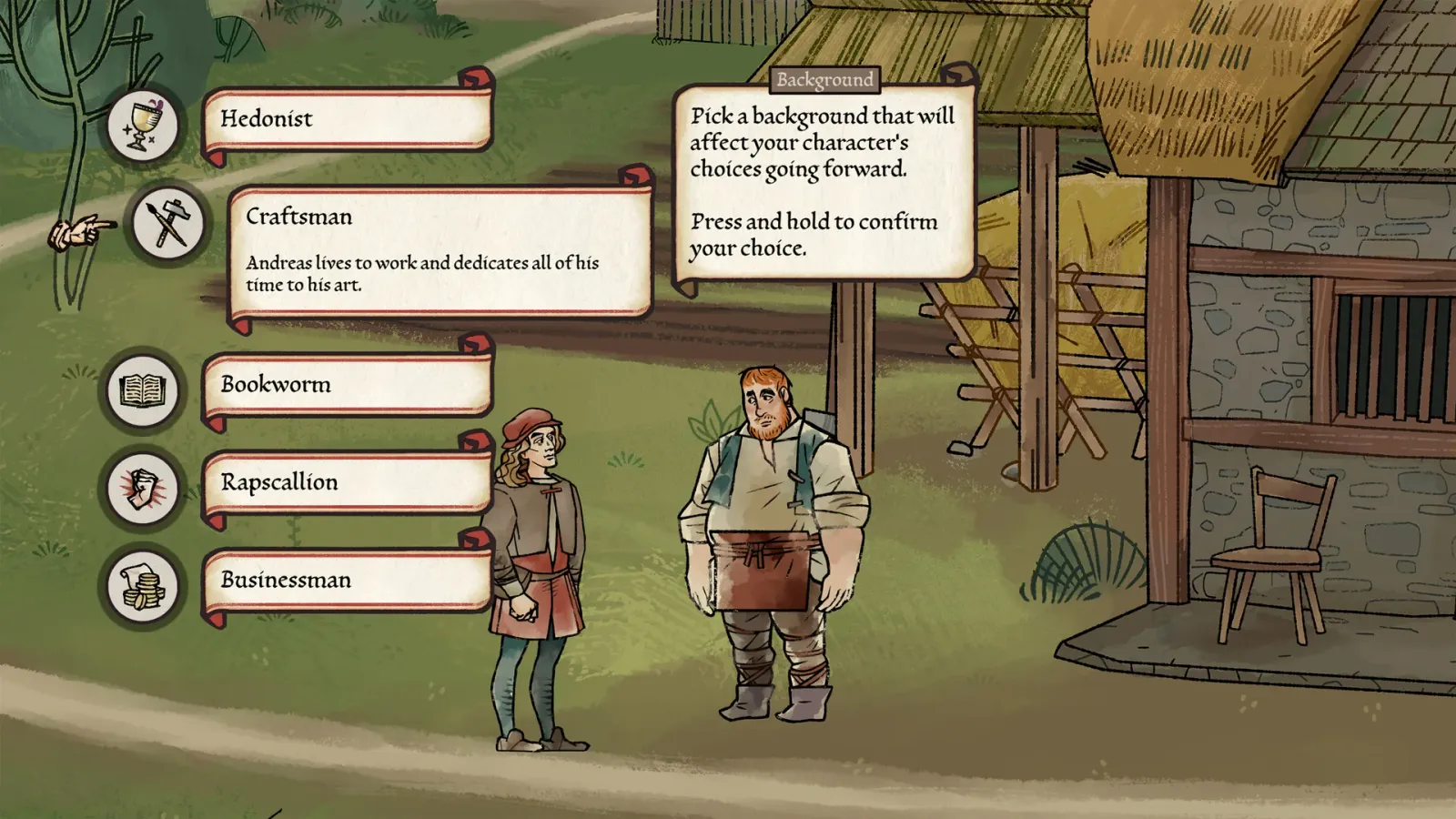
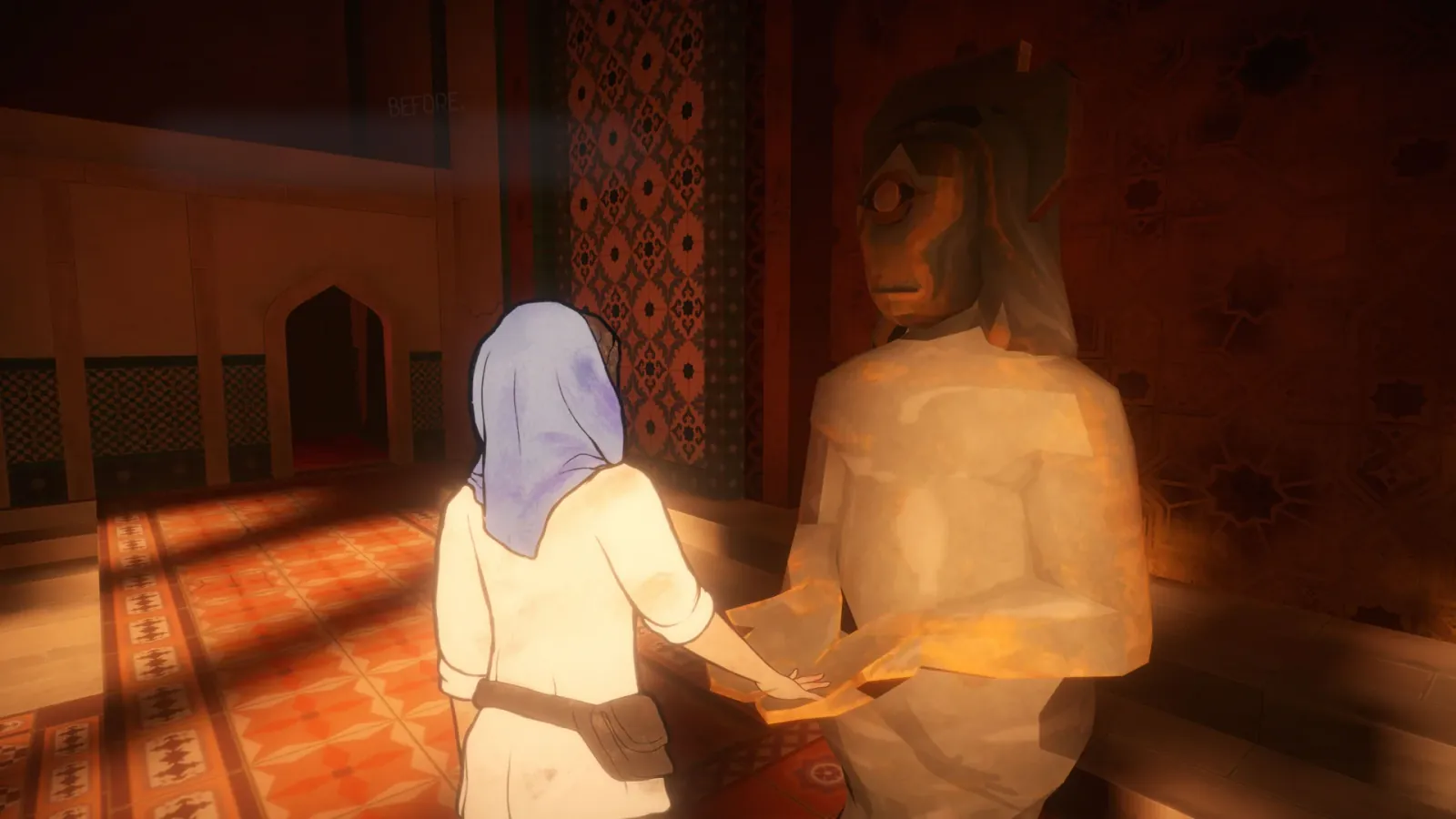
Play alternates between two things. In the kitchen you cook South Indian dishes, among them idli, dosa and biryani, from a recipe book that has been damaged, so lines are missing and you have to work out the step yourself. Between the cooking scenes are conversations you steer by picking replies, in a house that changes as the family's money, language and relationships change. An in-game cookbook keeps the real recipes so they can be cooked for real, and an in-game radio plays a soundtrack drawn from Tamil music.
What you actually do
A recipe appears as a page with gaps. You drag ingredients, pour, grind, steam, fold and time each step yourself, and where the book does not say how much or how long, you decide from what the dish around it implies. Getting it wrong is possible and the game lets it happen: the food comes out badly and the scene continues rather than resetting. Between meals you choose what Venba says to her husband and, later, to a son who answers her in English while she speaks Tamil. Those choices set the temperature of a conversation rather than branching the plot. The difficulty never really rises; what rises is how much the small decisions cost.
What it exercises
Reconstructs a missing step in a procedure from the steps on either side of it.
Follows a real sequence with real timing: soak, grind, ferment, steam, in order.
Notices how the shared language between a parent and a child changes over years.
Reads a conversation for what is not being said out loud.
Connects an everyday routine, a meal, to migration and family history.
Why we rate it Minimal Worksheet score 27 / 100
FitHow much real knowledge or skill does the play itself make you use?30weight 45%
At 30 the theme is genuinely in your hands: you cook the dishes, and the missing lines in the recipe book echo the gap the family is living through as language and distance grow between them. It sits at the low end of the range because the cooking itself is a short guided sequence rather than a system you experiment inside.
TransferWill what you practise here work outside the game?28weight 30%
At 28 noticing that food carries memory, and that a parent and child can drift apart across a shared but unequal language, is something a player can genuinely carry into their own life. It stays low because it is a single specific story told once, with nothing repeated to practice the noticing against.
PracticeDoes the game make you use that skill again and again, as it gets harder?20weight 25%
At 20, honestly the weakest dimension: there are only a handful of cooking scenes across one to two hours, each dish appears once or twice, and there is little reason to replay beyond hearing a different reply. Whatever this game offers a player, it offers once and does not ask for it again.
What the evidence says
Editorial onlyNobody outside our desk has checked this. It is our reading of how the game plays.
The level is Editorial only and the sources are the Steam and Xbox store listings, checked for developer, release date, price, stated length, the named dishes and the in-game cookbook. There is no research on this game and none has been added. The claim that it may help a player notice how food and language carry family history is an editorial reading of what the play actually consists of: cooking a real dish while a relationship shifts around you. It is a single authored story, so nothing said here generalizes beyond it.
Editorial assessment - not a measured scientific effect.
Fit
30/100
Transfer
28/100
Practice
20/100
Why it makes the cut
Its cooking, conversation, and narrative experience stand on their own without treating cultural understanding as an assignment.
Editorial only
This is our own reading of the design, based on the current Steam and Xbox listings; they confirm the length, the dishes and the setting, but no study measures how a player actually responds to it.
Prices are US store listings in USD, last refreshed 2026-09-25; regional prices and sales differ.
Age guidance
Ages 13+ · ESRB T
Topics
History & society
Play styles
Single-player, Narrative
Tags
Tamil cuisine · Migration · Family memory
Cooking the recipes and losing a shared language with a child are made to feel like the same loss, which is a real fit between mechanic and story, told once in one specific family.