Players explore scenes, inspect objects, collect sensory fragments, and assemble scrapbook-like journal pages from remembered details.
Why it may be useful
Progress depends on looking closely enough at a scene to record it, then choosing which detail belongs on a diary page, tying observation and reflection directly to play. The game does much of that composing work for you, so what you practice stays modest.
Keep in mind
Its reflective tone should stay on memory, noticing, and interpretation rather than on wellbeing or therapeutic benefit.
Written 2026-09-15 · editorial assessment, not a measured effect · how we rate →
What the game is
Dordogne is a short narrative adventure by the French studios Un Je Ne Sais Quoi and Umanimation, published by Focus Entertainment in June 2023. Mimi, now an adult, returns to her grandmother's house in the Dordogne region of south-west France to clear it out, and finds the diary she kept there as a child. The game moves between the two times.
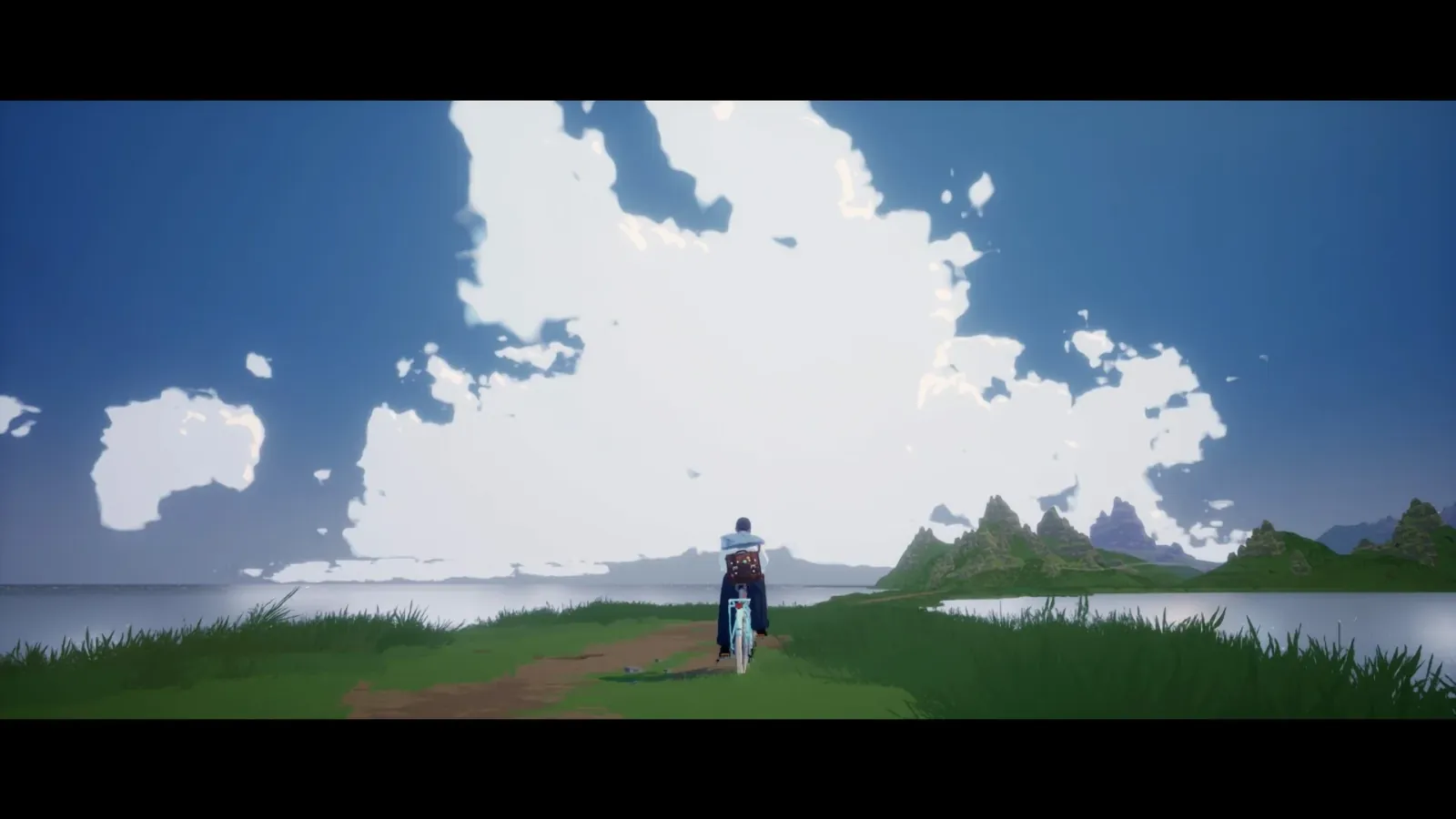
Everything is painted. Backgrounds are hand-made watercolors, characters are drawn over them in ink, and the whole thing looks like a picture book you can walk through. The childhood scenes are a river, a village, a garden and a house, and you steer Mimi slowly through them in a fixed-camera view while a narrator reads the diary aloud.
It is a one-time purchase on PC, with no online play and nothing to buy inside. Steam lists thirteen interface languages, including French, English, German, Spanish and Brazilian Portuguese.
What you actually do
Playing is mostly noticing. You walk Mimi around a scene and press a button on anything that responds: a jar of preserves, a cicada, a boat, her grandmother's hands. Some of those become entries. A camera takes photographs, a recorder captures sounds, and a small set of words and smells is collected as you go. Between chapters you assemble a diary page yourself, dragging photographs, stickers, words and colors onto it in any arrangement you like. There are short conversations where you choose a reply, and a few light physical tasks such as paddling a canoe or mixing a scent. Nothing can be failed and nothing is timed.
What it exercises
Looks closely at a scene and notices what is worth recording
Chooses which detail of a day best stands for the whole of it
Arranges images, words and color into a page that reads as a whole
Follows a story told out of order across two time periods
Connects an adult's memory with what the child actually experienced
Why we rate it Minimal Worksheet score 22 / 100
FitHow much real knowledge or skill does the play itself make you use?22weight 45%
Scored 22, near the bottom. You do progress by looking at things carefully enough to record them, and the diary page you build afterward is made only from what you chose to keep, a real link between noticing and play. It stays low because the recording itself is mostly a single button press on a highlighted object, so there is not much of a subject to actually work with.
TransferWill what you practise here work outside the game?18weight 30%
Scored 18, close to the floor. Choosing what to photograph, then deciding what a page should say about a day, resembles keeping a journal or a holiday scrapbook, and a player who does that already will recognize the shape of it. But the game does most of the actual composing work for you, so what carries over to a real journaling habit is thin.
PracticeDoes the game make you use that skill again and again, as it gets harder?25weight 25%
Scored 25, the weakest of the three. Every chapter repeats the same cycle of exploring, recording and assembling a page, so the observation decision does return, but the whole game is a handful of hours told once, and there is little reason to replay it beyond making a different diary page. That leaves very little repeated practice to speak of.
What the evidence says
Editorial onlyNobody outside our desk has checked this. It is our reading of how the game plays.
This is Editorial only. The only source is the Steam listing, checked in August 2026 and re-read here. It confirms the developers, the June 2023 release by Focus Entertainment, the price, the thirteen interface languages, the hand-painted watercolor technique, the two timelines, and the collecting of photographs, sounds and scents into a journal. It says nothing about learning or wellbeing. This assessment holds the rating low because progress depends mostly on a single button press on a highlighted object rather than any deeper observational skill, and because the whole experience runs only a few hours. We found no research on this game.
Editorial assessment - not a measured scientific effect.
Fit
22/100
Transfer
18/100
Practice
25/100
Why it makes the cut
PASS - Its memory-collecting narrative adventure has enough aesthetic and exploratory pull to qualify as game-first.
Editorial only
This is our own reading of the mechanics, checked against the Steam listing, which confirms the developers, the release date and the photograph-and-journal collecting loop. It says nothing about memory or wellbeing, and no study of this game exists.
Prices are US store listings in USD, last refreshed 2026-09-25; regional prices and sales differ.
No subscription requirement was found on the verified PC route.
Steam currently verifies interface support for the listed locales. Full audio and subtitle support are only marked where a current Steam source states them explicitly.
Recording a scene closely enough to keep it ties observation to progress, but the game composes much of the diary page for you, and the whole experience runs only a few hours, told once.