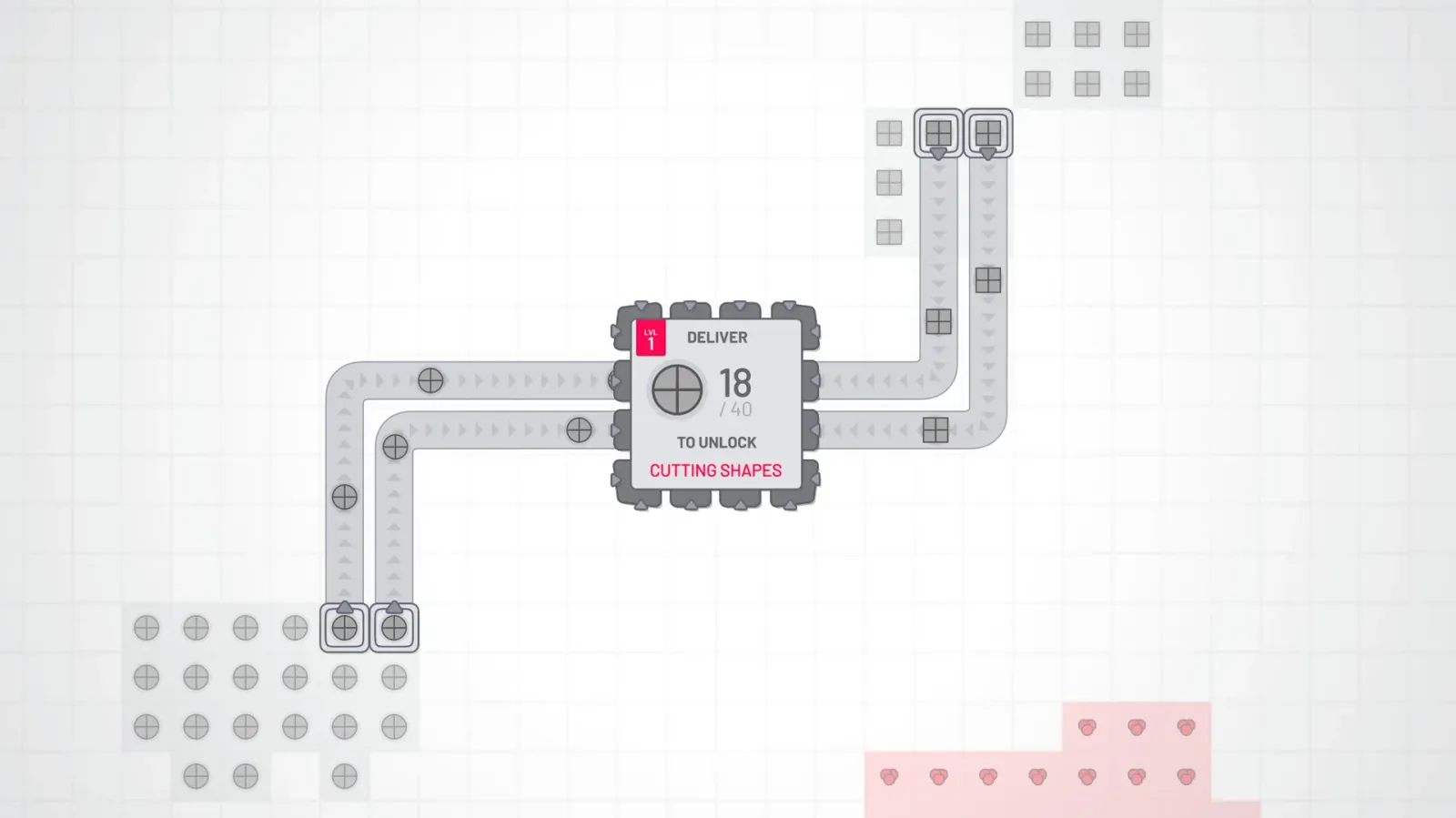
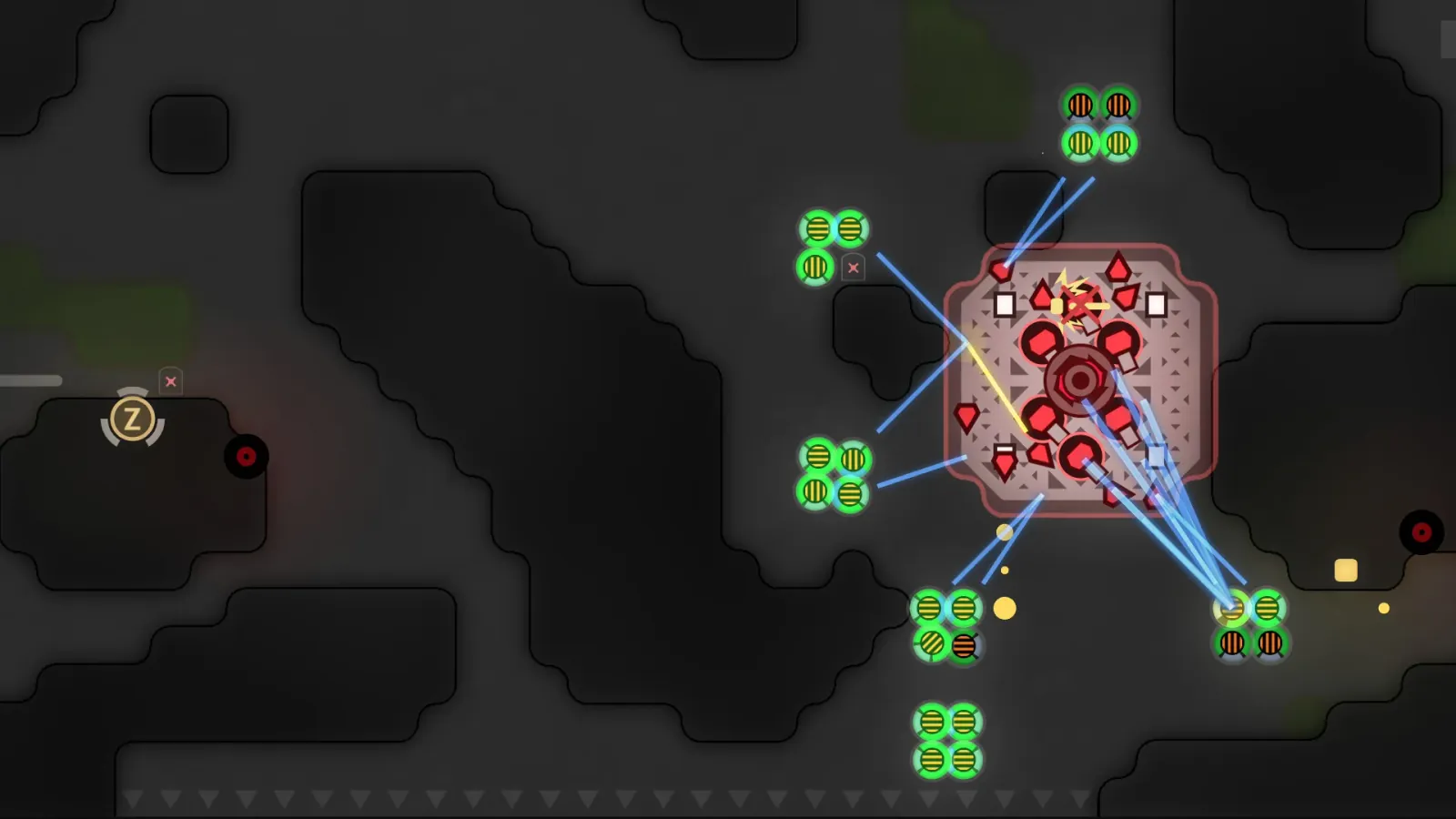
You restart an abandoned factory on Mars: mine ore, refine it, lay conveyors and rails, and open shops. Cats arrive with different tastes, you record what each one buys, and you feed that table of observations to an in-game machine-learning tool that predicts what the next cat will want.
Why it may be useful
The prediction loop is the game: you collect examples, train an in-game model on them, watch it guess wrong when the sample is thin, and gather more. That is the real shape of applied machine learning, though the model itself stays a black box you never open.
Keep in mind
The in-game model fits patterns to your data without showing the mathematics, so it builds intuition rather than a skill you could take to a notebook.
Written 2026-09-15 · editorial assessment, not a measured effect · how we rate →
What the game is
Learning Factory is an automation and management game from the Russian-founded studio Luden.io, the small team behind while True: learn(). It came out in January 2025 for Windows, macOS, Linux and Xbox after a long stretch in early access. You play the new chief engineer of a derelict factory on Mars, and the customers are cats.
Play is top-down and slow. The surface is a grid of ore patches, water, grass and rock, and you fill it with drills, smelters, assemblers, conveyor belts and shops. There is no combat and no timer. Sessions stretch as long as you let them, because the loop is always one more belt, one more product, one more shop. Menus are text-heavy: contracts, a research tree, a product catalog and an in-game wiki that explains the machine-learning vocabulary as it comes up.
What you actually do
You dig up raw material, route it through machines that combine it into goods, and deliver the goods to shops where cats buy them. Every sale is an observation: this cat, with these traits, bought this thing. You collect those observations into a data set and hand it to an in-game tool that learns which cats want which products, then predicts the next order. A prediction based on twenty sales is unreliable and you feel it in your income; a prediction based on hundreds is worth building a production line around. Difficulty rises as the product tree deepens and the map splits into surface and underground layers, so a routing mistake costs a whole shift of throughput.
What it exercises
Collects observations into a data set and notices when the sample is too small
Reads a prediction as a probability, not a promise
Traces a bottleneck backward from a starved machine to its supply
Balances input and output rates across a chain of machines
Plans a layout that can be extended without tearing it down
Why we rate it Moderate Worksheet score 64 / 100
FitHow much real knowledge or skill does the play itself make you use?65weight 45%
Fit reaches 65 because gathering data and acting on a prediction is how you earn money, not an optional side panel. It falls short of the top tier because a player can also succeed by guessing and brute-forcing production, so the useful part is available rather than compulsory, and the model itself is never opened up.
TransferWill what you practise here work outside the game?58weight 30%
Transfer sits at 58. What carries out is a habit about evidence: more examples make a better prediction, and a model trained on a narrow sample fails on new cases. What does not travel is any actual technique, since the player never chooses a model, a feature or a metric, only feeds it sales.
PracticeDoes the game make you use that skill again and again, as it gets harder?70weight 25%
Practice reaches 70. The prediction loop repeats every time a new product or a new kind of cat appears, and the factory keeps growing for tens of hours, so the same reasoning about data and throughput comes back again and again rather than being exercised once and set aside.
What the evidence says
Editorial onlyNobody outside our desk has checked this. It is our reading of how the game plays.
The evidence level here is editorial only. The developer's own game page and the Steam listing, both checked in September 2026, confirm what the game contains: automation, a research tree, and a machine-learning tool fed by the player's sales data, plus links to educational videos and an in-game wiki. Neither shows that playing improves any measured skill, and no study of this game exists that we could find. The rating is our reading of the mechanics: the data-to-prediction loop is real and repeated, which is why it scores reasonably well, and the hidden model is why accuracy and transparency hold it back.
Editorial assessment - not a measured scientific effect.
Fit
65/100
Transfer
58/100
Practice
70/100
Why it makes the cut
The pull is a calm build-and-optimize loop with cats to satisfy and no enemies; the prediction tool is one more machine on the floor, not a lesson between levels.
Editorial only
This rating is editorial only, checked against the developer's own game page and the Steam listing. Both describe the data-to-prediction loop but neither measures whether playing improves any skill; the assessment reads the mechanics rather than any outcome.
Prices are US store listings in USD, last refreshed 2026-09-25; regional prices and sales differ.
Windows, macOS and Linux on Steam and GOG; a macOS build is also sold through the Mac App Store.
There is a free demo on Steam.
Age guidance
Ages 10+
Topics
STEM
Play styles
Single-player, Simulation, Strategy, Sandbox
Tags
Machine learning · Automation · No combat · Long sessions
Gathering sales data and acting on a prediction is how you actually earn money here, not an optional side panel, but a player can also succeed by guessing and brute-forcing production, so the useful part is available rather than required.