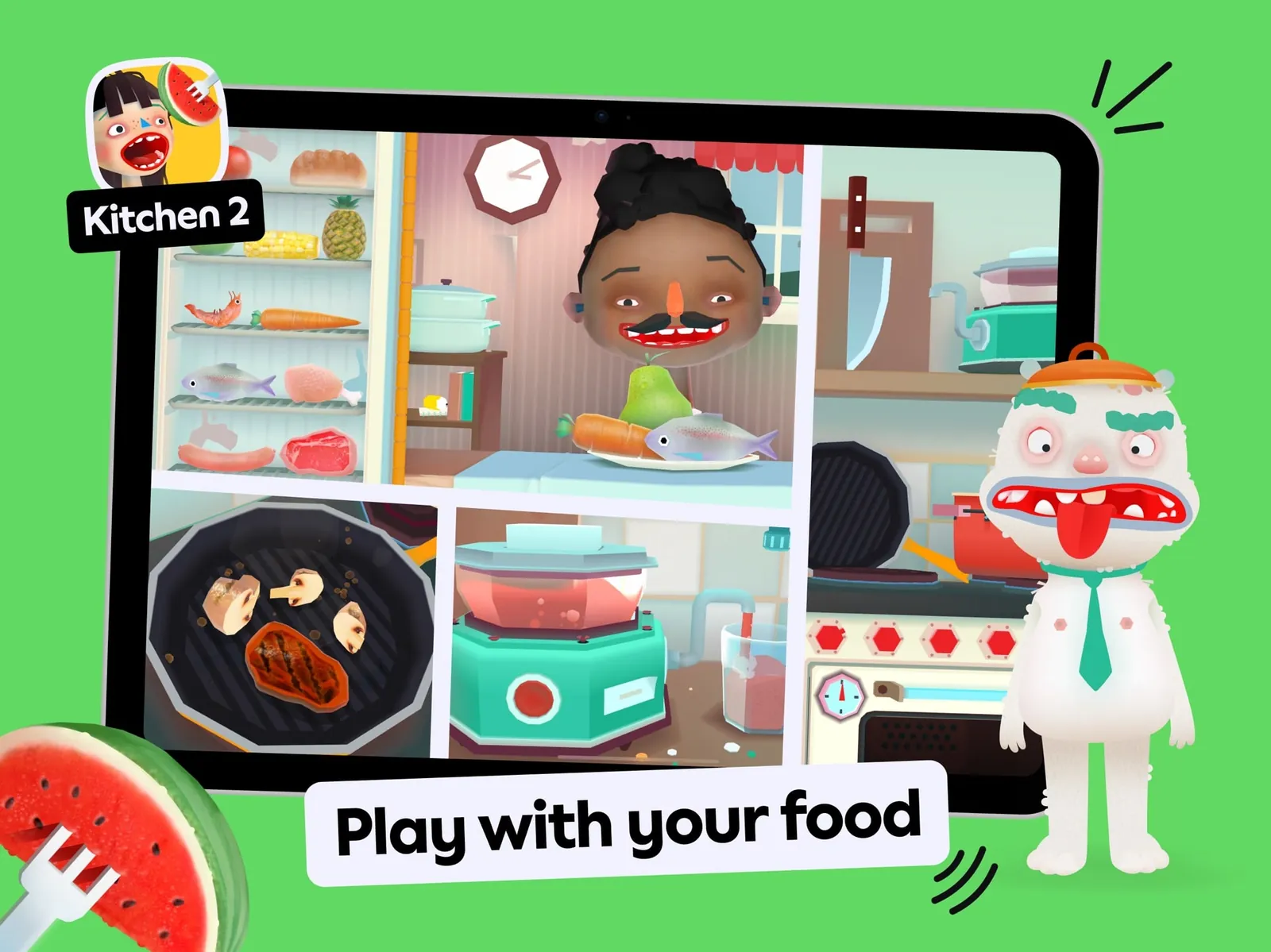
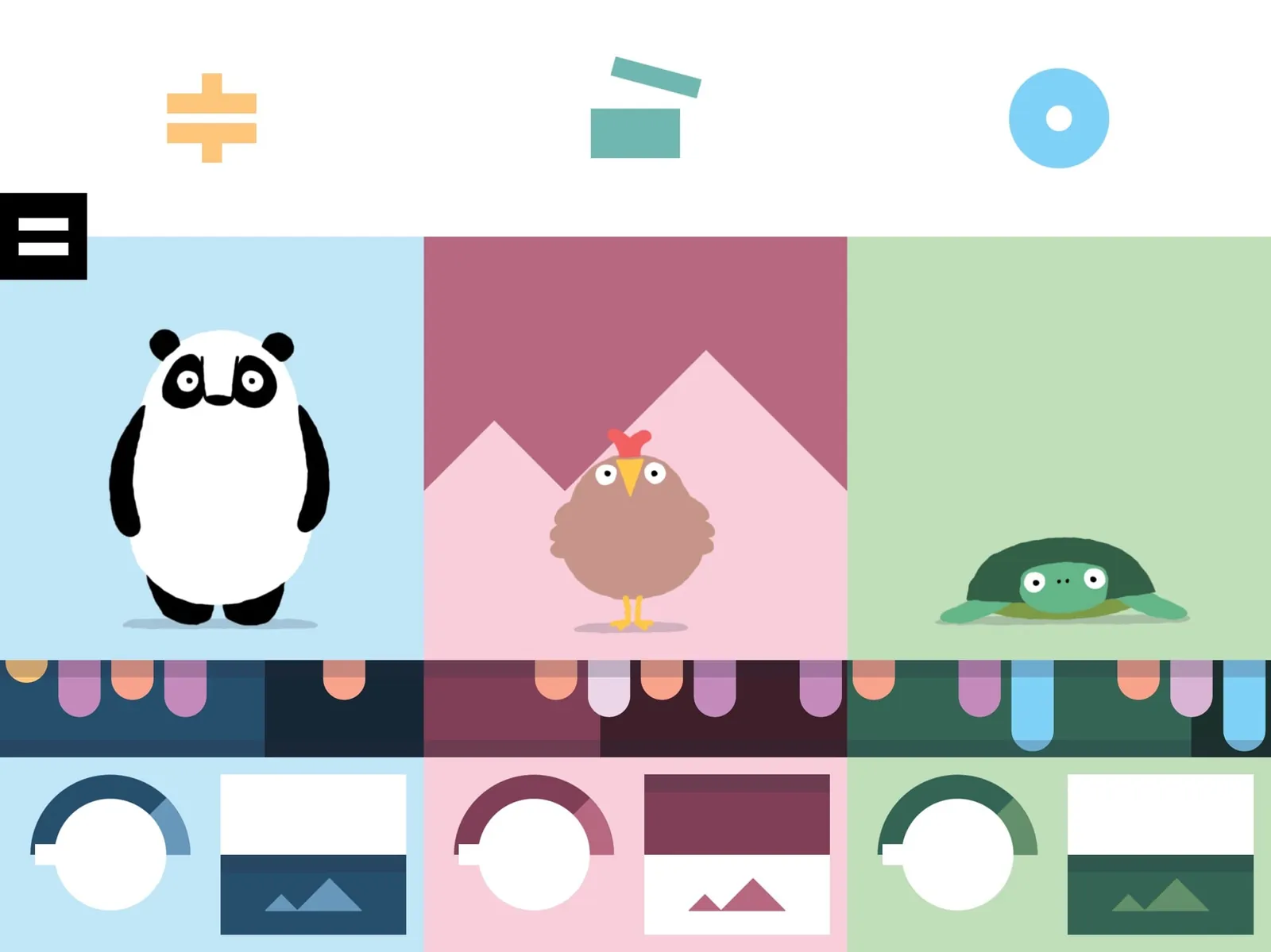
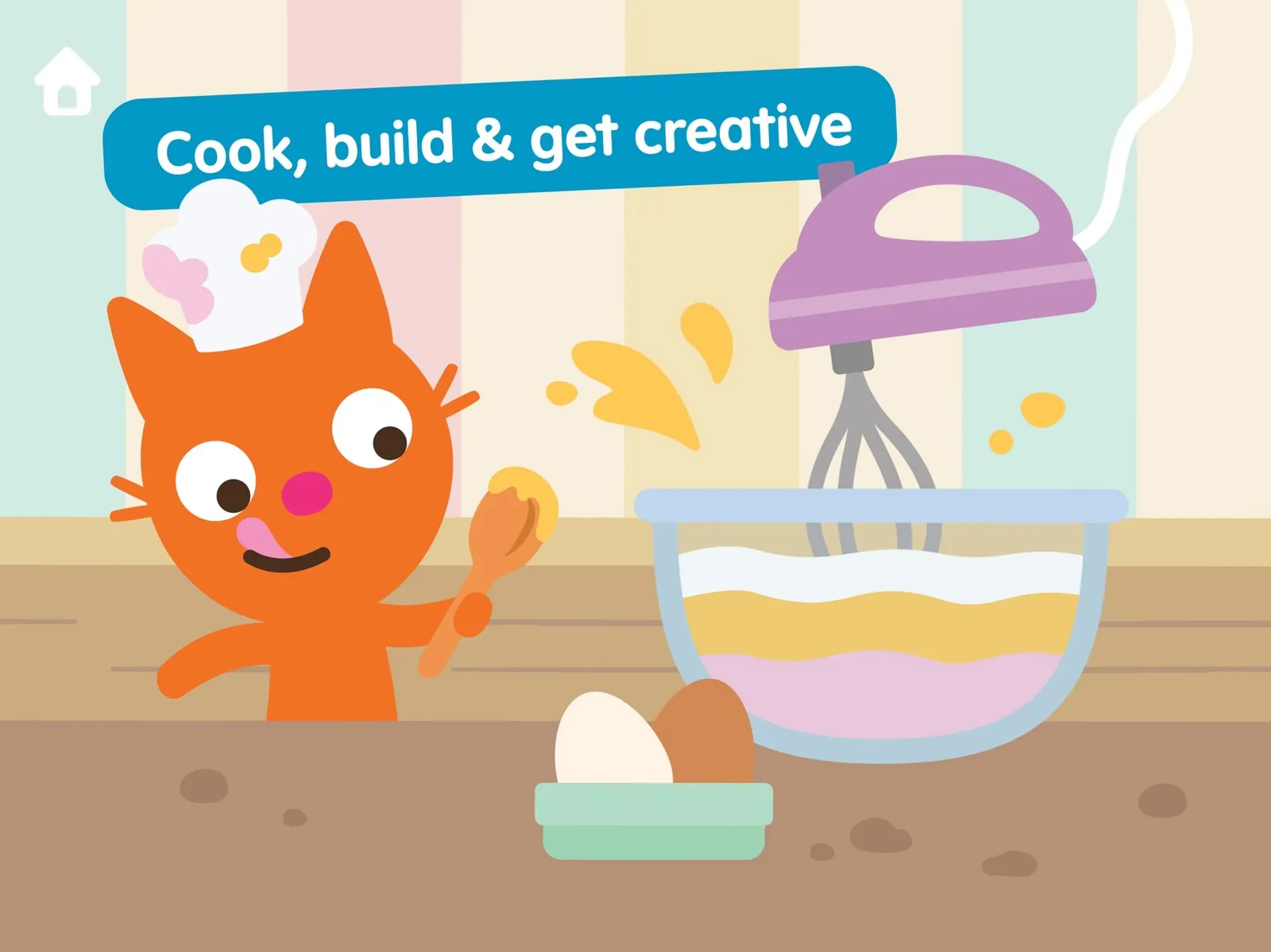
Children pick a toy - a house with families and pets, a marble machine, a town, a space scene, a drawing board, a music sequencer - and poke, drag and combine whatever is on screen; there are no instructions, goals, timers or rewards, and nothing can be done wrong.
Why it may be useful
This is an open-ended toy box for a young child: quiet cause-and-effect play with no goals or rewards. It builds small-motor control and sustained attention in the moment, but carries little that transfers beyond the screen once the trial period ends.
Keep in mind
Access sits behind a subscription after a seven-day trial, and because there are no goals, some children lose interest within minutes.
Written 2026-09-15 · editorial assessment, not a measured effect · how we rate →
What the game is
Pok Pok is a collection of digital toys for very young children, made by Pok Pok Inc. and launched in May 2021 as Pok Pok Playroom. It won an Apple Design Award that year. The app opens on a shelf of toys rather than a menu of lessons: a house with families and pets, a town, a marble machine, a drawing board, a music sequencer, a cooking toy, and more added over time.
Everything is deliberately quiet. Colors are muted, animations are slow, sounds are soft and hand-recorded, and there is no narration, no score, no timer and no failure. The developer's own summary is that there is no language and no winning or losing. Nothing on screen tells a child what to do, so a session ends when the child is finished rather than when a level does. It carries no advertising. The App Store lists it at 4.7 across roughly twenty-four thousand ratings.
What you actually do
A child taps a toy and starts poking. In the house they open doors, put a character in the bath, turn on a light, feed the cat, move a family upstairs. In the marble machine they drop a ball, watch where the tracks send it, then move a track and try again. In the sequencer they place notes on a grid and hear the pattern loop. The whole app runs on one discovery: touch something, watch what happens, do it again on purpose. There is no difficulty curve, because there is no difficulty. What changes over months is the child's intention.
What it exercises
Tests what a tap does, then repeats it deliberately to confirm the result.
Drags, pinches and rotates small objects with growing precision.
Builds a short sequence and watches it play back.
Invents a story with characters and props the app never suggests.
Stays with a single quiet activity without prompts or rewards.
Why we rate it Minimal Worksheet score 34 / 100
FitHow much real knowledge or skill does the play itself make you use?32weight 45%
At 32, fit reflects that exploring is genuinely the whole activity, which suits a very young child, but cause and effect is a general capacity rather than a specific domain: tapping, watching and repeating on purpose is the same underlying skill in the house, the marble machine or the music toy, so nothing here is subject matter a child works within, only a way of interacting with anything.
TransferWill what you practise here work outside the game?28weight 30%
Twenty-eight is deliberately low, and honestly so. There is no evidence that goal-free tapping on glass carries into anything specific, and none is claimed here. Small-motor control and the habit of sitting with one quiet activity are the plausible carriers, and even those depend heavily on whether an adult narrates and responds during play rather than on the app alone.
PracticeDoes the game make you use that skill again and again, as it gets harder?45weight 25%
At 45, practice captures children returning to the same three or four toys for months, each visit repeating the same act of poking and watching, which is genuine repetition for a toddler. It stays out of a higher band because the app never raises a bar or adds a new demand: the toys do not get harder, so many children eventually exhaust their interest and move on.
What the evidence says
Editorial onlyNobody outside our desk has checked this. It is our reading of how the game plays.
The record is Editorial only and rests on the official site, the press kit, the developer's blog and the App Store listing, which confirm the toys, the launch date, the 2021 Apple Design Award and the subscription terms. That award is for design, not for learning. One peer-reviewed source is cited, Hirsh-Pasek and colleagues in Psychological Science in the Public Interest, which argues that apps serve children best when play is active, socially interactive and meaningful. That paper is about app design in general, not about Pok Pok specifically, and no study has measured anything about this app.
Editorial assessment - not a measured scientific effect.
Fit
32/100
Transfer
28/100
Practice
45/100
Why it makes the cut
It is a toy box first: children return to the marble machine or the house because tinkering is fun in itself, and the app would lose nothing if no parent ever cared about a developmental benefit.
Editorial only
This is an editorial reading based on the official site, press kit and App Store listing, which confirm the toys, the 2021 Apple Design Award for design and the subscription terms; one general peer-reviewed paper on app design is cited, but no study has measured this app itself.
Prices are US store listings in USD, last refreshed 2026-09-25; regional prices and sales differ.
Pok Pok launched in May 2021 as Pok Pok Playroom and is now listed on the stores simply as Pok Pok; the same app won the 2021 Apple Design Award in the Delight and Fun category.
The developer states the app has no ads and no in-app purchases beyond the subscription itself, and that new toys are added regularly.
Age guidance
Ages 2-7
Topics
Creativity
Play styles
Single-player, Sandbox, Creative
Tags
No reading · Ad-free · Subscription · Open-ended toys · Short sessions
Cause-and-effect exploration suits a very young player well, but the toys never raise a goal or a challenge, so many children eventually move on without anything specific to show for the time.