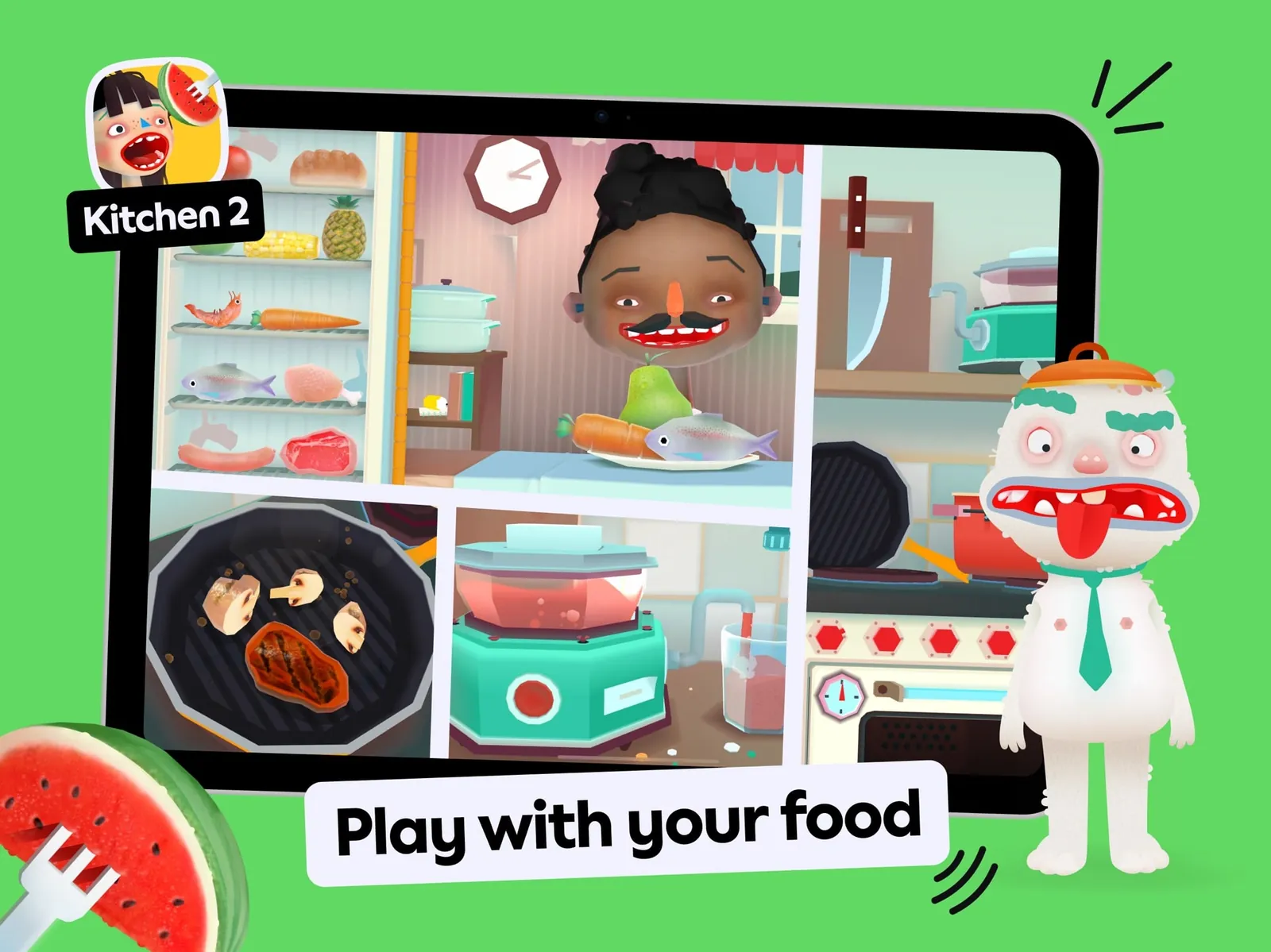
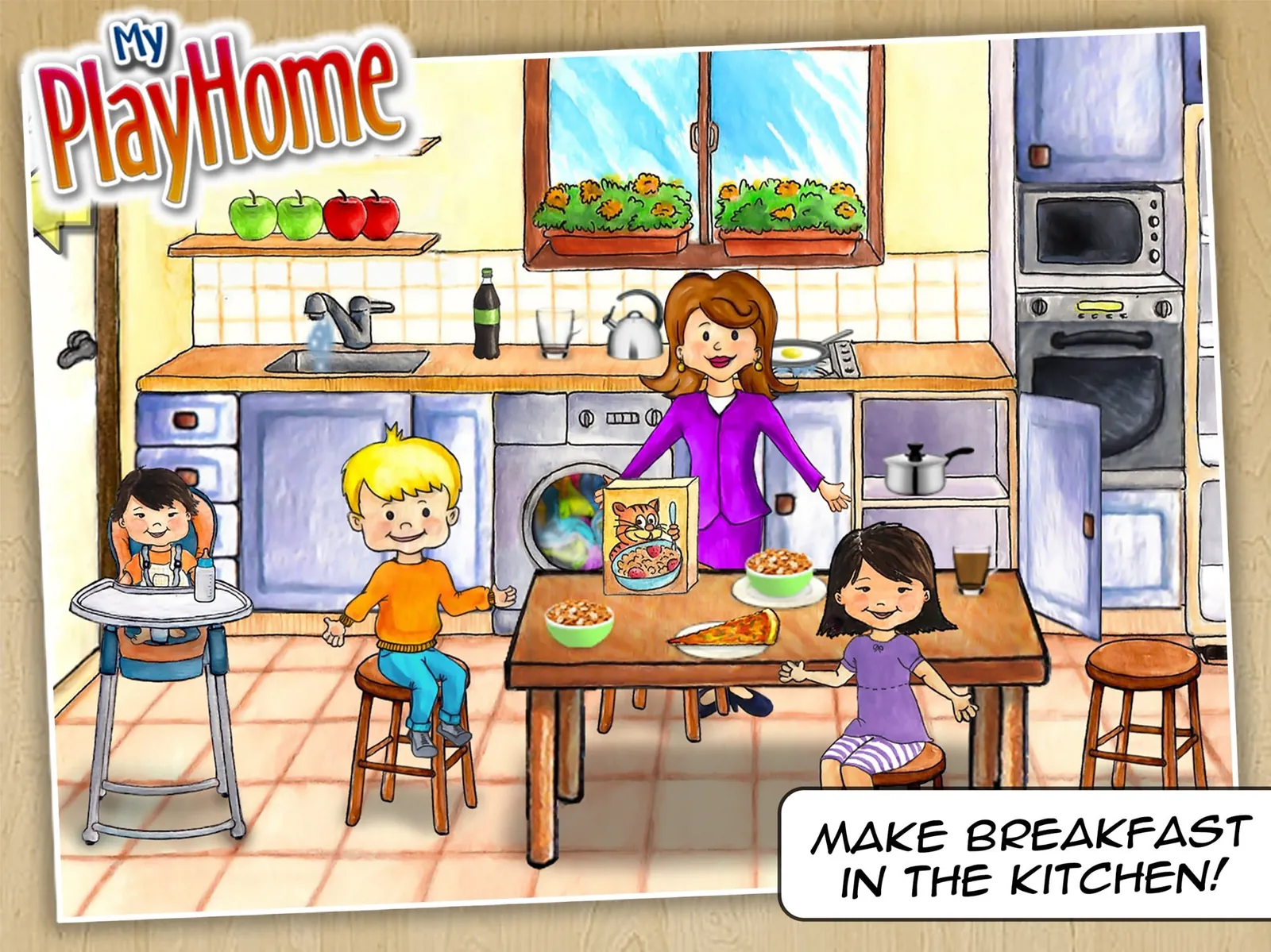
Children choose a Sago Mini character, then wander through small scenes - running a bakery, sailing a boat, dressing up, caring for babies, driving a fire truck - tapping objects to see what they do and inventing little stories with no scoring or fail states.
Why it may be useful
The scenes rehearse everyday routines and roles, letting a toddler practice pretend play, name objects and sequences like mix, bake, serve, and get deliberate at tapping and dragging. Sessions are short and forgiving enough for a two-year-old to lead the play.
Keep in mind
Sago Mini World only fully works through the Piknik subscription ($11.99 a month after a trial), and the hub keeps adding games, which can turn play into browsing rather than settling into one scene.
Written 2026-09-15 · editorial assessment, not a measured effect · how we rate →
What the game is
Sago Mini World is a hub app for toddlers on phones and tablets. Open it and you get a map of small worlds: a bakery, a boat, a fire truck, a dress-up room, a nursery with babies to look after. Tap one and you are inside a scene with a handful of characters and a lot of things to poke.
Nothing scores, nothing fails and nothing is timed. Objects react when tapped, characters respond, and small jokes are hidden in the corners. The art is thick outlines and flat color, and there is no reading anywhere, since instructions are pictures and animation. The listing dates from 2014 and has grown from a launcher into the current collection.
The app itself is a free download, but it runs on Piknik, a subscription from the same company. Piknik costs $11.99 a month after a thirty-day free trial and covers ten apps, of which Sago Mini World is one. Piknik describes the bundle as ad-free.
What you actually do
A child picks a character and a scene, then plays house. In the bakery you drag ingredients into a bowl, stir, put the tray in the oven and hand the result to whoever is waiting. On the boat you steer and pull things out of the water. In the nursery you feed, bathe and put a baby to bed. The order is loose and there is no right answer, so the play is whatever story the child narrates over it. Getting better is not really the frame here. What changes over months is that the child starts running longer sequences on their own instead of tapping at random.
What it exercises
Runs a familiar routine in order: mix, bake, serve
Names everyday objects and actions while an adult plays alongside
Practices deliberate tapping and dragging on a touch screen
Invents a short pretend story with no rules to follow
Why we rate it Minimal Worksheet score 31 / 100
FitHow much real knowledge or skill does the play itself make you use?28weight 45%
Fit scores 28. The pretend play is the whole app rather than a reward wrapped around drills, and the scenes are built from routines a two-year-old already half knows, which is a real fit for that age. The number stays under 30 because the scenes mostly reward tapping to see a reaction, and a child can get plenty of that without pretending at all.
TransferWill what you practise here work outside the game?25weight 30%
Transfer scores 25, the weakest dimension on purpose. Rehearsing a routine on a screen is not the same as rehearsing it with real cups and real dough, and there is no reason to think a tablet bakery builds anything a toy kitchen would not build better. What it may add is vocabulary, and only if an adult is talking alongside.
PracticeDoes the game make you use that skill again and again, as it gets harder?45weight 25%
Practice scores 45. Toddlers replay the same scene many times, and at this age repetition is the point rather than a flaw, which lifts the number above the bottom band. What holds it down is that the hub keeps adding games, so a session can turn into browsing for novelty instead of settling into one bakery long enough for the pretending to develop.
What the evidence says
Editorial onlyNobody outside our desk has checked this. It is our reading of how the game plays.
The evidence level is Editorial only. Three sources sit behind this: Sago Mini's own site, the Piknik subscription page and the App Store listing. They confirm the free download, the $11.99 monthly price after a thirty-day trial, the ten bundled apps, Piknik's ad-free description, the two-to-ten target range, and the App Store rating of 4.3 from 66,220 ratings. The developer's award list and its own skill claims were deliberately not treated as evidence. No study of this app exists, and the general research on pretend play concerns children playing with objects and people rather than tablets, so we do not lean on it.
Editorial assessment - not a measured scientific effect.
Fit
28/100
Transfer
25/100
Practice
45/100
Why it makes the cut
The scenes are toys with jokes and surprises in them; children play them for the silly reactions and the pretend stories, not for any lesson.
Editorial only
This is our editorial reading of Sago Mini's own site, the Piknik subscription page and the App Store listing. The developer's award list and skill claims were not treated as evidence.
Prices are US store listings in USD, last refreshed 2026-09-25; regional prices and sales differ.
Piknik's site lists Sago Mini World among ten bundled apps at $11.99 a month after a 30-day trial and describes the bundle as ad-free.
Sago Mini's older stand-alone apps (Sago Mini Friends and others) have mostly been folded into this hub.
Age guidance
Ages 2-5
Topics
Creativity
Play styles
Single-player, Sandbox, Creative
Tags
No reading · Ad-free · Subscription · Pretend play · Toddler-friendly
The scenes reward tapping to see a reaction more than they reward pretending itself, and rehearsing a routine on a screen is not the same as rehearsing it with real cups and dough.