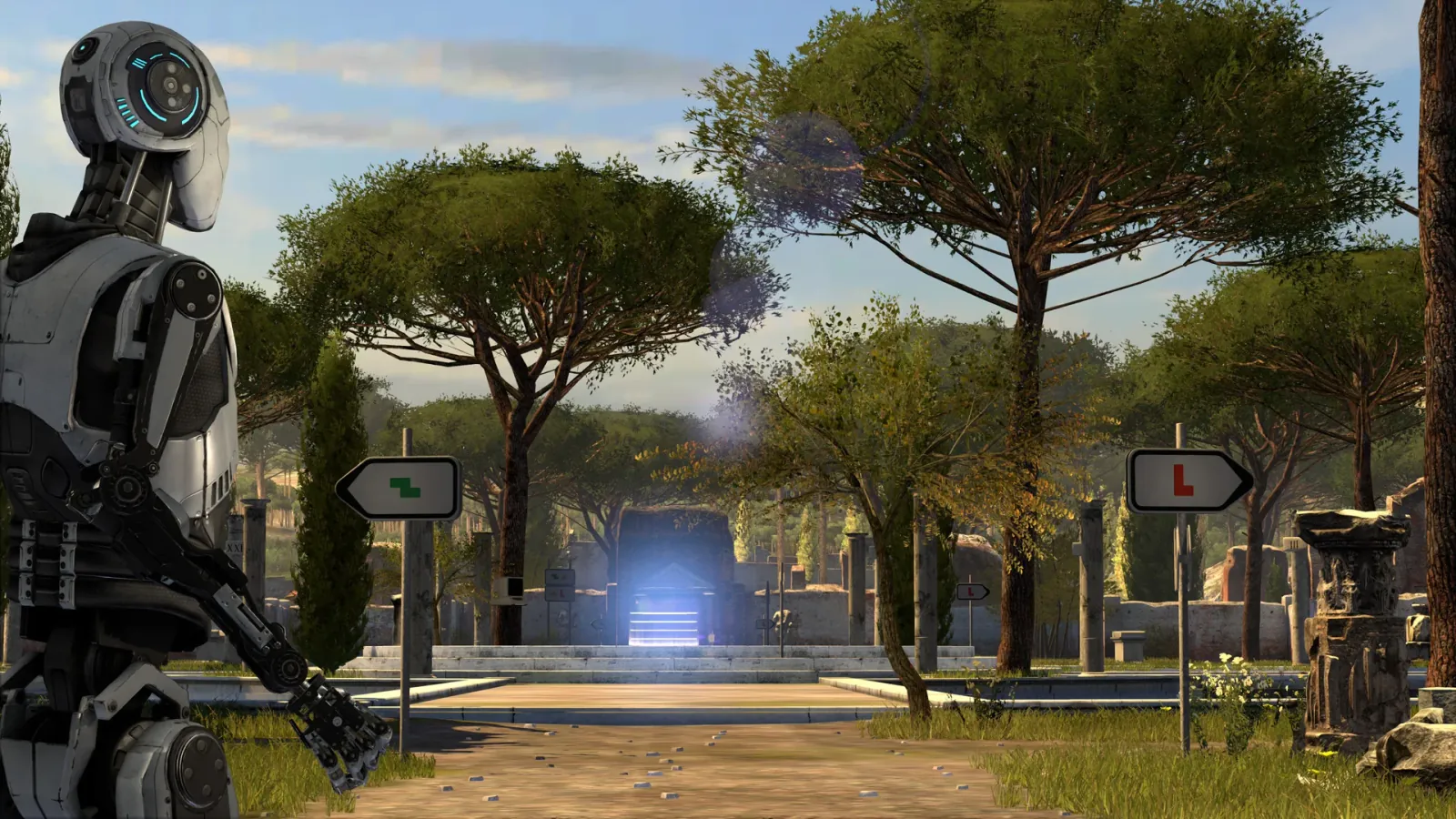
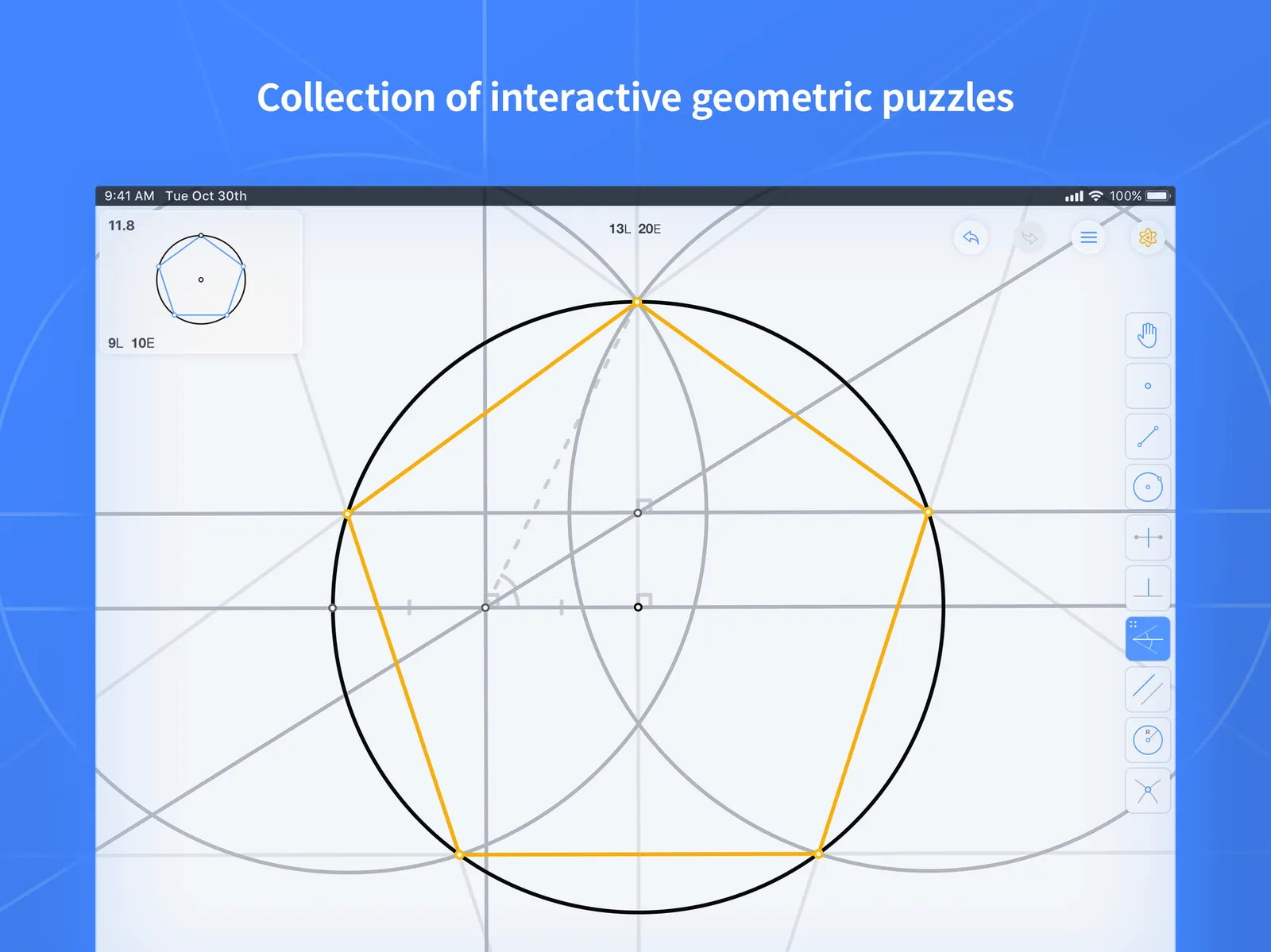
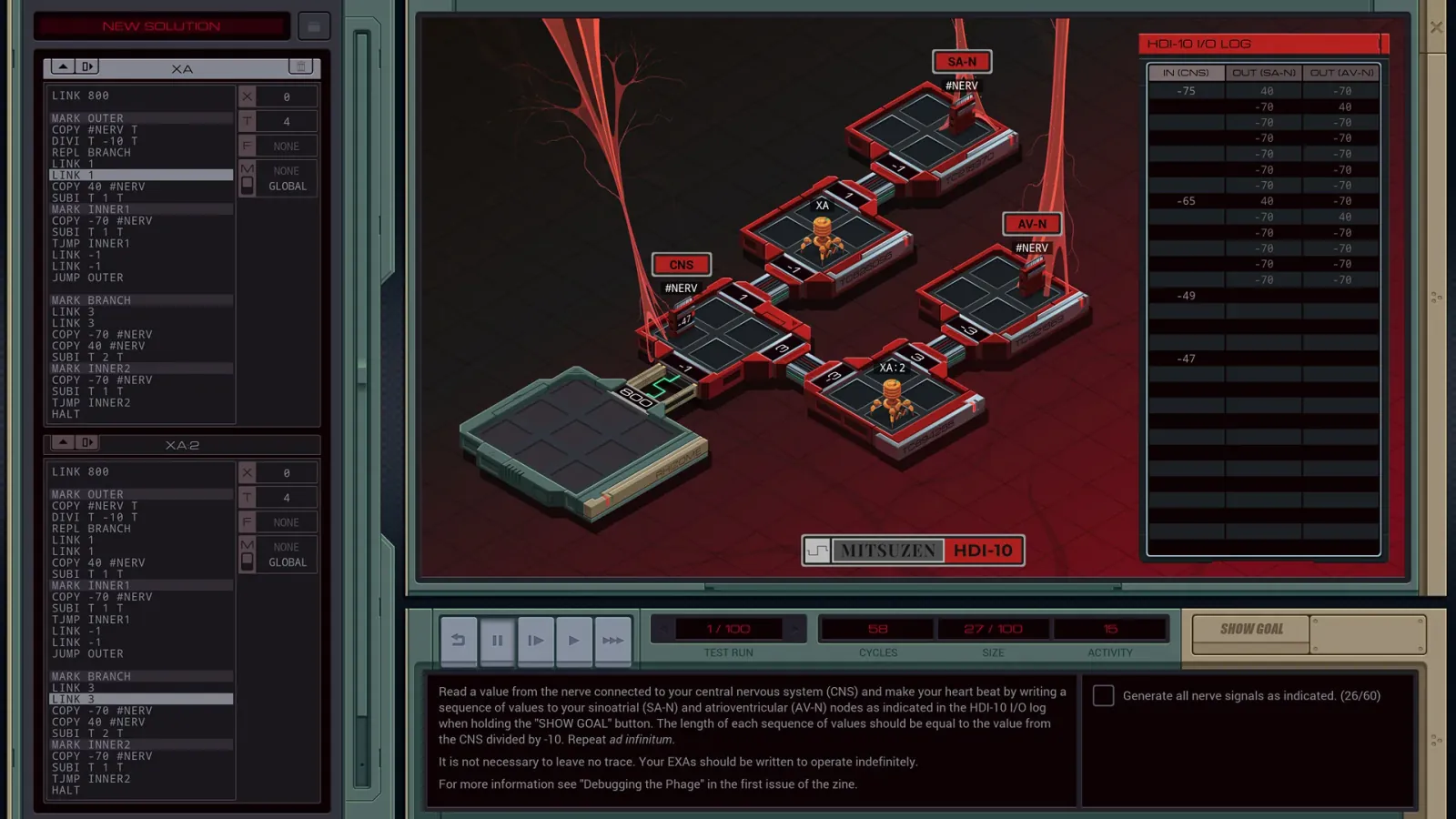
Players flip world states, trace cause-and-effect across rooms, and solve increasingly layered spatial logic problems.
Why it may be useful
The Sojourn asks you to simulate a room in your head before moving, tracing how one state change alters every surface in it. That is a real, narrow reasoning habit; the rules themselves are invented and abstract, so little else about the game carries elsewhere.
Keep in mind
The reasoning it builds is real but narrow, and the rules are invented and abstract, so almost nothing about them carries beyond this specific game.
Written 2026-09-15 · editorial assessment, not a measured effect · how we rate →
What the game is
The Sojourn is a first-person puzzle game by the small studio Shifting Tides, published by Iceberg Interactive. The Steam version dates from September 2020. You walk, unarmed and unhurried, through a pastoral world of marble terraces, olive trees and standing statues, and every locked gate in it is a puzzle room.
The whole game turns on one idea. The world has two states, a bright one and a shadowed one, and stepping into a light source flips you between them. What is solid in one state is gone in the other: floors become gaps, walls become doorways, blocked routes open. Statues placed around a room can be swapped with your own position, so you can send a statue somewhere you cannot walk and then trade places with it.
Content is organized into four chapters, each with its own look and its own added rule, and each holding dozens of self-contained rooms plus harder optional ones off the path. A quiet story about light and loss runs underneath, but it stays in the background. A room takes anywhere from thirty seconds to twenty minutes.
What you actually do
You enter a room, look at the gate you need to reach, and read the space twice: once as it is, once as it will be after the flip. Then you plan a sequence. Move a statue onto a plinth, cross while the floor exists, flip states, swap with the statue you left behind, reach the ledge that only exists in shadow. The order matters, and most rooms have exactly one order that works.
Difficulty rises by combination rather than speed. The first chapter teaches the flip; later ones constrain when you may flip, then stack the constraints. Getting better shows up as fewer wasted moves: instead of walking in and trying things, you stand still, trace the route in your head, and only then act.
What it exercises
Predicts how one state change will alter every surface in a room
Holds a four or five step plan in mind before the first move
Reads a space for what is solid, walkable and blocked in each state
Tests an idea, watches it fail, and edits the plan instead of restarting
Why we rate it Minimal Worksheet score 34 / 100
FitHow much real knowledge or skill does the play itself make you use?35weight 45%
Thirty-five. Forecasting a room before acting is the whole game, and nothing else competes for attention, but the skill is one narrow move, predicting a single state flip, applied over and over rather than a wider subject a player works within. It is a clean mechanic with very little underneath it.
TransferWill what you practise here work outside the game?22weight 30%
Twenty-two, near the bottom of the scale. Running a change forward mentally before committing has the same shape as planning in geometry or reading code, but the rules here are entirely invented and abstract, so nothing concrete carries with a player once the game ends, only the vague habit of pausing to think first.
PracticeDoes the game make you use that skill again and again, as it gets harder?45weight 25%
Forty-five. Four chapters do return to the same core move with a new constraint layered on each time, which is real repetition, but the whole game is only a handful of hours, closer to one extended sitting than a system that keeps handing back harder problems over the long run.
What the evidence says
Editorial onlyNobody outside our desk has checked this. It is our reading of how the game plays.
The level is Editorial only, meaning an editorial reading of how the game is built rather than a measured result. The Steam page and the developer's own site confirm the concrete facts used above: Shifting Tides as developer, Iceberg Interactive as publisher, a September 2020 Steam release, four chapters, and a light-and-shadow swap as the central mechanic. Neither says anything about what playing does to a player. We know of no study of this game, and none of this exact mechanic, so none is cited here.
Editorial assessment - not a measured scientific effect.
Fit
35/100
Transfer
22/100
Practice
45/100
Why it makes the cut
PASS - Its first-person puzzle structure stands as a real entertainment draw.
Editorial only
This is our reading of how the game is built, based on the Steam page and the developer's own site; neither says anything about what playing does to a player, and no study of this mechanic exists.
Prices are US store listings in USD, last refreshed 2026-09-25; regional prices and sales differ.
No subscription requirement was found on the verified PC route.
Steam currently verifies interface support for the listed locales. Full audio is captured only where Steam explicitly marks it; subtitle coverage remains unknown unless a platform source states it separately.
Age guidance
Ages 12+ · ESRB E
Topics
Logic & strategy
Play styles
Single-player, Puzzle
Tags
First-person puzzles · State changes · Spatial forecasting
Predicting how a room changes before acting is genuine reasoning, but the rules are invented and abstract, so what a player keeps is a habit of forecasting rather than any transferable knowledge.