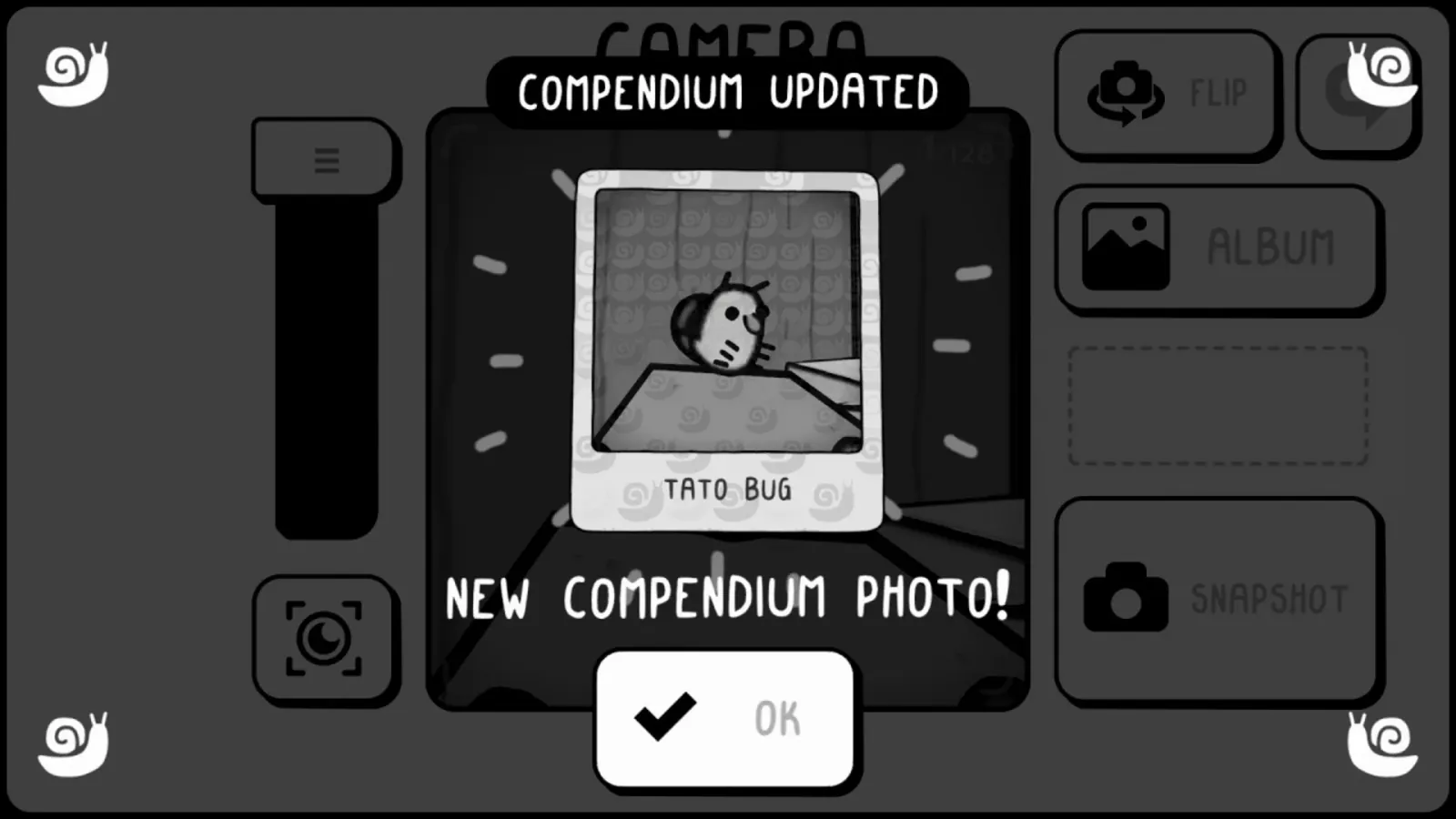
Players explore constrained spaces, frame shots to meet specific prompts, and build a visual record of a world under pressure.
Why it may be useful
Bounties and bonus objectives judge what is inside your frame and how it is arranged, so you make real compositional decisions constantly. There is no exposure or light management to learn, and a functional photograph passes the checklist as easily as a considered one.
Keep in mind
The setting is invented, and the game deliberately explains nothing, so a player takes away a mood and a set of images rather than any facts.
Written 2026-09-15 · editorial assessment, not a measured effect · how we rate →
What the game is
Umurangi Generation is a first-person photography game by Origame Digital, published with Playism and released in May 2020. You are a courier in a near-future New Zealand city, and the job is to deliver parcels and take photographs. The setting is Maori and Pacific in its language, art and music, and the city is in the middle of a slow catastrophe that nobody in the game explains to you.
Each level drops you into a small area: a rooftop, a train station, a construction site, a beach. You get a bounty list, a set of specific shots to take, such as a particular sign, three of your friends, a piece of equipment. You have a limited time, and a camera with lenses and attachments that you unlock by finding hidden film canisters and completing extras.
The photographs themselves are real photographs in the sense that framing is under your control: you choose the lens, the angle, the depth of field, and the game includes color grading tools for adjusting a shot afterwards. What is not under your control is the world in the background, which gets progressively worse from level to level while the bounty list stays cheerfully mundane.
What you actually do
You read the bounty list, then walk the level looking for the named subjects. Finding them is often the puzzle: the sign is visible only from a ledge you have to climb to, and getting three friends into one frame means finding an angle where all three are lined up. Then you decide how to shoot it, because the level extras reward specific compositions rather than just presence.
The tension in the design is what sits behind the subject you were told to photograph. A shot of a friend also contains, if you frame it that way, the military vehicles in the street. Getting better means shooting less and looking more: walking the whole area first, then choosing angles that say something rather than ticking items off.
What it exercises
Frames a photograph deliberately, choosing what to include and exclude
Explores a space thoroughly to find a specific subject
Uses a lens and depth of field to change what a picture emphasizes
Reads a scene for context the instructions did not mention
Why we rate it Minimal Worksheet score 30 / 100
FitHow much real knowledge or skill does the play itself make you use?30weight 45%
At 30 the framing is a genuine mechanic: bounties and bonus objectives judge what is in the shot and how it is arranged, which most games with a camera do not ask for. It stays low because the scoring is still a checklist at heart, and a functional photograph passes as easily as a considered one, so composition is optional rather than required.
TransferWill what you practise here work outside the game?25weight 30%
At 25 choosing a viewpoint, deciding what stays out of frame and noticing what a picture implies are the actual habits of photography, and they carry to a phone camera immediately. It goes no higher because there is no exposure, no light management and no real equipment to learn, so the technical half of the craft does not cross over at all.
PracticeDoes the game make you use that skill again and again, as it gets harder?35weight 25%
At 35 every level repeats the same find-and-frame task, and bonus objectives push replaying a level with different equipment, which is where the composition practice deepens a little. It stays low because the game is not long, and once the extras are finished there is very little reason to return to it.
What the evidence says
Editorial onlyNobody outside our desk has checked this. It is our reading of how the game plays.
The evidence here is Editorial only, our reading of the mechanics. The Steam listing on file confirms the developer and publisher, the May 2020 release, current PC availability, the photo-bounty structure with unlockable lenses and a color grading tool, and the scale of its reception. It measures nothing about players. No study of this game is cited because none is known, and the claim being made is limited to what the mechanic requires: repeated, judged decisions about what belongs in a frame.
Editorial assessment - not a measured scientific effect.
Fit
30/100
Transfer
25/100
Practice
35/100
Why it makes the cut
PASS - Its photography missions are compelling as play even before the social reading enters the picture.
Editorial only
This is our own reading of the mechanics, based on the current Steam listing; it confirms the developer, release date and reception but measures nothing about what a player actually notices or learns.
Prices are US store listings in USD, last refreshed 2026-09-25; regional prices and sales differ.
No subscription requirement was found on the verified PC route.
Steam currently verifies interface support for the listed locales. Full audio is captured only where Steam explicitly marks it; subtitle coverage remains unknown unless a platform source states it separately.
Framing decisions are real and constantly judged, but the game is short and the technical side of photography, exposure, light and equipment, is entirely absent.