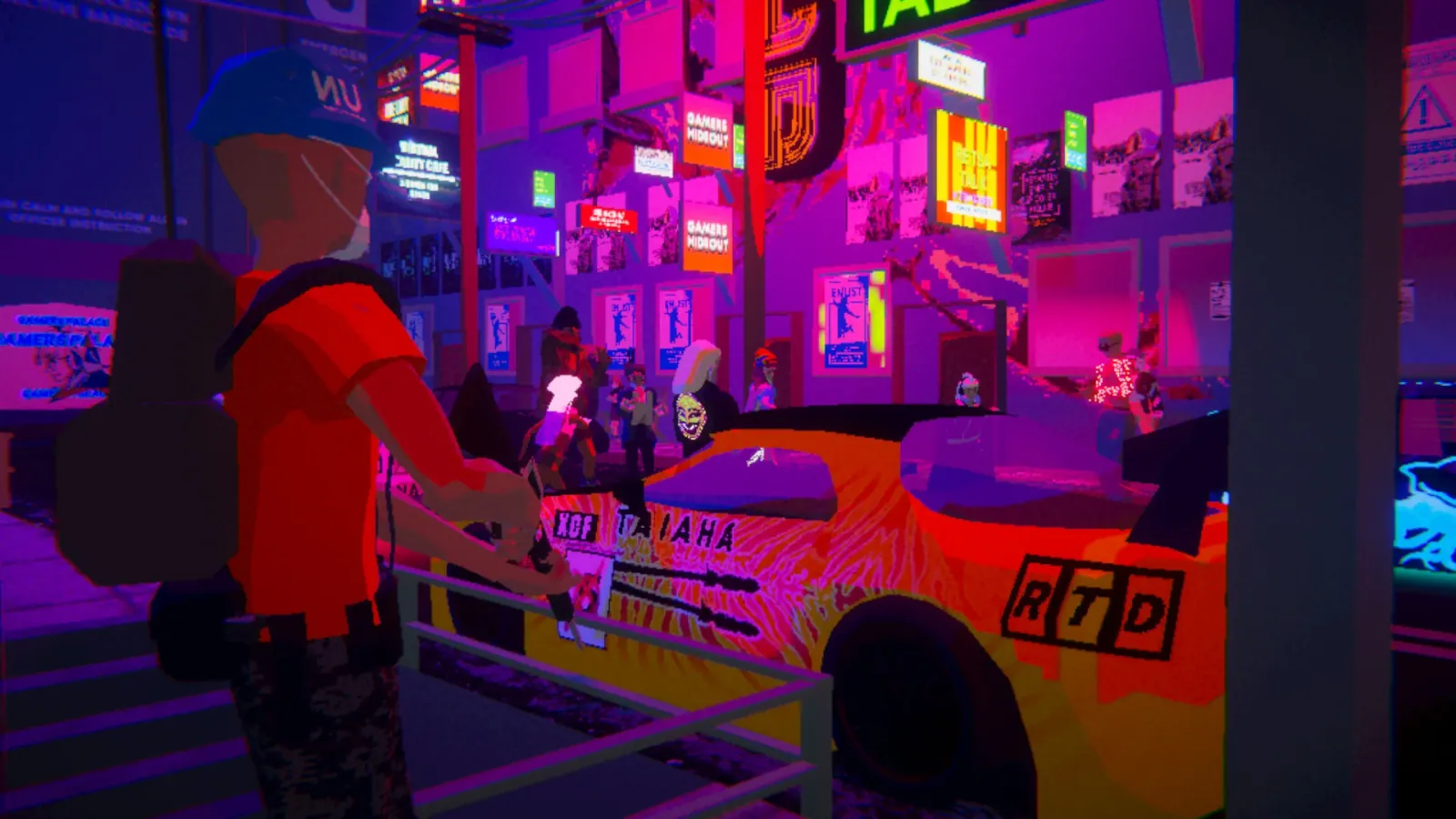
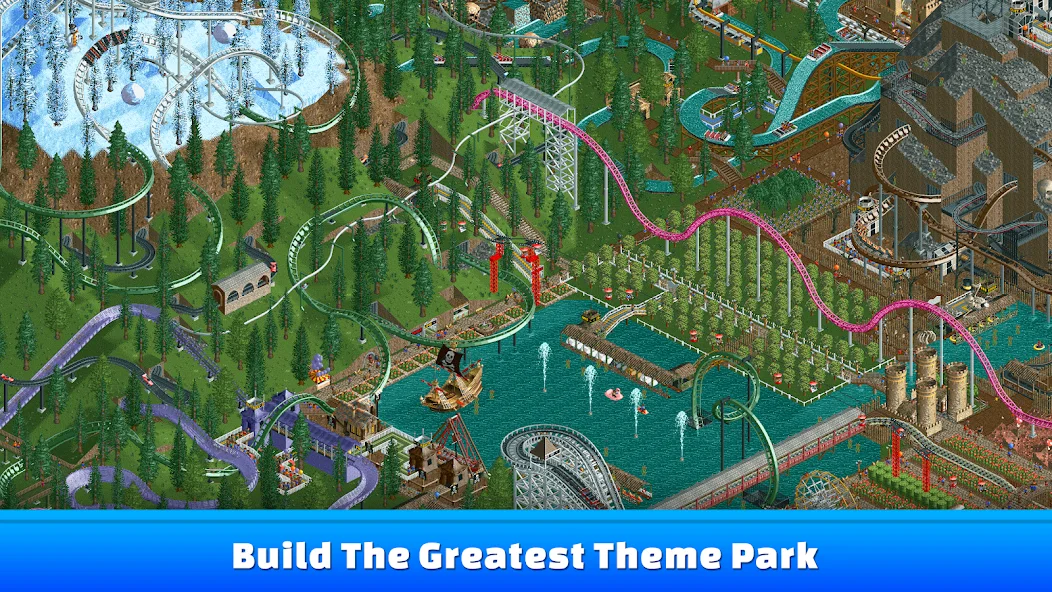
Players zone, place landmarks, trigger events, survive disasters, and then drop into the city as an avatar to explore, complete quests, and expand long-term projects.
Why it may be useful
This is mostly a light city-decorating toy: you notice that services must keep pace with growth, which is a mild systems habit, but the model is too simplified for anything here to carry into real planning or civic knowledge.
Keep in mind
Treat it as an approachable city-systems sandbox, not as a realistic urban-planning simulator.
Written 2026-09-15 · editorial assessment, not a measured effect · how we rate →
What the game is
Pocket City 2 is a city-building game for phones and tablets from Codebrew Games, released in March 2023, with a Windows and macOS version on Steam. It is a paid app, and the store listing states plainly that there are no microtransactions and no waiting timers, so everything opens through play. The view is a bright isometric grid you pan and pinch with your fingers.
You start with empty land and a small budget. Zones for homes, shops and industry go down first, then roads, then the services that keep them working. Events arrive on their own, some cheerful like a block party and some destructive like a tornado. What separates this from most city builders is the avatar: at any point you can drop a character into the city and walk the streets you drew, taking quests and playing small minigames such as street racing and flying. Google Play users rate it 4.4 out of 5.
What you actually do
A turn of attention looks like this: check what the citizens are complaining about, find the district causing it, and spend money on the fix. Traffic backs up, so you widen a road or move an industrial zone away from the houses. Crime rises in one corner, so you place a police station and watch the number fall over the next minute. Money comes from taxes that depend on how many citizens you have and how content they are, so every service you add has to pay for itself in growth. Getting better means anticipating the complaint before it appears.
What it exercises
Reads citizen complaints to locate which part of the city is failing.
Sequences spending so that services arrive just before demand does.
Notices how zoning one thing next to another changes both.
Runs a budget where every building carries an ongoing cost.
Switches between a map view and a street view of the same place.
Why we rate it Minimal Worksheet score 34 / 100
FitHow much real knowledge or skill does the play itself make you use?30weight 45%
At 30, fit is thin: growing the city does require noticing which service is missing and paying for it, which is a real systems loop, but it sits right at the edge where that counts as subject matter at all. The minigames and quests, street racing, flying, sit beside the simulation rather than inside it, which is a large part of why the number stays this low.
TransferWill what you practise here work outside the game?22weight 30%
Twenty-two means almost nothing here travels. Tracing a complaint back to its cause is a mild reasoning habit, and the sense that changing one thing changes another is genuine, but no real planning, zoning law or municipal finance survives contact with reality. A player will not understand cities better afterward, only argue about them slightly more carefully.
PracticeDoes the game make you use that skill again and again, as it gets harder?55weight 25%
At 55, practice is middling: the same loop repeats every few minutes for as long as the city grows, and a new city restarts it on different terrain, which suits short mobile sessions well. What holds it down is that a large, stable city stops generating problems, so play drifts into decoration once growth levels off, and the underlying demand never really escalates.
What the evidence says
Editorial onlyNobody outside our desk has checked this. It is our reading of how the game plays.
The record is Editorial only: our judgment about the mechanics, with no research behind it. The sources are the App Store and Google Play listings plus the Steam page, which confirm the developer, release date, price, platforms, the absence of ads and microtransactions, and the feature list including avatar mode and real-time collaboration. No study has looked at whether city-builders change how anyone thinks about towns or services, and none was found for this game. What is observable is that the game states a shortage, requires a fix and shows the result, many times per session. That is practice, not instruction.
Editorial assessment - not a measured scientific effect.
Fit
30/100
Transfer
22/100
Practice
55/100
Why it makes the cut
Building and roaming your own city is clearly compelling game-first play even without any meaning or planning claims.
Editorial only
This is an editorial reading based on the App Store, Google Play and Steam listings, which confirm the developer, price and feature list; no independent research on Pocket City 2 or city-builders generally was found.
Prices are US store listings in USD, last refreshed 2026-09-25; regional prices and sales differ.
The current App Store listing describes a premium purchase with no microtransactions or long wait times.
Current verified routes are iOS, Android, and Steam for Windows and macOS.
Keep this record strictly on Pocket City 2, not the first game.
Current iOS and Android availability are directly verified, and Pocket City 2 is currently sold on Steam for Windows and macOS.
Steam directly verifies English, French, German, Spanish (Spain), and Brazilian Portuguese. App Store labels English only despite its update history noting added translations, so mobile language claims stay platform-specific.
Premium purchase on iOS, Android, and Steam. The current App Store product description explicitly says there are no microtransactions or long wait times.
Age guidance
Ages 9+
Topics
History & society, Creativity
Play styles
Single-player, Simulation, Sandbox, Creative
Tags
City building · System interdependence · Mobile sandbox
Noticing which service is missing before growth stalls is a real, repeatable habit, but the minigames and quests pull attention away from the systems, and nothing about the model resembles real municipal planning.