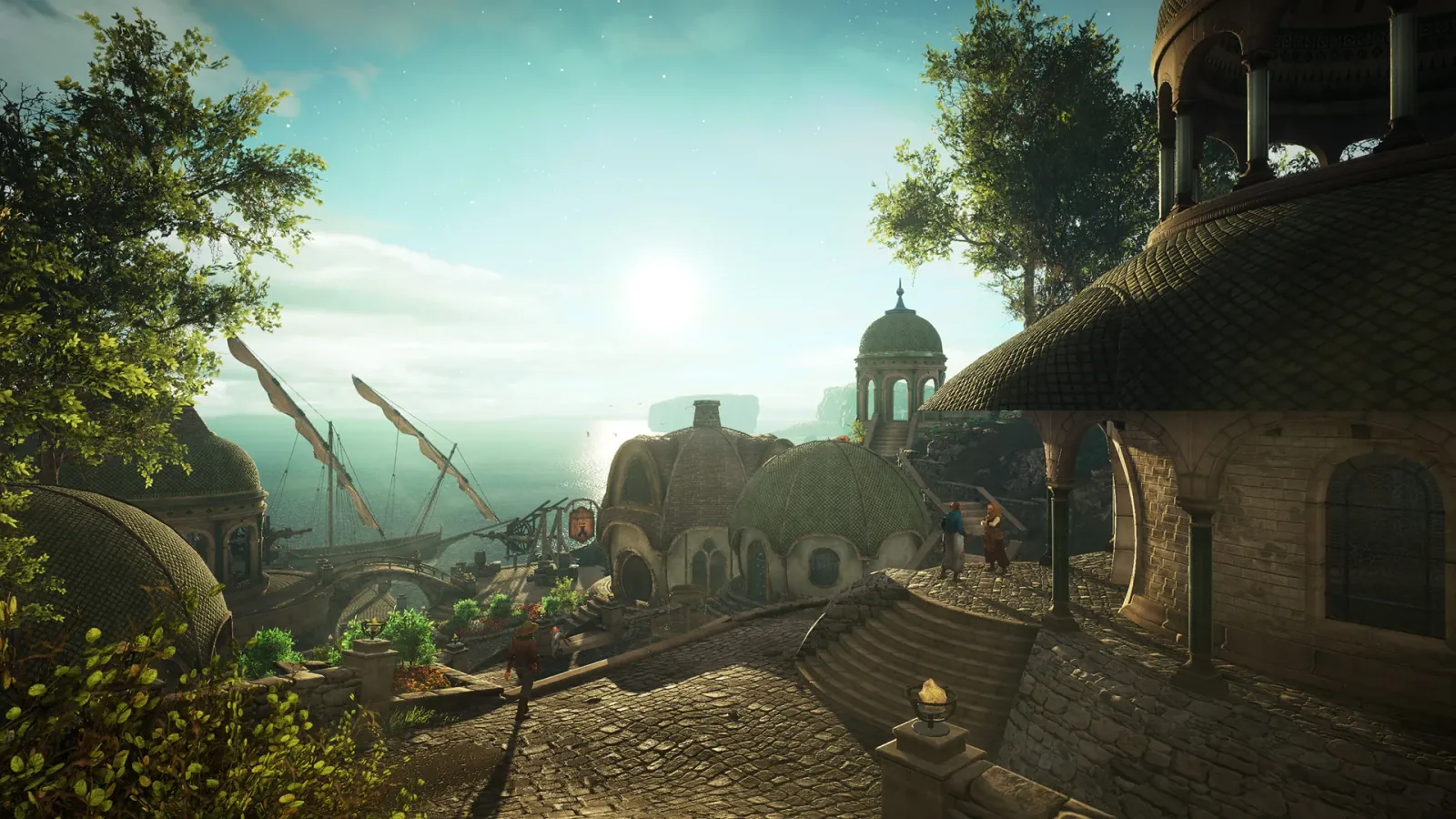
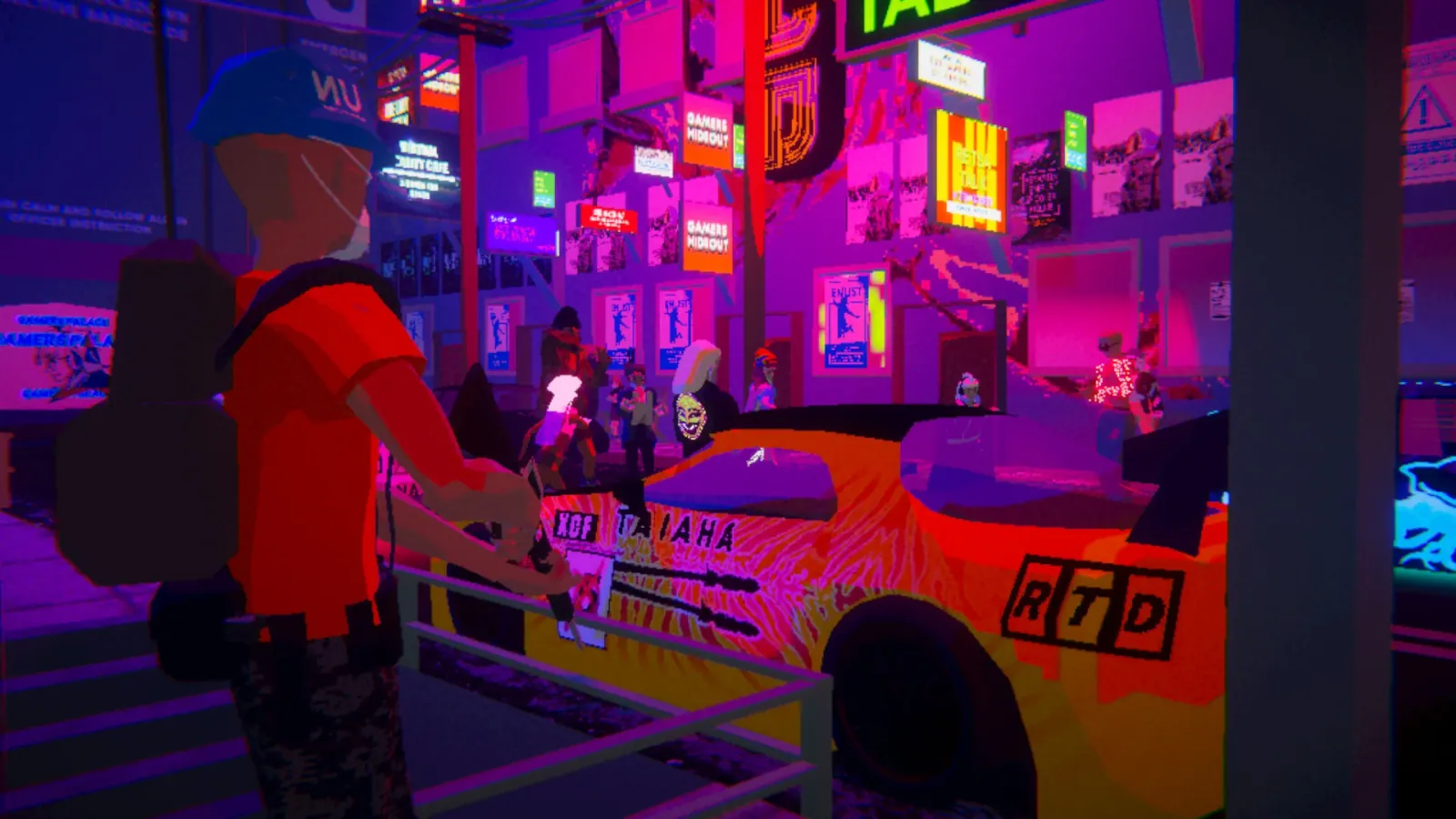
Players explore small areas, take photos, solve requests by noticing visual details, and use the camera to help characters with specific little problems.
Why it may be useful
You explore small scenes with a camera, and solving each request means noticing a specific detail rather than just pointing and shooting. It is a calm, pleasant way to spend a few hours, but it teaches little about photography itself.
Keep in mind
Its camera use is quest logic rather than a serious photography model, so any transfer to real photographic craft or documentary judgment is limited.
Written 2026-09-15 · editorial assessment, not a measured effect · how we rate →
What the game is
TOEM is a small photography adventure by the studio Something We Made, released in September 2021. It is drawn entirely in black and white, in a soft hand-inked style, and viewed from above at a fixed angle so each area looks like a diorama on a table. There is no combat, no danger and no way to lose.
You are a traveler with a camera, heading toward a mountain to see a phenomenon called TOEM. Between you and it are a handful of small regions: a home village, a seaside town, a forest, a snowy peak. Each is a compact area you can walk around in a few minutes.
Everywhere there are people with a request. Somebody has lost a sheep. A birdwatcher needs a picture of a particular bird. A ghost wants proof it exists. Solving a request means finding the thing and photographing it, and each solved request gives you a stamp. Collect enough stamps in a region and the bus will take you onward. Alongside that runs a compendium of creatures to photograph, and hats and camera attachments that unlock small new abilities.
What you actually do
You raise the camera, which zooms into a first-person view, and look. The requests are deliberately vague, so the work is noticing: a shape half hidden behind a rock, a person who is only there at a certain moment, a creature that appears when you make a noise nearby. Photographing the wrong thing costs nothing, so a player can shoot freely and check what registered.
Difficulty rises through indirection. Early requests describe the subject plainly. Later ones give a hint and expect you to work out both what is meant and how to make it happen, sometimes by using an item or by changing something in the scene first. Getting better looks like slowing down: walking the whole area once before taking any photographs, and rereading the request before shooting.
What it exercises
Reads a vague description and works out what it refers to
Scans a scene carefully instead of looking only where the eye lands
Frames a subject deliberately rather than pointing and shooting
Connects a small clue to something noticed earlier in the area
Why we rate it Minimal Worksheet score 18 / 100
FitHow much real knowledge or skill does the play itself make you use?18weight 45%
At 18 finding the specific thing a request means is the actual task, so the noticing is not decorative. It stays low because most requests only check that the subject is in the shot at all: composition, light and framing are never judged, so the camera is barely more than a pointer.
TransferWill what you practise here work outside the game?12weight 30%
At 12 the game teaches almost nothing about photography as a craft: no exposure, no light, no timing, no judgment about what a picture is for. What little carries over is a general habit of looking closely, and that habit is not specific to a camera at all.
PracticeDoes the game make you use that skill again and again, as it gets harder?25weight 25%
At 25 the whole game is a handful of hours long, and once a request is solved there is no reason to repeat it. A creature compendium keeps a completionist going a little further, but the core find-and-photograph task barely repeats before the game ends.
What the evidence says
Editorial onlyNobody outside our desk has checked this. It is our reading of how the game plays.
The evidence here is Editorial only, our reading of the design. The Steam, Nintendo and App Store listings on file confirm the practical facts: the September 2021 original release, current availability on PC, console and mobile, and the photograph-to-help structure. None of them measures attention or observation, and no study of this game has been found. The claim is deliberately modest: solving a request requires finding a specific thing in a scene, which is looking practice, not training in photography or in visual literacy more broadly.
Editorial assessment - not a measured scientific effect.
Fit
18/100
Transfer
12/100
Practice
25/100
Why it makes the cut
The pleasure of wandering, photographing, and solving quirky requests works perfectly well without any added useful-effect framing.
Editorial only
This is our own reading of the design, based on the current Nintendo, App Store and Steam listings, none of which measures attention, observation or any photography skill.
Prices are US store listings in USD, last refreshed 2026-09-25; regional prices and sales differ.
Current Nintendo, App Store, and Steam listings confirm ongoing console, mobile, and PC availability.
Steam confirms a September 17, 2021 release date for the original game.
Age guidance
Ages 8+ · ESRB E
Topics
Creativity
Play styles
Single-player, Puzzle, Narrative
Tags
Photography · Helping townsfolk · Observation
Finding the exact thing a request describes is genuine looking practice, but the camera never asks for real photographic judgment, which keeps the band low.