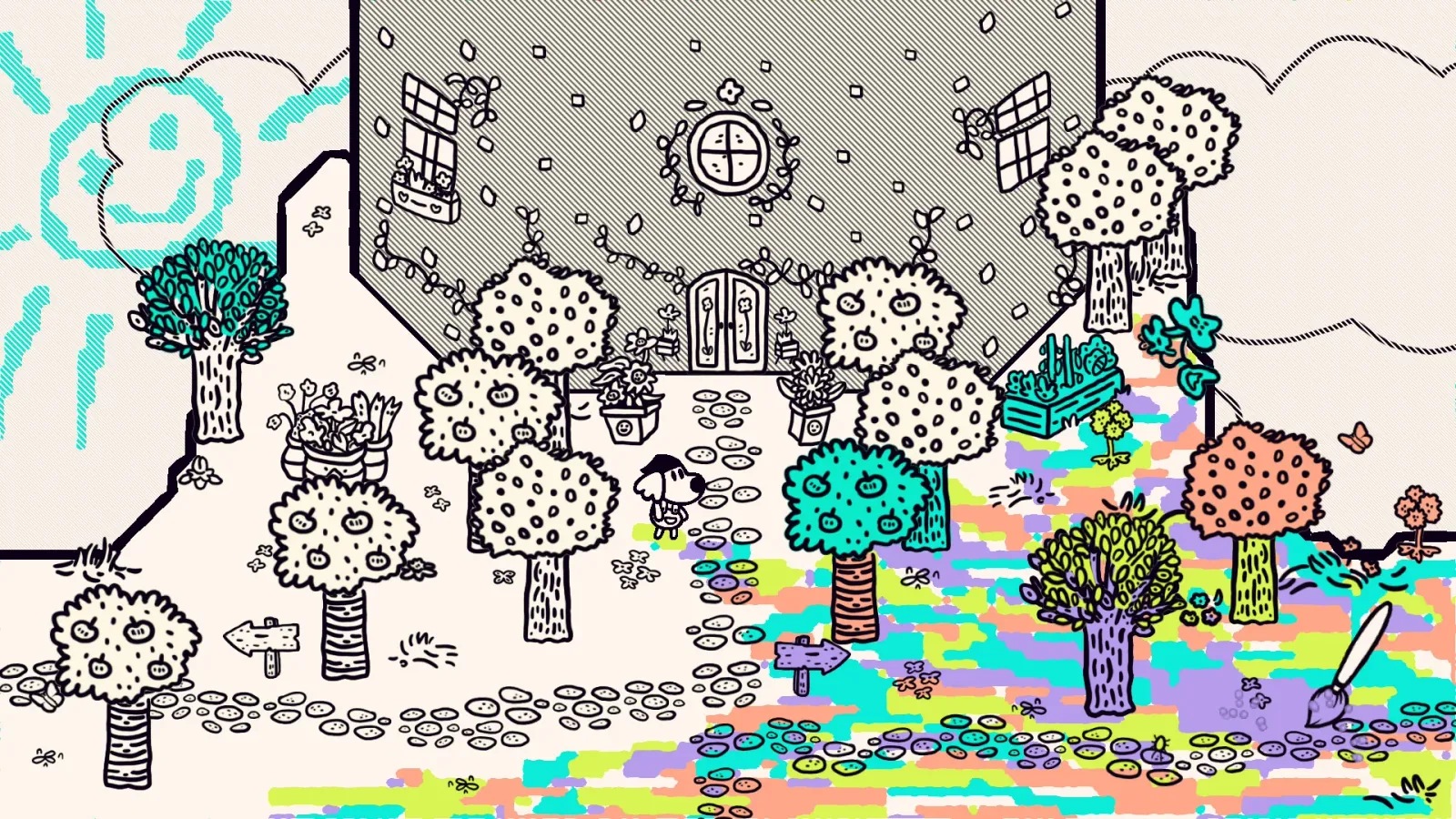
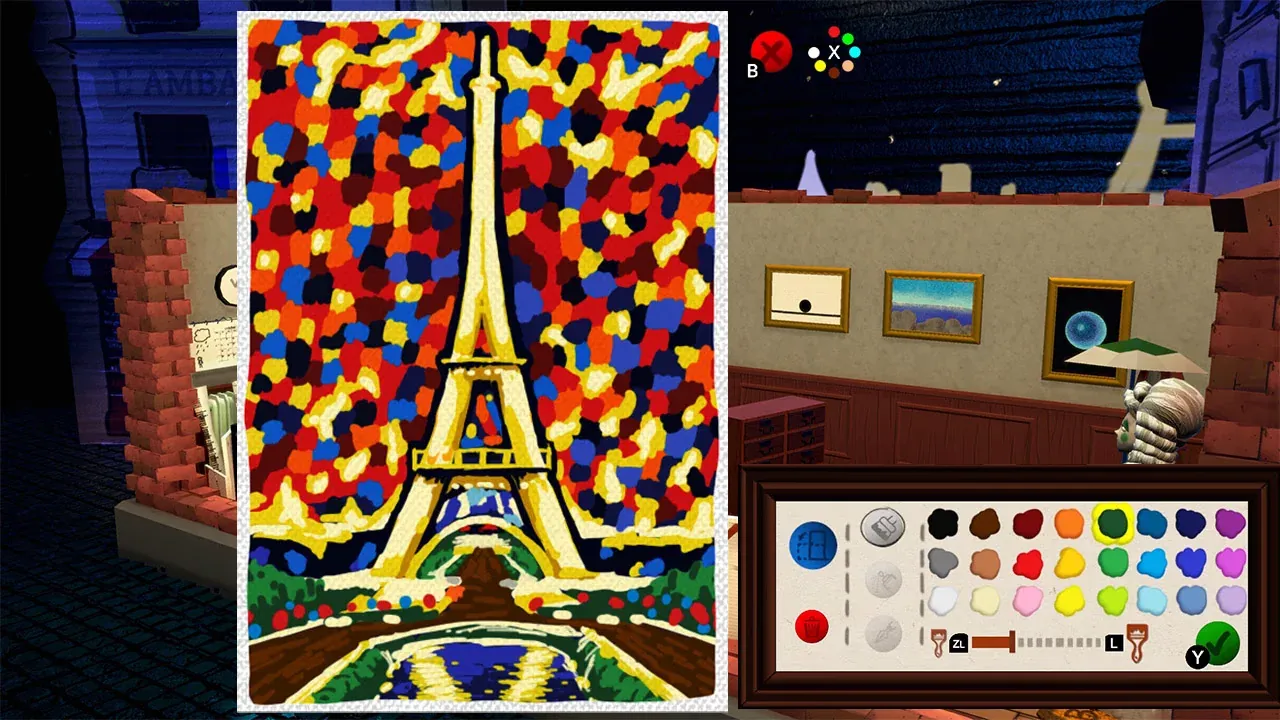
Players explore an island, collect materials, make paintings at chosen viewpoints, talk to residents, and complete quests that unlock new places and perspectives.
Why it may be useful
This is mainly a calm, good-looking world to wander and paint in. Choosing a view and framing it is a real compositional habit, but the game teaches no actual painting technique, so what travels afterward is small.
Keep in mind
Its value is mostly in attentive exploration and making, not in art instruction or cultural education.
Written 2026-09-15 · editorial assessment, not a measured effect · how we rate →
What the game is
Eastshade is a first-person open-world adventure by Eastshade Studios, released for PC in February 2019 and for PlayStation 4 and Xbox One later the same year. You are a traveling artist who has come to the island of Eastshade to paint four places your mother asked you to paint before she died. The island's residents are talking animals, and there is no combat anywhere in it.
You walk, and later cycle, through forests, cliffs, a walled town and a fishing village, rendered in warm painterly light with weather that changes around you. Instead of a weapon you carry an easel. Setting it up freezes the view into a frame you can compose, and what comes out is a painting you keep and can give away.
There is no way to die and no fail state. Progress comes from conversations, from materials you gather to make canvases and equipment, and from the pictures people ask you for. It is a one-time purchase with no online element.
What you actually do
Someone tells you what they want: the lighthouse at dusk, a friend's house, something to remind them of a place they can no longer reach. You go and find it, which usually means solving a small access problem first, a bridge to cross, a wall to get over, a coat to keep out the cold, by gathering materials and building the thing that gets you there. Then you set up the easel, move the frame until the composition is right, and paint. Canvases are limited, so you cannot paint everything, and a painting given away is gone. Getting better means recognizing what a person actually wants to see, and spotting the view before anybody asks for it.
What it exercises
Composes a frame: chooses what to include and what to leave out
Interprets a description of a place and finds it in an open world
Plans a route around obstacles using materials gathered along the way
Manages a scarce resource, since canvases run out
Asks questions in conversation to work out what someone actually needs
Why we rate it Minimal Worksheet score 24 / 100
FitHow much real knowledge or skill does the play itself make you use?25weight 45%
Fit is 25. Choosing what to include in a frame is a real compositional judgment, and the game will not let you finish a commission without making it. But painting here is simplified to pointing a camera at a preset scene: there is no color mixing, no brushwork, no technique to learn, so what the mechanic actually asks of you is thin.
TransferWill what you practise here work outside the game?18weight 30%
Transfer is 18, close to the floor. Composing a frame is a real habit and might change how someone looks through a camera afterward, but that is the whole of it: no color theory, no drawing, no handling of light is taught, and the island itself is invented, so nothing factual carries anywhere.
PracticeDoes the game make you use that skill again and again, as it gets harder?30weight 25%
Practice is 30. The paint-and-deliver loop repeats across the island and the composition decision comes up dozens of times, but the game is finite, there is little reason to replay it, and framing a view never actually gets harder from the first commission to the last.
What the evidence says
Editorial onlyNobody outside our desk has checked this. It is our reading of how the game plays.
The evidence level is Editorial only. The sources are the developer's own game page and studio site, checked in August 2026 and re-read here, which confirm the studio, the February 2019 PC release, the console versions later that year, the traveling-painter premise, the easel used to compose pictures anywhere in the world, and that dialogue choices affect later outcomes. Neither source addresses learning or art education, and no study of this game exists. The rating reflects an editorial reading: framing a view is genuinely the only way to progress, which keeps the play tightly linked to the mechanic, but the game teaches no technique and its world is entirely invented, which is why so little carries beyond the island itself.
Prices are US store listings in USD, last refreshed 2026-09-25; regional prices and sales differ.
Single-player play is supported.
The game focuses on painting, conversation, and questing rather than combat.
Age guidance
Ages 7+ · PEGI 7
Topics
Creativity
Play styles
Single-player, Narrative, Creative
Tags
Painting · Observation · Nonviolent exploration
It sits low because framing a view is genuinely the whole mechanic, but the game teaches no technique, the world and its residents are invented, and the composing decision never grows harder.