What the game is
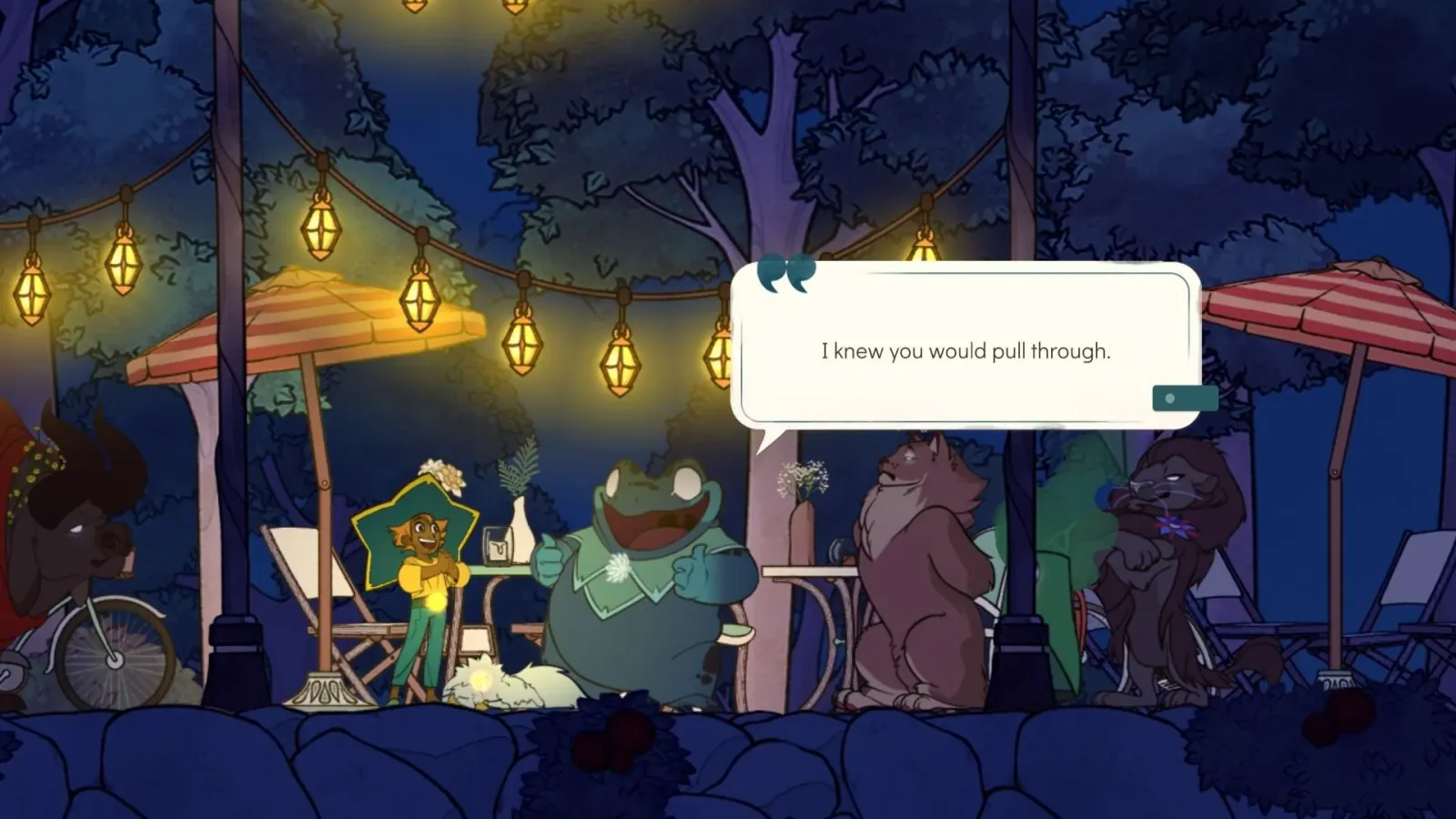
Cozy Grove is a life simulation by Spry Fox, released for PC in April 2021 and also sold on Nintendo Switch. You arrive on a small island as a Spirit Scout, a kind of camp volunteer, and find the place drawn almost entirely in grey. It is haunted by bears who died there and have not moved on, each stuck on something they left unfinished.
The screen shows a hand-drawn, side-on view of a wooded island you walk around, gathering wood, shells, fish and buried objects. Helping a bear returns color to the ground around it, so the island fills in slowly, patch by patch, as you work through its residents. There is a campfire to feed, a wandering shopkeeper, crafting and a lot of decorating.
It runs on the real clock. Spry Fox's own Steam listing says the game hands out thirty to sixty minutes of new quest content each day, and describes a campaign of forty hours or more meant to be spread across months.
What you actually do
Each session you walk the island looking for what changed overnight. Ghosts ask for things: a particular fish, three pieces of a certain wood, an object buried somewhere on the map. Some requests need an item you can only make, so you gather, craft and come back. Handing over what a bear asked for unlocks the next piece of their story and paints the surrounding trees and grass back into color. When the day's quests run out the game says so, and what remains is optional, mostly fishing, decorating your camp and feeding the animals. Getting better mostly means knowing the island well enough to find things quickly, and learning which materials are worth keeping.
What it exercises
- Keeps several open requests in mind and works out an efficient route around them
- Reads a description of an object and matches it to something on the map
- Returns to an unfinished task after a real day away from it
- Follows a story about loss told in short pieces over many weeks
- Runs a small economy: gather, craft, sell, buy the missing part
Why we rate it Minimal Worksheet score 20 / 100
FitHow much real knowledge or skill does the play itself make you use?15weight 45%
Scored 15, near the bottom. You do have to listen to what a ghost says it needs before you can advance, which is a real, if thin, link between the theme and the mechanic. It stays this low because every request is a simple fetch task: find an object, bring it back. There is no subject matter to engage with beyond that one repeated errand.
TransferWill what you practise here work outside the game?12weight 30%
Scored 12, close to the floor. Returning to something day after day and finishing what someone actually asked for is a habit worth having, but fetch quests for cartoon ghosts are a shallow stand-in for real care, and the game never asks anything emotionally difficult of you. Almost nothing here demonstrably carries into how you treat people.
PracticeDoes the game make you use that skill again and again, as it gets harder?40weight 25%
Scored 40. The design is built on return visits, the same gather-and-deliver loop repeated every day for months, which is real, reliable repetition. It stays in the lower half because the loop never gets any harder: the difficulty on day one and day sixty is the same, so what builds is a habit of showing up rather than a growing skill.
What the evidence says
Editorial onlyNobody outside our desk has checked this. It is our reading of how the game plays.
This is Editorial only. Spry Fox's own site plus the Steam and Nintendo listings, checked in August 2026 and re-read here, supply the concrete numbers: thirty to sixty minutes of new quests a day, a campaign of forty hours or more, and a design meant to run for months. None of the sources studies what daily play does for anyone. This assessment is a judgment about mechanics: repeated, low-pressure helping matches the wellbeing framing in principle, but errands for cartoon ghosts are a light model of care, and we found no research on this game.