What the game is
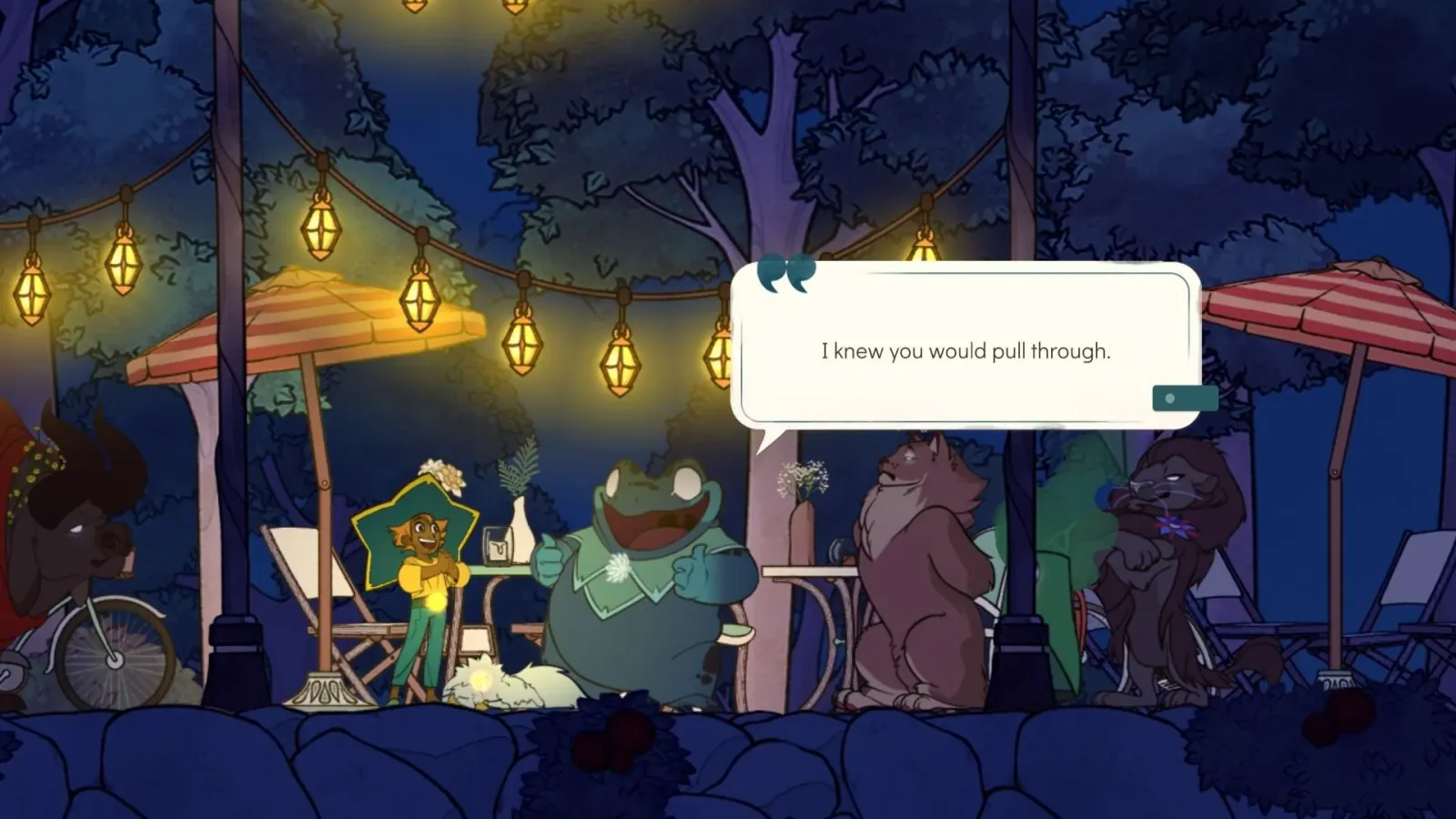
Mutazione is a hand-drawn adventure game by Die Gute Fabrik, published by Akupara Games and released in September 2019 on PC and later on Nintendo Switch. Its makers call it a mutant soap opera, which is accurate. A meteor struck this island more than a century ago; the people who survived changed, and their descendants live in a small, shabby, close community where everybody knows everybody's business.
You play Kai, a fifteen-year-old girl who arrives by boat to help care for her grandfather Nonno, who is dying. She has never been here, knows almost nobody, and quickly finds that the adults are not telling her everything. The cast is large and each character has their own routine, their own grudges and their own idea of what Kai should be doing.
The other half of the game is gardening. Kai plants musical gardens: each plant contributes a sound, so a garden is also a piece of music, and the mixture changes the mood of the place around it. Alongside that are the ordinary events of a small town, barbecues, band nights, boat trips, which is where most of the story actually happens. It is a paid game, supporting fifteen languages.
What you actually do
You walk around the island, and you choose who to talk to. That is most of it. Conversations are long, people repeat themselves, moods shift depending on what happened yesterday, and the same character will tell you a different version of an event once they trust you. Nothing is scored, nobody can die, and there is no way to fail; what you can do is miss things by not being where a conversation was happening.
The gardens are the one system. You collect seeds, plant them in a plot, and listen: each plant adds an instrument to a drifting soundscape, and the combination is meant to shift the atmosphere of that part of the island. Getting better looks like paying attention, remembering who said what about whom, going back to someone after an argument, and noticing the story that the adults are talking around rather than about.
What it exercises
- Follows several relationships at once and tracks how they change over time
- Notices what a character avoids saying, not only what they say
- Revisits people rather than treating a conversation as a task to be completed
- Arranges plants into a combination and listens to the result
- Sits with a story that moves slowly and does not resolve on demand
Why we rate it Minimal Worksheet score 20 / 100
FitHow much real knowledge or skill does the play itself make you use?20weight 45%
Fit is scored 20 because observing this particular community is not a theme laid over the game, it is the only meaningful input: deciding whose company to be in. It sits low because the gardening system, the one thing you actually build session to session, has little to do with the social observation being credited here, so a large share of the mechanics sit outside what we are crediting.
TransferWill what you practise here work outside the game?15weight 30%
Transfer is scored 15 because attending to what people mean rather than what they say is a genuinely useful habit, and this game rewards it more than most stories do. But it is one fictional community over a few hours, the reading of it is guided entirely by the writing, and nothing measures whether that attention carries into a real conversation once the game is over.
PracticeDoes the game make you use that skill again and again, as it gets harder?25weight 25%
Practice is scored 25 because the game keeps returning you to the same people across its run, and rereading a relationship after new information is the core repeated act. It is capped hard by length: once the story ends it ends, a second playthrough offers atmosphere rather than new insight, and there is little reason to keep coming back.
What the evidence says
Editorial onlyNobody outside our desk has checked this. It is our reading of how the game plays.
The evidence level is Editorial only. The Steam and Nintendo store pages confirm the developer, the publisher, the September 2019 release, the setting, Kai and her grandfather, the musical gardens and the language support, and that is the extent of what is established. No research on this game exists in the sources checked, and none on narrative games in general was borrowed, because none of it tested this one. The claim that it gives practice in noticing relationships and atmosphere is a reading of a game whose only real verb is listening. Nothing here supports a wellbeing or therapeutic claim, and none is made.