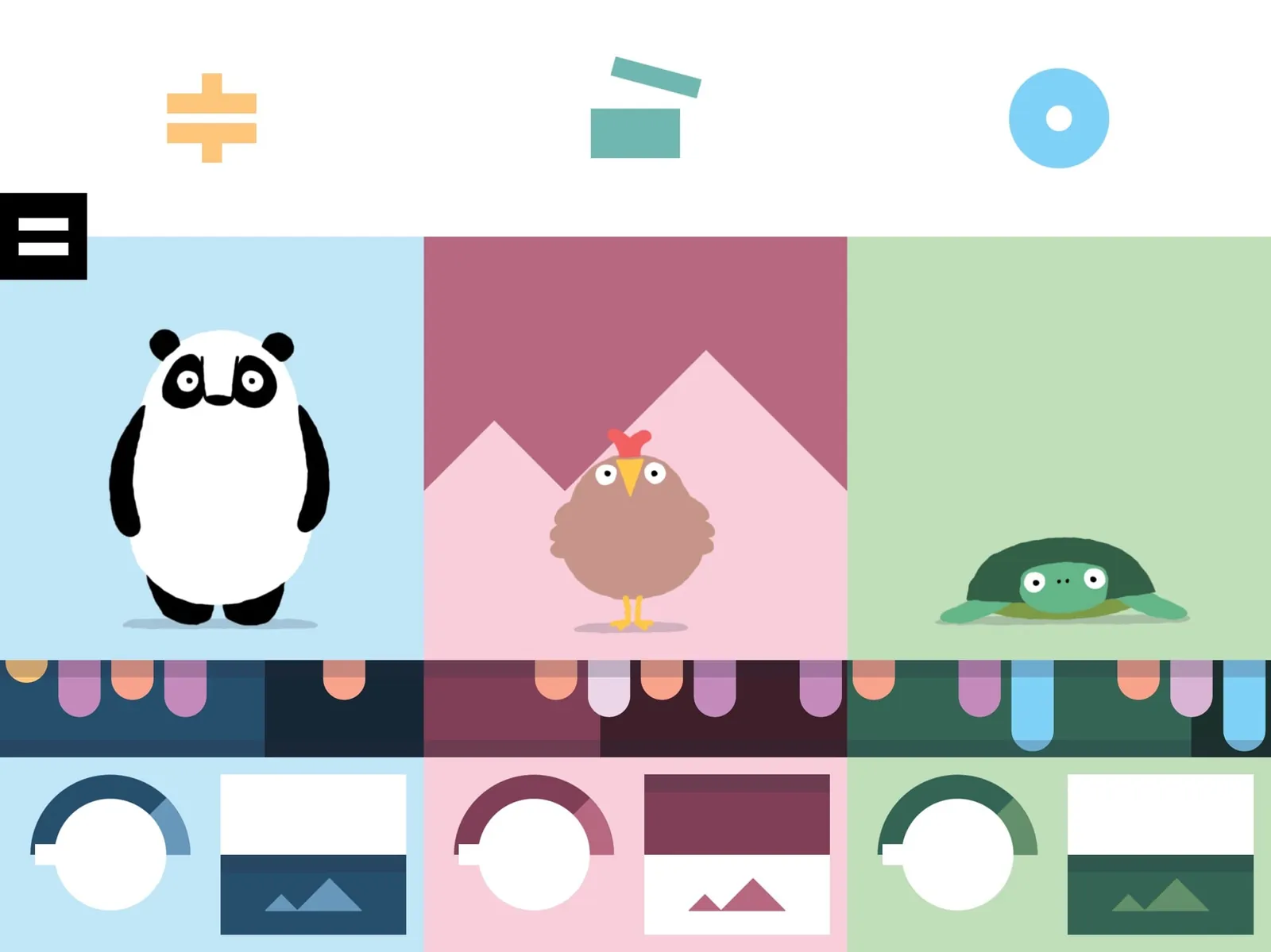
What the game is
Metamorphabet is a touchscreen toy by Vectorpark, the studio of artist Patrick Smith, released in 2015 and still sold on the App Store and Google Play. It won an Apple Design Award, which is a prize for design rather than for learning. There are 26 screens, one per letter, and nothing else: no menus to speak of, no levels, no score, no timer and no instructions.
Each screen holds a single fat, three-dimensional letter drawn in flat pastel colors on an empty background. Touch a highlighted part of it and the letter changes into something whose name begins with that letter, then changes again, then again, before returning. A soft voice names each change as it happens. The A sprouts antlers, bends into an arch, then grows legs and ambles away.
Sessions are short by design, a few minutes at a time, and children pick their own order. It is a paid app, around six dollars, with no advertising, no in-app purchases, no accounts and nothing to unlock. The App Store description records an update for iOS 18 in December 2024, and the developer gives the intended age range as three to seven.
What you actually do
A child taps, drags, spins or pulls at a letter and watches what it becomes. The interactions are not signposted; a small glow or a wobble suggests where to push, and the child works out the gesture by trying. Each letter holds a fixed short chain of transformations, so the discovery is finding the touch that triggers the next one, and then finding the one after that.
There is nothing to win and nothing to get wrong, so progress means covering more letters and remembering which one turns into what. What actually happens in the room is talk: the animation is slow and strange enough that children ask what that is, and an adult supplies the word. Repeat visits are about revisiting favorites rather than getting further, because there is no further to get.
What it exercises
- Links a touch to an effect and repeats the gesture deliberately to make it happen again
- Hears a new word attached to a picture of the thing, in context rather than on a list
- Recognizes letter shapes as objects that can be turned, stretched and rebuilt
- Explores an interface with no instructions and works out what responds
- Describes what is happening on screen to an adult who is watching
Why we rate it Minimal Worksheet score 22 / 100
FitHow much real knowledge or skill does the play itself make you use?22weight 45%
Fit is scored 22 because the vocabulary and cause-and-effect are folded into the play rather than quizzed, but the connection between a letter and what it becomes is mostly decorative: a viewer can love the whole app and remember the transformations, the antlers, the arch, the legs, without registering the letter shape underneath at all.
TransferWill what you practise here work outside the game?20weight 30%
Transfer is scored 20 because a handful of new nouns and a feel for letter shapes is a modest haul, and the app teaches no letter sounds, no blending and nothing that functions as reading instruction. Most of what a child actually gains depends on an adult talking alongside, which makes the value a property of the moment rather than of the software.
PracticeDoes the game make you use that skill again and again, as it gets harder?25weight 25%
Practice is scored 25, the weakest axis, because the content is finite: 26 letters with a fixed set of transformations and no procedural variety, so once every letter has been found the app is essentially finished. Most children exhaust it within a few weeks of occasional use, and nothing brings them back afterward.
What the evidence says
Editorial onlyNobody outside our desk has checked this. It is our reading of how the game plays.
The evidence level is Editorial only. The developer's site and the App Store listing confirm the age range, the absence of in-app purchases and the design award, none of which speaks to learning. The single research source cited, Hirsh-Pasek and colleagues writing in Psychological Science in the Public Interest in 2015, reviews what makes an app educational and argues that active, engaged, meaningful and socially interactive use matters more than passive drill. It never tested Metamorphabet or anything resembling it; it is cited only for the general point that talk around a screen matters more than the app itself, which is exactly what this one depends on.