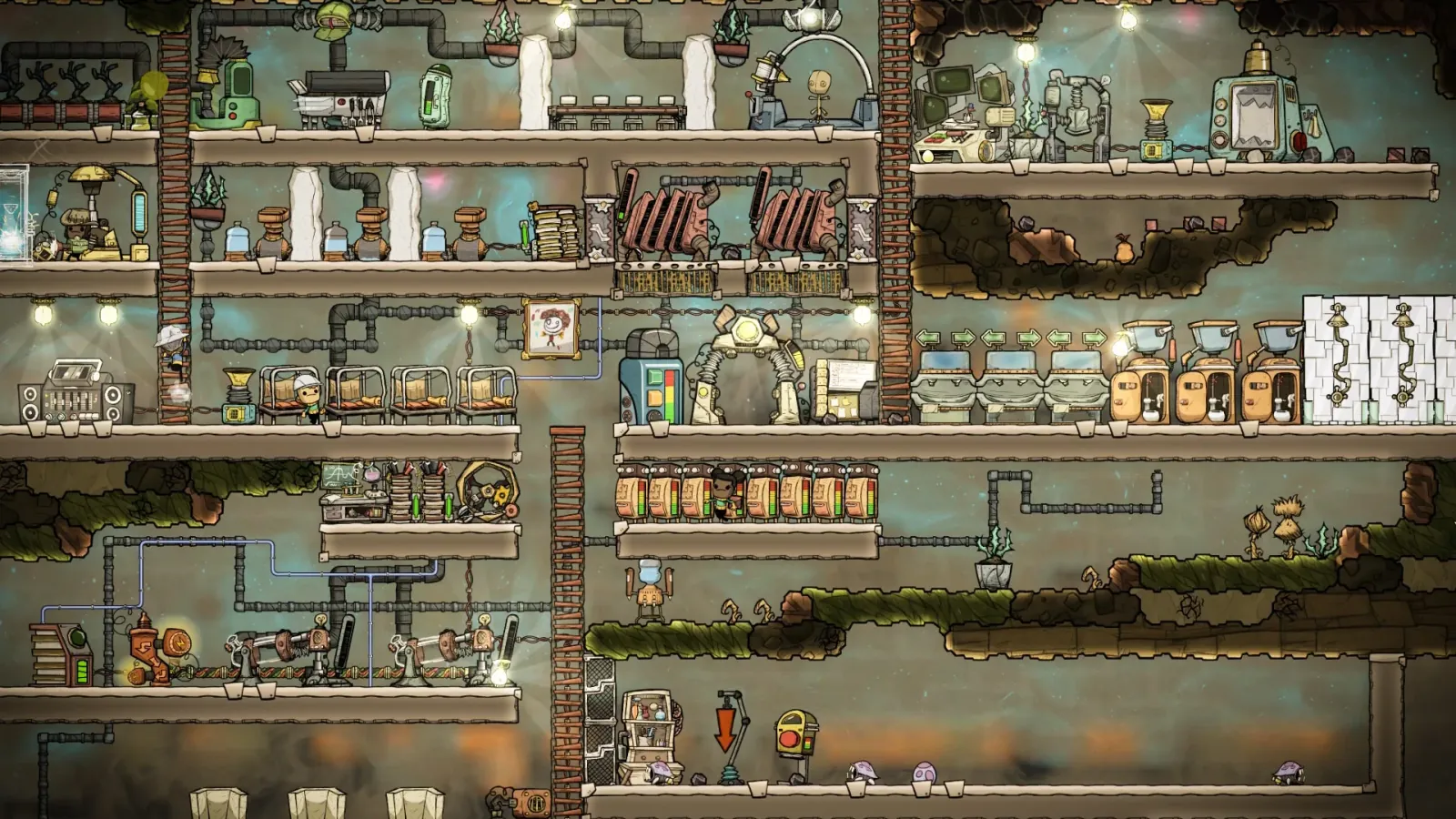
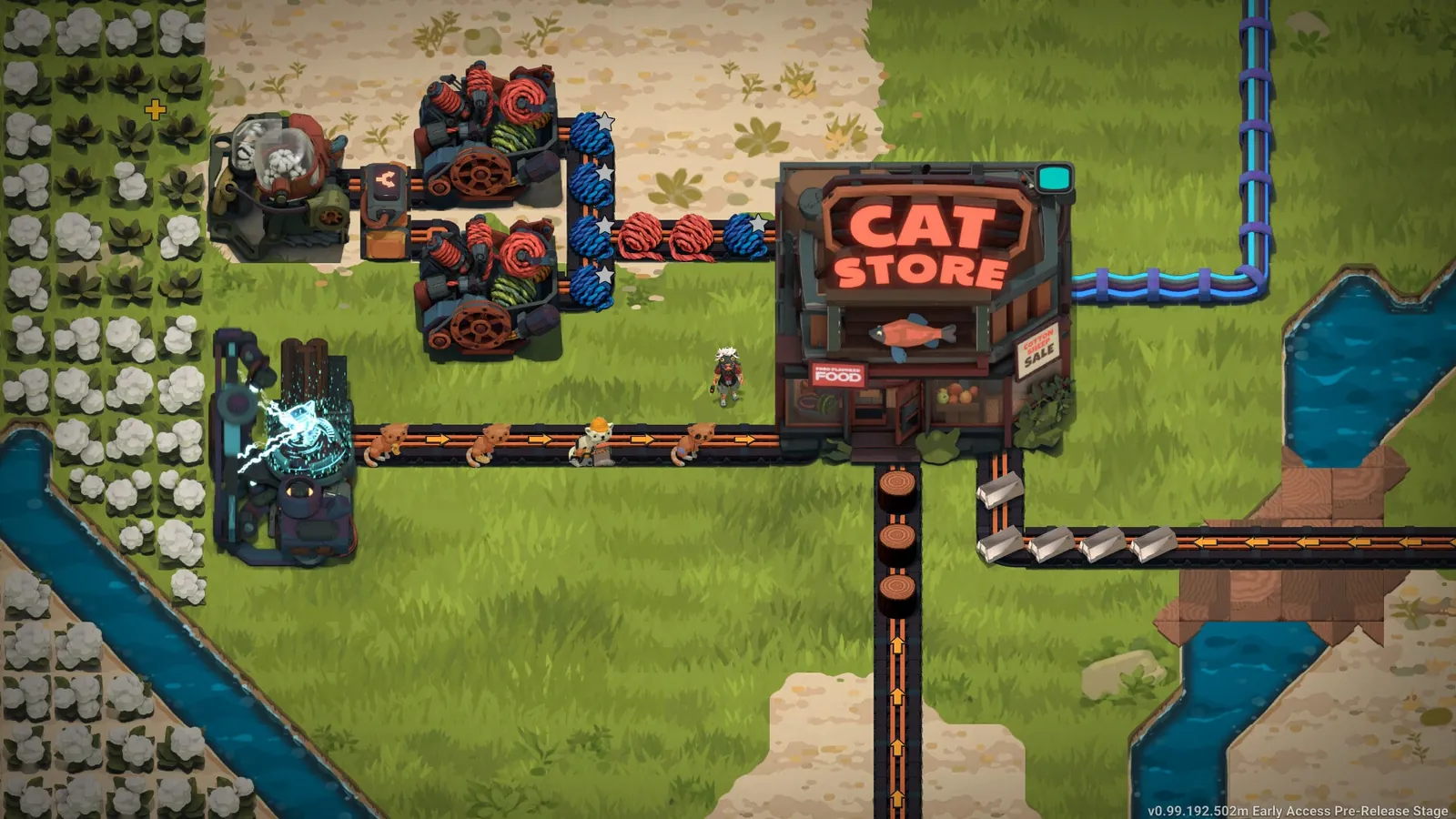
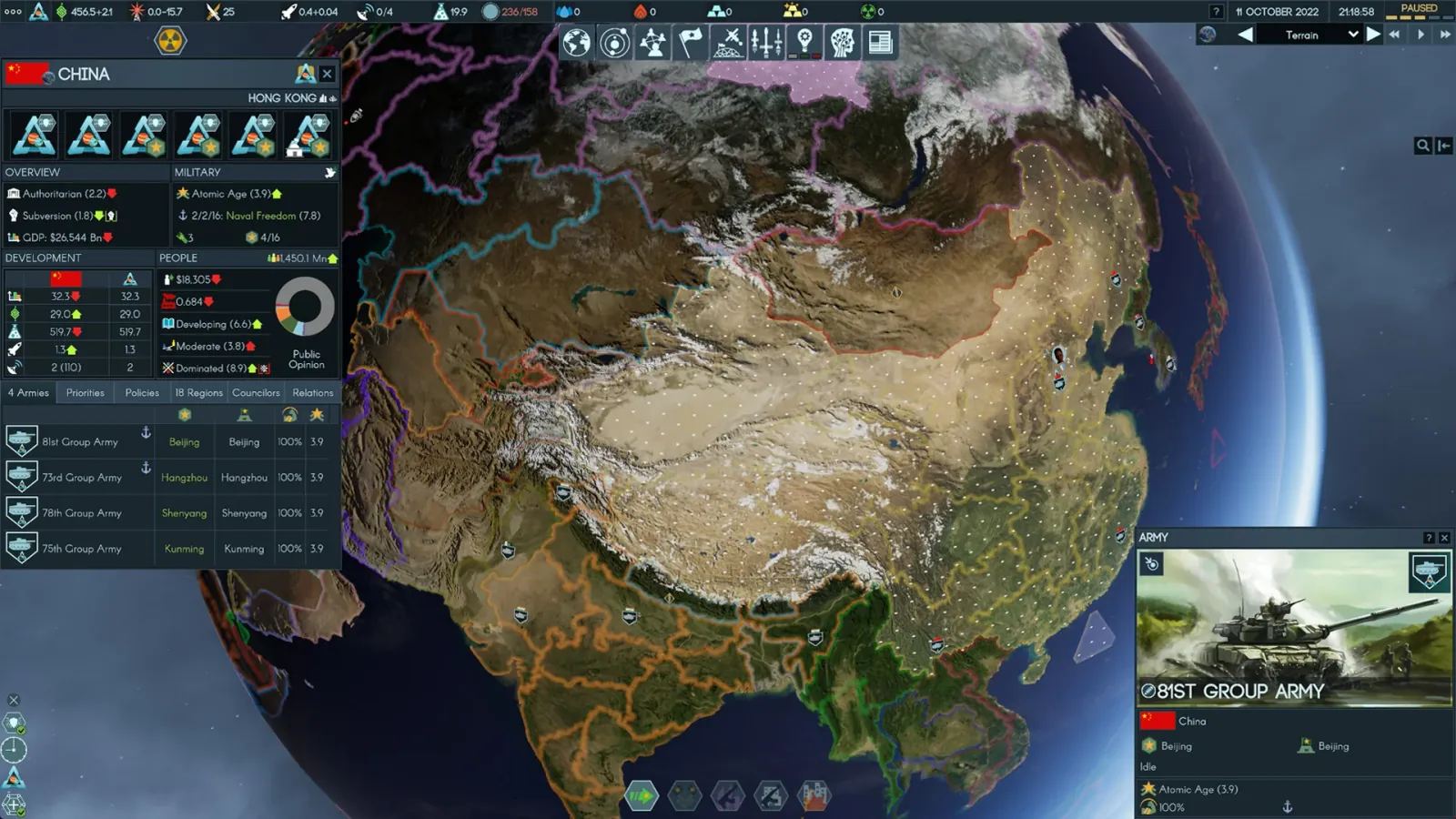
Players place infrastructure, extract resources, build factories, manage logistics, and push Mars toward different terraforming and political outcomes.
Why it may be useful
It gives you practice tracing supply chains and planning several steps ahead, though what carries over is patience with complicated systems rather than domain knowledge you could name elsewhere.
Keep in mind
Its science-and-society value is modest, and it should not be read as realistic Mars engineering.
Written 2026-09-15 · editorial assessment, not a measured effect · how we rate →
What the game is
Per Aspera is a real-time strategy and management game about terraforming Mars, made by Tlon Industries and published by Raw Fury in December 2020 for PC. You do not play a colonist. You play AMI, an artificial consciousness who wakes in orbit with one instruction: make Mars livable. The screen is a rotating globe of red rock. You zoom in to place mines, factories, power plants and habitats, and zoom out to watch planet-wide readouts for temperature, pressure and water creep upward.
The main structure is a long story campaign with branching choices about who Mars is for, plus a sandbox mode for building without the plot. Nothing here is quick. A campaign runs tens of hours, because a chain of buildings takes real minutes to pay off. The tone is serious science fiction with full voice acting. Steam players rate it Mostly Positive across about 2,500 English reviews; the praise is for the scale, the complaints are about the interface.
What you actually do
You survey the surface for metal and mineral deposits, drop a mine, and connect it back to the network so a factory can turn ore into the parts the next building needs. Everything is a chain: power feeds the drill, the drill feeds the plant, the plant feeds the construction drones. When a chain breaks, you trace it back and find the missing link. Above that sits terraforming proper, where you spend game-decades raising temperature, thickening the atmosphere and melting ice into liquid water, each step unlocking the next. Getting better means planning three buildings ahead instead of reacting to the shortage you already have.
What it exercises
Traces a production chain backward to find which missing input stalled the line.
Places buildings around supply distance and power reach rather than free space.
Reads planet-wide gauges for temperature, pressure and water to choose what to build next.
Sequences long projects whose payoff arrives many minutes after the decision.
Weighs a branching story choice about who benefits from the work being done.
Why we rate it Low Worksheet score 48 / 100
FitHow much real knowledge or skill does the play itself make you use?45weight 45%
You do the planning yourself: tracing a broken supply chain and sequencing new construction is the actual moment-to-moment task, not a fact you read about. The score of 45 reflects how much of that work is abstracted into single numbers and menu clicks rather than a system you build by hand, so it counts as one narrow skill practiced repeatedly rather than a domain you work within.
TransferWill what you practise here work outside the game?38weight 30%
The habit of tracing dependencies back to a stalled input is real, and it is the kind of patience that helps with any complicated system. At 38, transfer stays modest: nothing here is tied to an actual discipline like logistics or engineering, so what a player takes away is a general disposition toward complexity, not knowledge that transfers to a specific field or job.
PracticeDoes the game make you use that skill again and again, as it gets harder?65weight 25%
At 65, practice is solid but capped: the campaign and sandbox mode add up to dozens of hours, and the same act of surveying, connecting and repairing a supply line recurs constantly. What keeps the number from climbing higher is that the underlying decision barely changes shape as the game goes on, so late hours repeat the same reasoning rather than demanding something new of it.
What the evidence says
Editorial onlyNobody outside our desk has checked this. It is our reading of how the game plays.
This entry is Editorial only, meaning it reflects our own reading of the mechanics rather than a measured result. The single source is the game's Steam store page, which confirms the developer, publisher, release date, modes and player reception, and nothing beyond that. No study has examined whether playing Per Aspera changes how anyone plans or reasons about interdependent systems, and none was substituted to stand in for one. What can be said honestly is narrow: the game repeatedly demands supply-chain reasoning as you play, and that repeated demand is a fair basis for calling it practice, not for claiming the skill sticks afterward.
Editorial assessment - not a measured scientific effect.
Fit
45/100
Transfer
38/100
Practice
65/100
Why it makes the cut
Terraforming management has a clear standalone play draw.
Editorial only
This is an editorial reading of the mechanics, not a study: the sole source is the game's own store page, and no research has measured whether playing Per Aspera changes how anyone plans or manages complex systems.
Its systems demand real planning and dependency-tracing, but the fiction is far from actual Mars engineering, so what sticks is a habit of thinking in supply chains rather than domain knowledge.