Players use a radial singing mechanic to talk, harmonize, unlock paths, and complete light platforming and puzzle sequences around the world.
Why it may be useful
You solve everything here by singing at it, which makes a habit of trying expression before force. The note-matching itself teaches little, so treat this as a warm, unusual adventure rather than a skill-builder.
Keep in mind
The singing is a matching puzzle with one correct answer supplied by the game, not free musical expression or ear training.
Written 2026-09-15 · editorial assessment, not a measured effect · how we rate →
What the game is
Wandersong is a musical adventure made by Greg Lobanov with Wishes Ultd. and the audio studio A Shell in the Pit, released on 27 September 2018 and priced at about twenty euros. You play a bard who cannot fight. The only verb the game gives you is singing: a ring of colored notes opens around the character, you point at one, and he holds it.
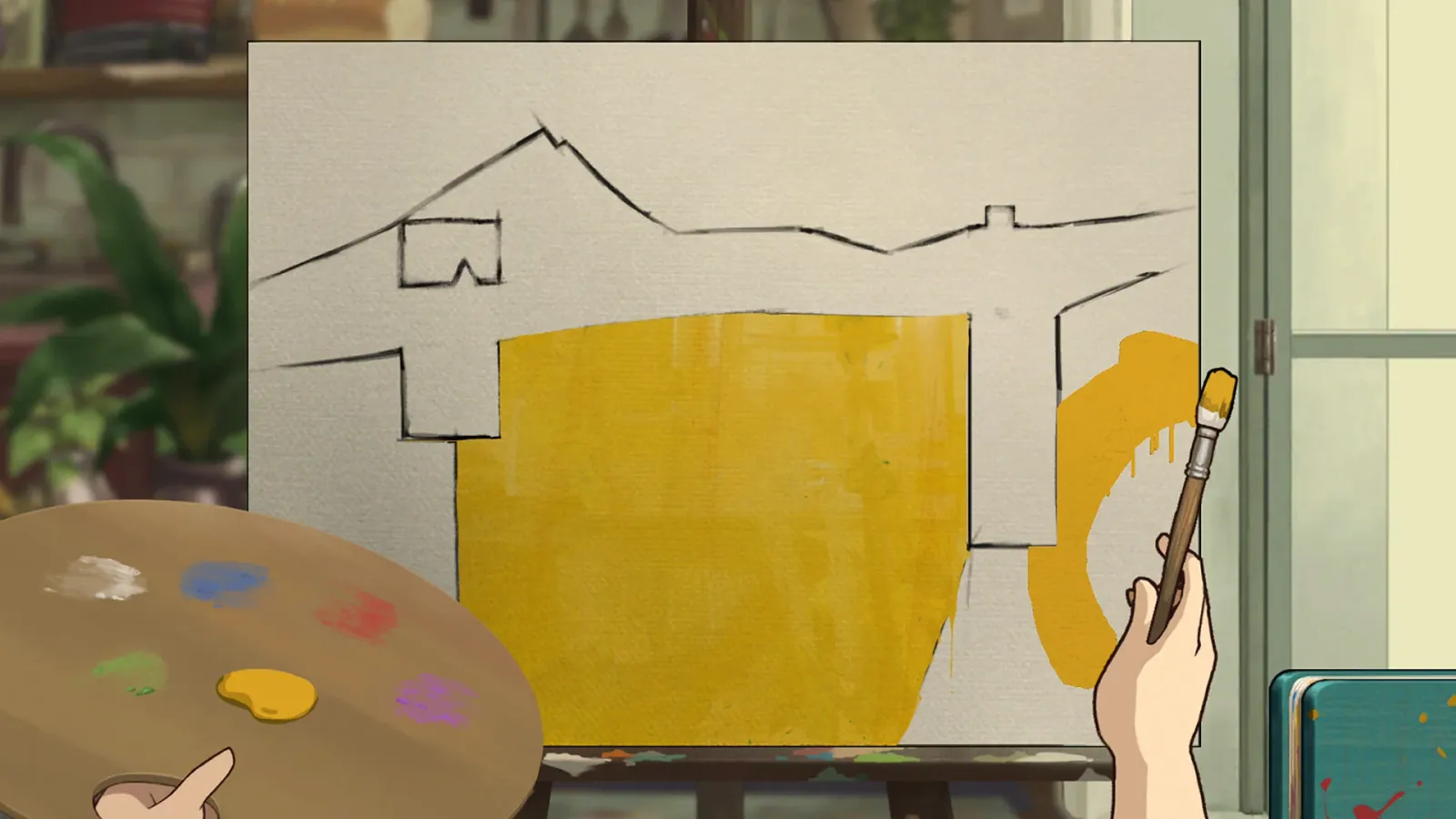
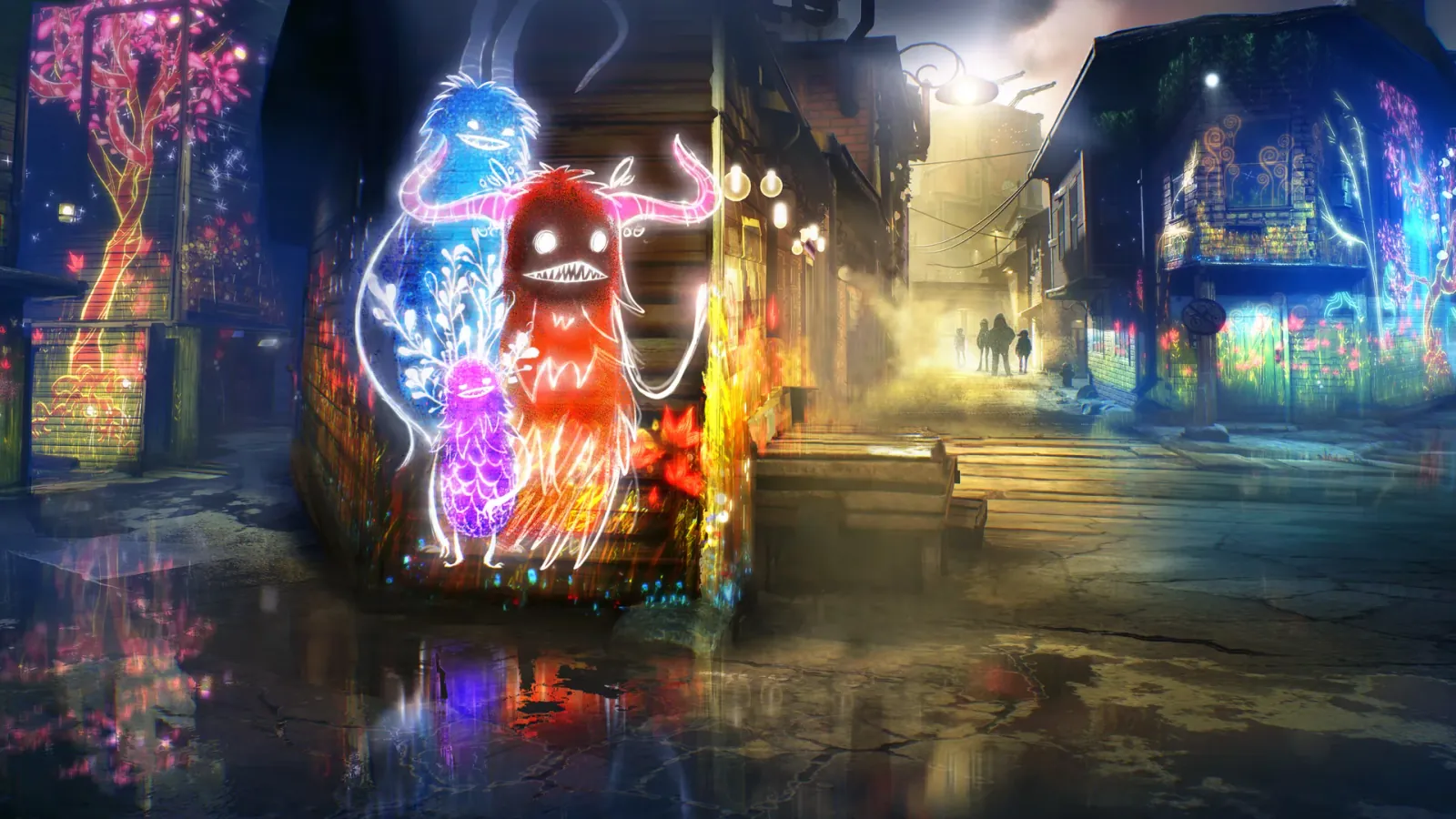
The game is a long overland trip through a series of very different regions, each with its own small crisis and its own cast. Steam puts it at ten to twelve hours and counts more than a hundred and fifty characters to talk to, and almost all of them sing back. The look is flat, hand-drawn and bright, closer to a picture book than to a platformer, and the tone stays warm even when the plot turns bleak. Steam states the game is fully accessible to color-blind and deaf players, and there is a dedicated dance button you can press at any moment.
What you actually do
Singing is how you do everything. You hold the button, the wheel of notes opens, and you pick pitches in sequence: to answer a phrase a character has just sung, to make a plant grow, to steer wind, to calm an animal, or to open something that only responds to the right series. Conversations run on the same mechanic, and often what matters is that you keep going rather than that you get it exactly right. Between these sit light platforming stretches and a handful of set-piece chapters that change the rules entirely for an hour. Difficulty rises through longer sequences and tighter timing, never through combat.
What it exercises
Repeats a heard sequence of pitches back in the right order.
Holds a longer pattern in memory as the phrases get longer.
Tries persuasion or cooperation where another game would offer a fight.
Matches timing to a rhythm that another character sets.
Keeps going through a scene that cannot be won, only finished.
Why we rate it Minimal Worksheet score 17 / 100
FitHow much real knowledge or skill does the play itself make you use?15weight 45%
There is no attack button, so every obstacle in Wandersong genuinely has to be sung at, a real commitment to expression over force. But the singing is almost always a matching puzzle with one correct sequence chosen by the game, not the player, so what looks like expression is closer to following a cue. That gap between theme and mechanic is why fit sits at 15.
TransferWill what you practise here work outside the game?12weight 30%
Copying a pitch sequence back has a surface resemblance to ear-training, and trying cooperation instead of confrontation is a habit worth having, but the game supplies the correct answer every time and nothing is rehearsed against a real listener or a real conflict. At 12, transfer credits almost nothing specific: the disposition may linger, but no skill travels with it.
PracticeDoes the game make you use that skill again and again, as it gets harder?25weight 25%
Singing recurs constantly across ten to twelve hours, so the wheel gets used thousands of times, which would normally push practice high. It stays at 25 because the sequences never get harder in any way that matters: after the first hour a player repeats an action already mastered rather than being stretched by it, so volume without escalation earns very little credit.
What the evidence says
Editorial onlyNobody outside our desk has checked this. It is our reading of how the game plays.
The level is Editorial only. The Steam listing supports the facts used here: the developers, the 27 September 2018 release, the price, the ten-to-twelve-hour length, the count of more than a hundred and fifty characters, the accessibility statement for color-blind and deaf players, and the dance button. No study of Wandersong exists and none has been added. That singing rather than fighting might change how a player approaches an obstacle is an editorial reading of the control scheme, not an outcome anyone has measured, and it does not extend to any claim about music learning.
Editorial assessment - not a measured scientific effect.
Fit
15/100
Transfer
12/100
Practice
25/100
Why it makes the cut
PASS - The singing-based platform adventure is charming and desirable as play on its own merits.
Editorial only
This is an editorial reading of the Steam listing and the control scheme; no study of Wandersong exists and no school, program or clinic use has been documented.
Prices are US store listings in USD, last refreshed 2026-09-25; regional prices and sales differ.
No subscription requirement was found on the verified PC route.
Age guidance
Ages 10+ · ESRB E10+
Topics
Mind & well-being, Creativity
Play styles
Single-player, Narrative, Puzzle
Tags
Musical interaction · Expressive communication · World-spanning adventure
Wandersong replaces every fight with a song, which is a genuine design choice, but the singing is simple pitch-matching and nothing here builds musical or interpersonal skill that lasts past the credits.