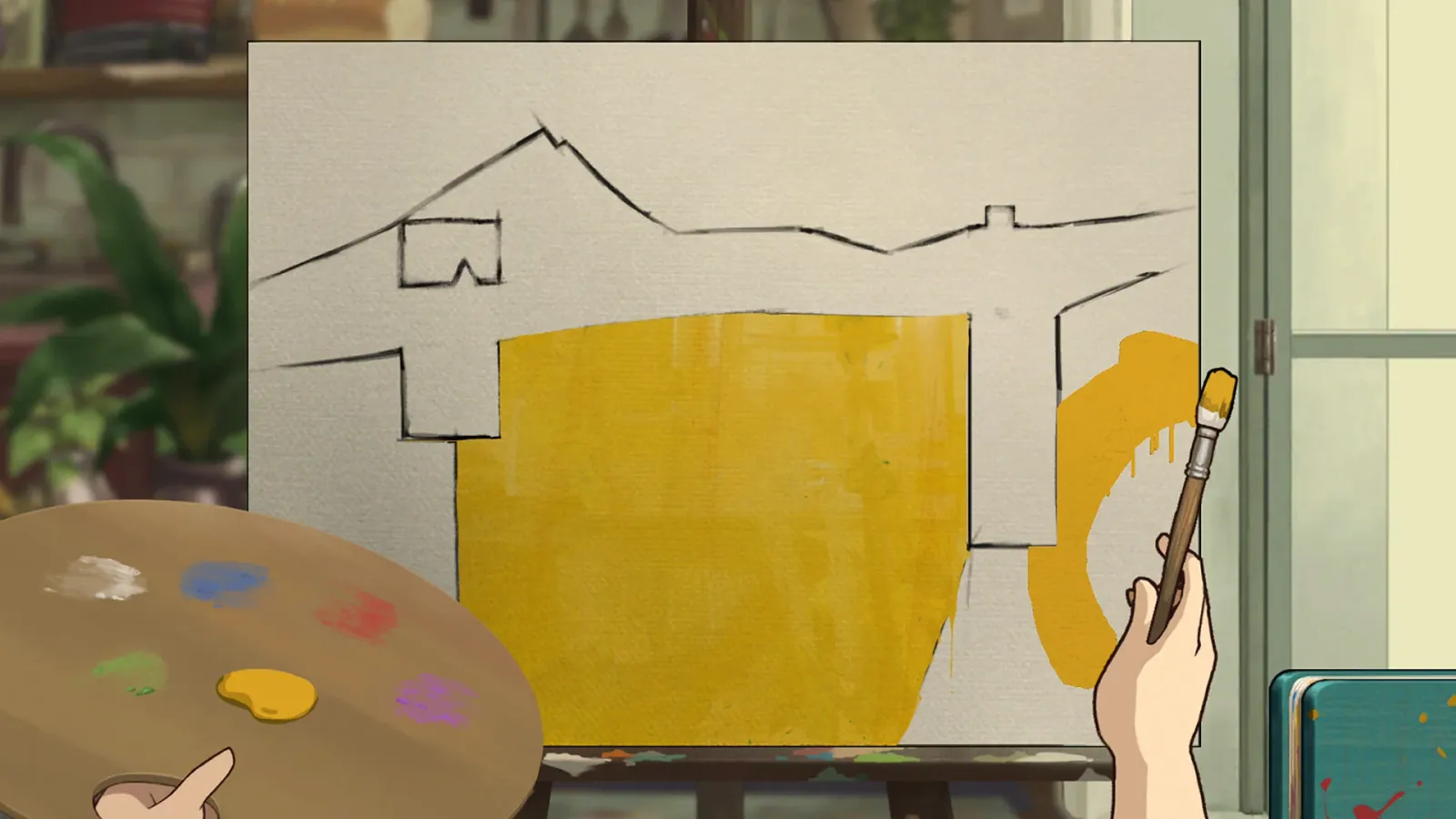
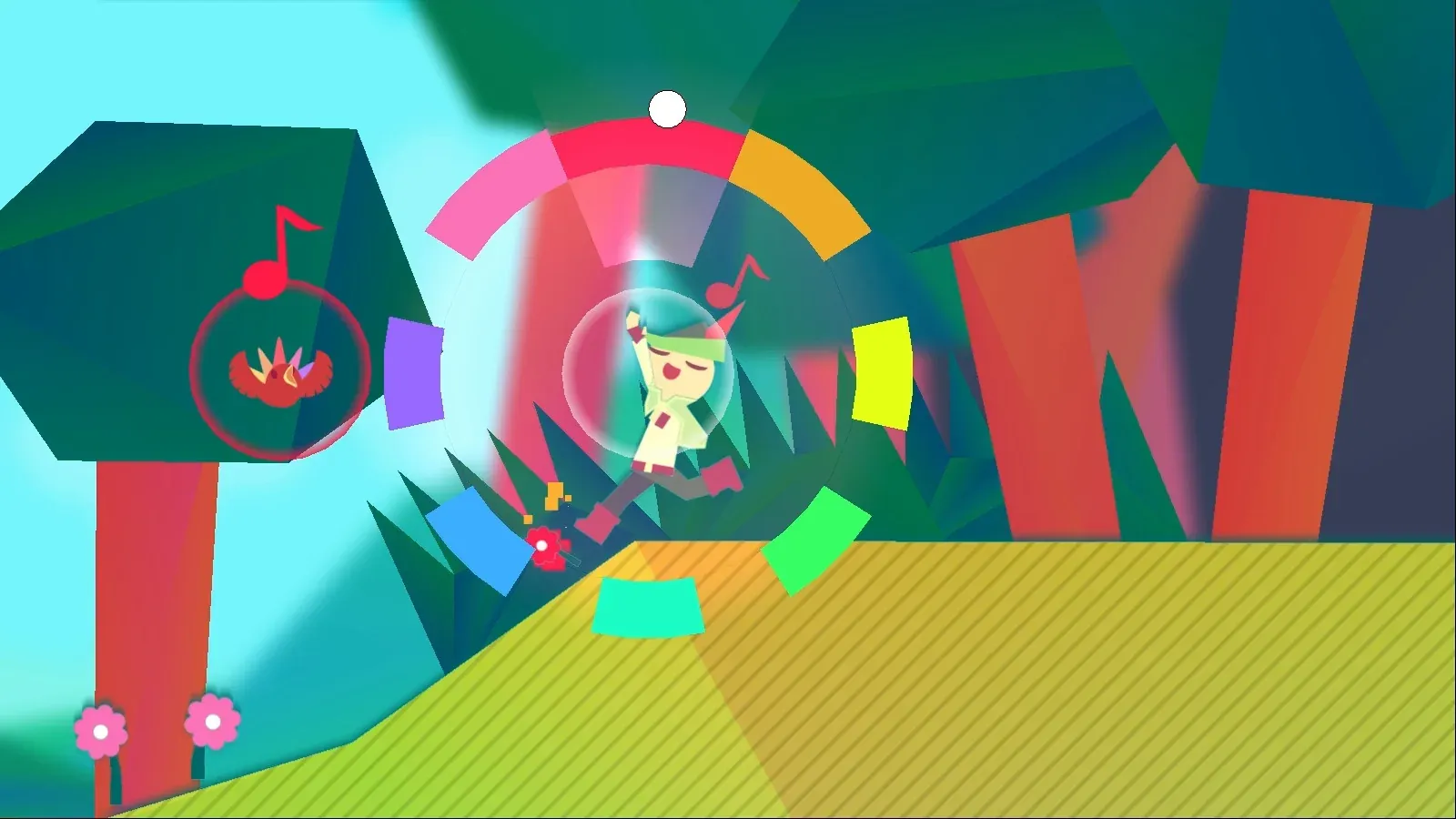
Players walk across diary pages, move and activate words to create paths, then use word magic inside a fantasy world to solve platforming and environmental puzzles.
Why it may be useful
You stand on sentences and spend verbs as tools, so reading is not a wrapper around the game but the surface you move across, which asks for real close reading. The puzzles themselves are easy and mostly single-solution, so the thinking involved stays light.
Keep in mind
Its emotional family story is part of the recommendation, not something hidden behind its gentle art direction.
Written 2026-09-15 · editorial assessment, not a measured effect · how we rate →
What the game is
Lost Words: Beyond the Page is a narrative puzzle-platformer released in April 2021 by Sketchbook Games. Its story was written by Rhianna Pratchett, and Steam describes it as a fully voiced narrative about family, loss and healing. It is rated PEGI 7.
The game runs in two places at once. Half of it is a diary, and you literally walk on the handwriting: the lines of a girl called Izzy's entries are the platforms, and words slide, tilt and rearrange under your feet. The other half is the fantasy story she is writing, drawn in watercolor, where you play the heroine of her own tale.
In the fantasy half, individual words are tools. You collect one and cast it at the world: mend to repair a broken bridge, rise to lift water, burn to clear a path, and the word is spent once used. Steam lists English alongside French, Italian, German and Spanish, and the route verified here is Steam for PC.
What you actually do
In the diary you read and move. A sentence is a ledge; stepping on a word can knock it out of place, tipping the line and opening a gap, and reaching the next page means rearranging what is written. It is slow and deliberate, and it makes you read every line, because you are standing on it.
In the fantasy world the words are verbs you carry. You reach a broken bridge, open your small collection, and choose mend. You reach a fire and choose rain. The puzzles are gentle and rarely have more than one answer; the difficulty is emotional rather than mechanical. Getting further means keeping the two halves connected, because what happens in the diary changes what the fantasy needs.
What it exercises
Reads closely, because the text is the ground the character stands on
Chooses a verb that fits an obstacle from a small carried vocabulary
Connects events in a diary to events in the story being written
Interprets a figurative scene rather than solving a mechanical puzzle
Follows a long narrative and tracks how a character's feelings change
Why we rate it Minimal Worksheet score 22 / 100
FitHow much real knowledge or skill does the play itself make you use?25weight 45%
Fit sits at 25. The link between words and play is real rather than decorative: you stand on sentences and spend verbs, so reading is the surface you move across rather than a wrapper around the game. It stays low because the puzzles themselves are easy and mostly single-solution, so little independent reasoning is actually required.
TransferWill what you practise here work outside the game?20weight 30%
Transfer sits at 20. Treating a word as something with force, and noticing that a story can carry what cannot be said directly, is close to what a literature lesson attempts, and a player reads more carefully here than the same text on a page. What it does not build is vocabulary or writing skill in any measurable way.
PracticeDoes the game make you use that skill again and again, as it gets harder?20weight 25%
Practice also sits at 20. The word-casting and diary-walking recur throughout, so the same close reading is exercised across the whole game, which gives a few hours of steady practice. It is a single playthrough with one ending and no reason to repeat it, which makes this a concentrated experience rather than a practice routine.
What the evidence says
Editorial onlyNobody outside our desk has checked this. It is our reading of how the game plays.
The evidence level here is editorial only. The two cited sources, the Steam page and Sketchbook Games' studio site, confirm the 2021 release, the developer and publisher, the price, Rhianna Pratchett as the writer, the fully voiced narrative, the diary-and-fantasy structure with words used both as platforms and as magic, the PEGI 7 rating and the listed languages. Neither says anything about learning or emotional outcomes. We cite no study and know of none on this game. In particular we make no claim that it helps anyone cope with a real loss; the rating reflects the close reading and interpretation the play requires.
Editorial assessment - not a measured scientific effect.
Fit
25/100
Transfer
20/100
Practice
20/100
Why it makes the cut
Word-powered platform interaction makes it more than a story wrapper.
Editorial only
This rating is editorial only. The Steam page and Sketchbook Games' studio site confirm what the game contains but say nothing about learning or emotional outcomes; the rating reflects the close reading and interpretation the puzzles actually require.
Prices are US store listings in USD, last refreshed 2026-09-25; regional prices and sales differ.
Offline single-player play is available.
The story is fully voiced, but text interaction remains central to puzzle play.
Steam lists English, French, German, and Spanish (Spain).
Age guidance
Ages 10+ · ESRB E
Topics
Creativity, Mind & well-being
Play styles
Single-player, Narrative, Puzzle
Tags
Word puzzles · Family loss · Narrative platforming
Standing on sentences and spending verbs makes reading the actual surface of play rather than a wrapper around it, but the puzzles are gentle and mostly single-solution, so the thinking they ask for stays light throughout.