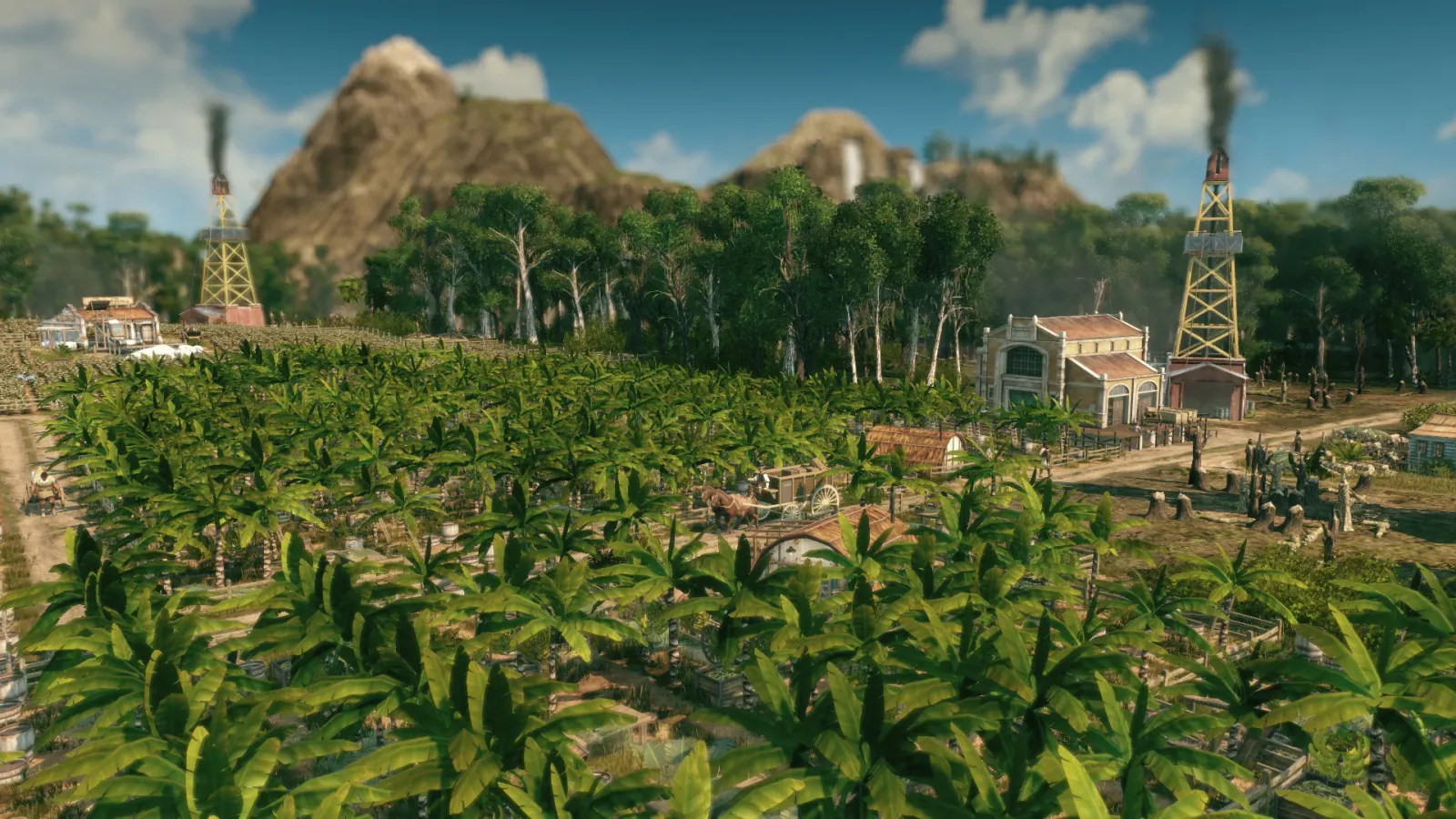
Players develop a gridless town, manage resources, and assemble modular public buildings.
Why it may be useful
The core idea, that layout and walking distance decide whether a settlement actually works, is a genuine urban-planning insight you learn by doing. Money, land ownership and politics, which decide how real towns get built, are left out entirely.
Keep in mind
A stylized model of a medieval town, not a reconstruction of a specific place.
Written 2026-09-15 · editorial assessment, not a measured effect · how we rate →
What the game is
Foundation is a medieval city builder with no grid. Most games of this kind put you on a checkerboard; here you paint a rough zone across a hillside and villagers build houses inside it, following the ground rather than a plan, so towns end up with crooked lanes and clustered squares. Polymorph Games developed and published it, spent six years in early access from February 2019, and released version 1.0 in January 2025.
The other distinctive tool is the monument builder: churches, castles and manors are assembled from individual parts, so you place a nave, add a tower, extend a wing, and the building is yours rather than a menu item. Underneath sits a familiar management game: production chains from field and quarry to workshop, taxes, trade with neighboring villages, and villagers who need food, goods and a reason to stay. Progress runs through three Estates of the Realm, Labor, Clergy and Kingdom, and each pulls the town a different way. Maps are generated, so no two towns start alike.
What you actually do
You mark a zone, watch where the houses land, then fix what the layout broke. Villagers walk everywhere, so distance is the real currency: a bakery too far from the wheat means idle workers and a queue. You assign people to jobs, notice which resource is running short, and add the building that fixes it, which usually creates a shortage somewhere else. Between those loops you spend time on the monument tool, stacking parts into a church that fits the hill. Missions from the three Estates set goals and unlock buildings, and there is no combat to interrupt any of it. Getting better means placing a workshop where the walk is short before the queue ever forms.
What it exercises
Plans a layout around walking distance rather than around a grid.
Traces a shortage back through a production chain to its missing input.
Balances competing demands from three factions with different rewards.
Composes a building from parts and judges whether it fits its site.
Reads how a settlement grows outward from the resources that feed it.
Why we rate it Low Worksheet score 44 / 100
FitHow much real knowledge or skill does the play itself make you use?38weight 45%
Fit is 38. The link between layout and how people move is a real mechanic rather than a detail: a town that looks handsome but makes everyone walk simply fails, which is a genuine urban idea learned by doing. It stays in the lower band because most of the playtime is ordinary production-chain management that could sit inside any city builder, with the walking-distance idea as only one part of it.
TransferWill what you practise here work outside the game?30weight 30%
Transfer is 30. What may carry over is a habit of thinking about a place in terms of distance, flow and where things have to be, which is close to how planners actually talk. It sits at the low end because the game abstracts away land ownership, money and politics, the forces that decide how real towns actually get built, so what transfers is a narrow sliver of urban thinking.
PracticeDoes the game make you use that skill again and again, as it gets harder?70weight 25%
Practice is 70. Generated maps make the layout problem new every time, and within a single town the same question, where does this building go, returns constantly as the settlement grows. A save runs for many hours, and the three Estates give different routes through, so the reasoning gets real, repeated use. It sits at the edge of the higher band rather than above it because the underlying question never really changes in kind.
What the evidence says
Editorial onlyNobody outside our desk has checked this. It is our reading of how the game plays.
The evidence level is Editorial only: a reading of the mechanics, checked against the Steam listing and the Polymorph Games site. There is no research on Foundation, and none for gridless city builders as a class, so nothing here is a measured outcome. The reasoning is that this game makes distance and flow the deciding variables in a way most builders do not, which is a real planning idea met through play. Whether anyone who plays it thinks differently about a real high street afterward is untested. The store page supports the January 2025 release, the developer, the price and the feature list.
Prices are US store listings in USD, last refreshed 2026-09-25; regional prices and sales differ.
Age guidance
Ages 13+
Topics
History & society, Logic & strategy
Play styles
Single-player, Strategy, Simulation
Tags
City builder · Medieval · Urban layout
It sits low because much of the playtime is ordinary resource management that could sit in any builder, and the game leaves out the land, money and politics that decide how real towns get built.