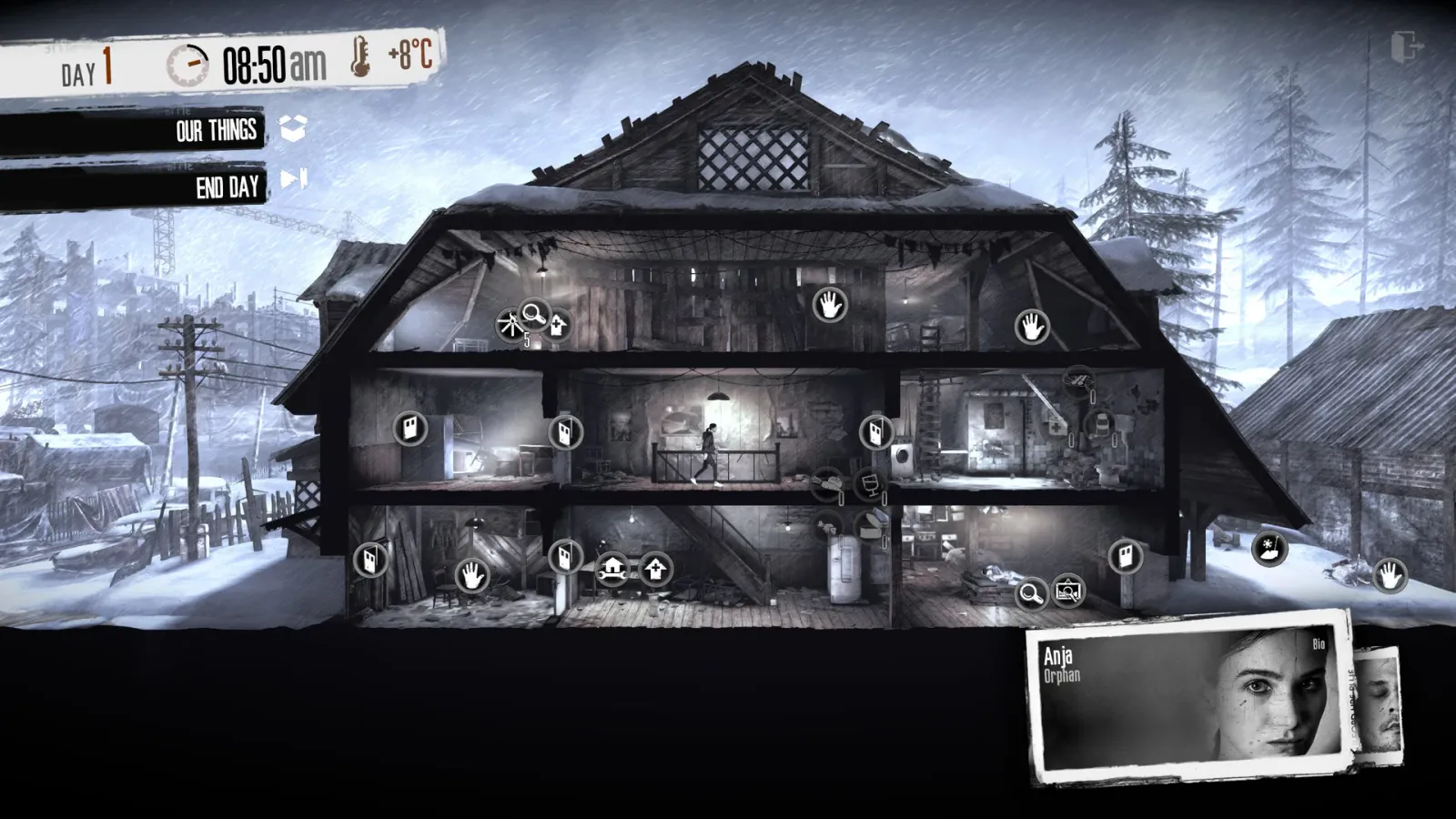
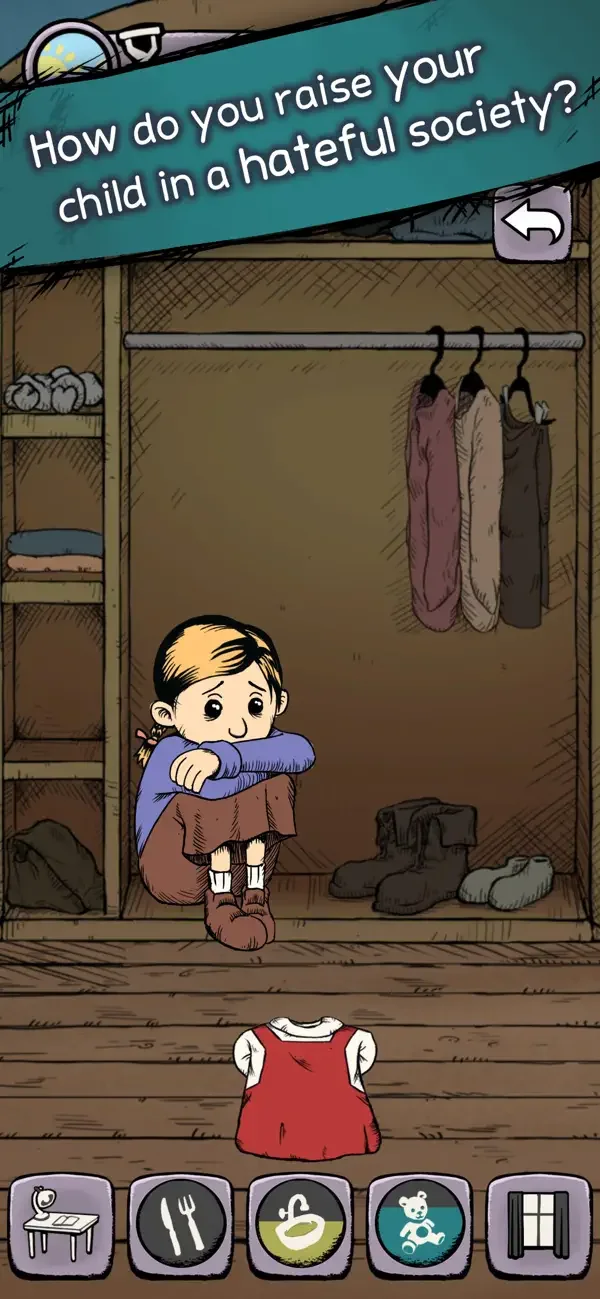
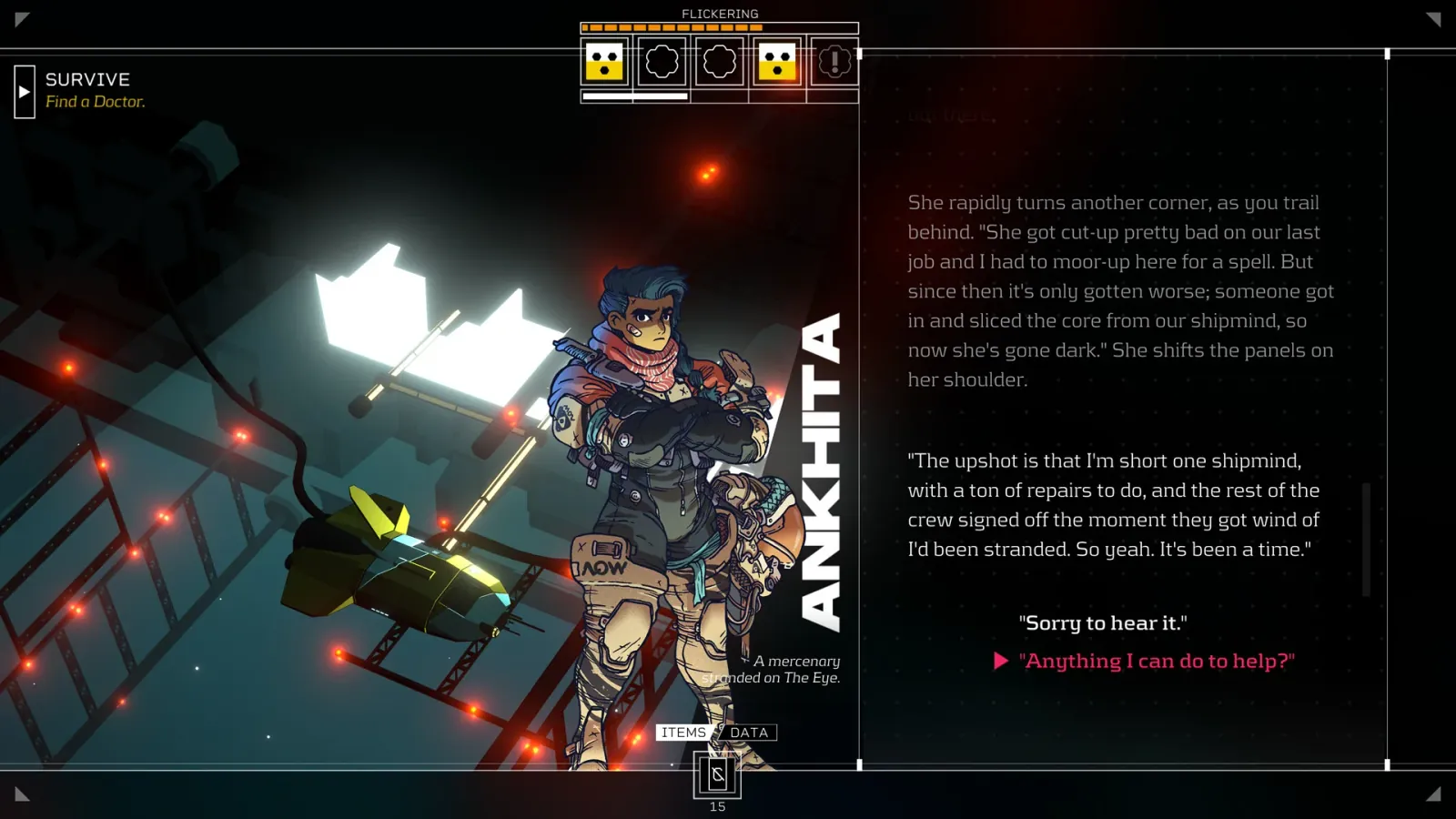
Players explore a hospital and mirrored fantasy spaces, solve light puzzles, and complete story arcs that connect different patients' needs and histories.
Why it may be useful
Progress depends on reading what each patient needs emotionally, then finding the object that answers it in a parallel fantasy world. The puzzles are mostly ordinary item-matching, so treat this as a moving story more than skill practice.
Keep in mind
The emotional impact is real in the moment, but nothing here is evidence that playing changes how you treat people afterward.
Written 2026-09-15 · editorial assessment, not a measured effect · how we rate →
What the game is
Rakuen is a story-driven adventure for PC, written, drawn and scored almost single-handedly by Laura Shigihara and released in May 2017. You play a boy who lives on a hospital ward. When his mother reads from his favorite storybook, the two of them step into the world inside it: a forest of odd creatures watched over by a sleeping Guardian. Every patient down the corridor has a counterpart there.
There is no combat. Play is walking, talking, picking up objects and working out where they belong, in the manner of a gentle point-and-click adventure seen from above in soft pixel art. Some rooms tighten into escape-room puzzles, and a few sequences turn genuinely eerie.
The stories are about illness and loss: an old man nobody visits, a woman in a coma, a girl who never said goodbye. It is one linear story with an ending, not a game replayed for a better result. Steam lists thirteen supported languages.
What you actually do
Most of your time goes on errands with a point behind them. A patient's fantasy counterpart wants something; finding it means noticing a detail in the hospital, carrying it into the forest, and using it where it fits. You read notes left in drawers, listen to what characters say about each other, and connect a complaint in one world to its cause in the other. Puzzles are object logic and observation: match a symbol, restore power, work out a sequence, with a few rooms that hold you until you have looked at everything. Getting better means listening more closely, because the game rarely states an answer but almost always shows it first.
What it exercises
Tracks who wants what across two linked settings and matches a need to an object
Reads dialogue for motive rather than instruction, then acts on that reading
Works backward from a locked room to the detail that opens it
Puts a name to what a character will not say: grief, guilt, loneliness
Why we rate it Minimal Worksheet score 18 / 100
FitHow much real knowledge or skill does the play itself make you use?18weight 45%
Fit scores 18. You cannot close a character's story without working out what that character actually wants, and the object you need is hidden behind that understanding, which is a real and specific form of interpretation. It stays this low because several of the puzzles are ordinary item logic, fetch this, place it there, that would work in any adventure game regardless of story.
TransferWill what you practise here work outside the game?15weight 30%
Transfer scores 15. Reading a person's situation from indirect signals is a genuine skill, and the game gives real practice at noticing what someone is not saying. But the signals here are authored to be findable, and every story resolves once you find the right object. A real person who stays unresolved does not work the same way, so little of the technique itself travels.
PracticeDoes the game make you use that skill again and again, as it gets harder?20weight 25%
Practice scores 20. One playthrough returns to the same act, notice, interpret, fetch, resolve, across a series of characters built the same way, which is real repetition inside a single run. What holds the score down is that it stops there: once the answers are known the interpretive work is gone, and there is no reason to replay for more of it.
What the evidence says
Editorial onlyNobody outside our desk has checked this. It is our reading of how the game plays.
The evidence level is Editorial only: our reading of the mechanics, not a measured result. The single listed source is the Steam store page, which confirms Laura Shigihara as developer and publisher, the May 2017 release, the price, the thirteen supported languages, and the game's own account of its hospital-and-forest structure and non-combat puzzle play. Nothing there measures what playing Rakuen does to a player, and we found nothing elsewhere that does. Research on narrative and perspective-taking exists, but none of it studied this game, and we are not borrowing its authority.
Editorial assessment - not a measured scientific effect.
Fit
18/100
Transfer
15/100
Practice
20/100
Why it makes the cut
PASS - Its gentle RPG-adventure structure gives it clear standalone appeal.
Editorial only
This is our editorial reading of the mechanics, not a measured result. The single listed source is the Steam store page, and nothing there measures what playing Rakuen does to a player.
Prices are US store listings in USD, last refreshed 2026-09-25; regional prices and sales differ.
No subscription requirement was found on the verified PC route.
Steam currently verifies interface support for the listed locales. Full audio and subtitle support are only marked where a current Steam source states them explicitly.
Age guidance
Ages 13+
Topics
Mind & well-being
Play styles
Single-player, Narrative
Tags
Character interpretation · Narrative linkage · Hospital fantasy
The interpretive work sits inside real puzzles, but several are ordinary item logic that would fit any story, and the technique barely transfers to a person who will not resolve.