What the game is
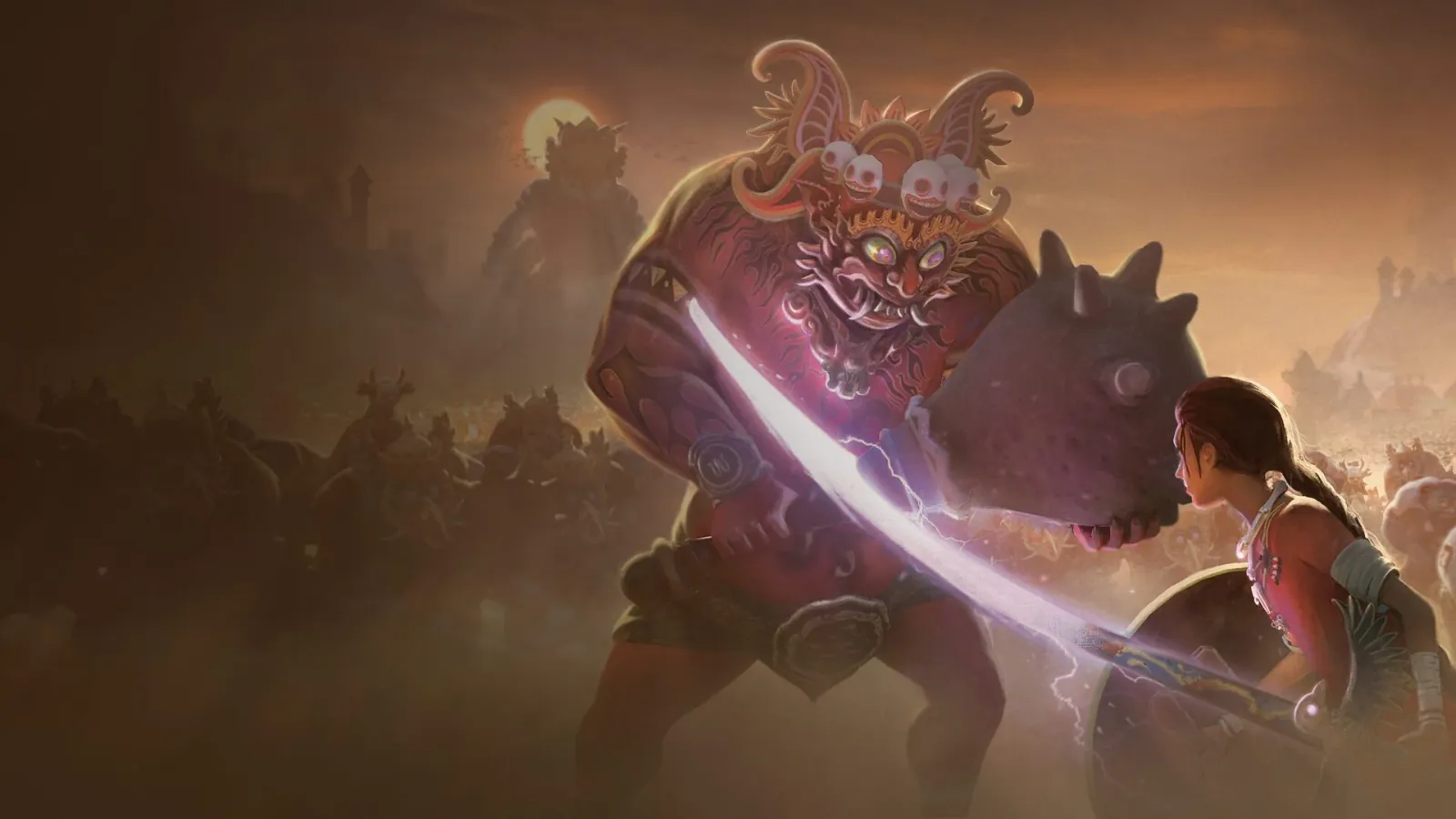
Mulaka is a 3D action adventure made by Lienzo, a studio in northern Mexico, and released in February 2018. You play a Sukurúame, a shaman of the Rarámuri people of the Sierra Tarahumara in Chihuahua, sent out across desert, canyon and highland to stop a corruption spreading through the land. The world is rendered in flat, low-polygon shapes and strong color, so the landscape reads as a stylized version of a real place rather than a photograph of it.
The cultural material is not decoration. The store page confirms that the narration is spoken in the Rarámuri language, with music built from instruments of the region, and that the powers you gain come from demigods of Rarámuri myth. The people are usually called Tarahumara from the outside; Rarámuri is their own name for themselves, which is the one used here.
It is a single-player game of moderate length, bought once on Steam for around twenty euros, with English and Latin American Spanish text. Lienzo has committed to donating up to ten percent of earnings to organizations working in the Sierra Tarahumara. Console versions exist but were not verified for this entry.
What you actually do
You run, and you run a lot: the Rarámuri are known worldwide for long-distance running, and the game builds that into how it moves, with sprinting, sliding and jumping across broken ground. Between the running there is hand-to-hand combat against creatures drawn from myth, light environmental puzzles that gate the way forward, and plant gathering, since crushing the right herbs into potions is how you heal and buff yourself.
The other layer is sight. As a shaman you can shift into a spirit view that reveals things ordinary eyes miss, paths, hidden objects, the true shape of a problem. Demigods grant animal transformations along the way, each opening a movement option the previous area denied you. Getting better means reading the landscape for the route it allows rather than the route you expected, and switching powers fluently in a fight.
What it exercises
- Meets a specific living culture on its own terms, including its language and music
- Reads a landscape for routes, hazards and hidden detail rather than following a marker
- Matches a gathered ingredient to the effect a situation calls for
- Switches between several movement and combat abilities under pressure
- Notices how a myth explains a place, and that other people explain places differently
Why we rate it Minimal Worksheet score 27 / 100
FitHow much real knowledge or skill does the play itself make you use?30weight 45%
Fit is scored 30 because the culture is built into how the game plays rather than added as text: you hear the language while playing, you run because the Rarámuri run, and the powers are drawn from named demigods. It sits low because most of your minutes go to ordinary combat and platforming that carry no cultural content at all, so the cultural material is a thin layer over a conventional action game.
TransferWill what you practise here work outside the game?25weight 30%
Transfer is scored 25 because what a player is likely to take away is curiosity, a name they had not heard, a sound, a question about who these people are, rather than knowledge. That is worth something, and it is genuinely how interest starts, but a spark needs a book or someone who knows more to become anything more, and the game itself does not supply that step.
PracticeDoes the game make you use that skill again and again, as it gets harder?25weight 25%
Practice is scored 25 because the action loop of running, fighting and gathering does repeat throughout the game, but the cultural encounter, the part actually being credited here, happens once. Finishing it takes a handful of evenings, and there is little reason to play again once the myths and the language have already been heard.
What the evidence says
Editorial onlyNobody outside our desk has checked this. It is our reading of how the game plays.
The evidence level is Editorial only. The Steam store page confirms the developer, the February 2018 release, the price, the Rarámuri narration, the regional instruments, the demigod powers and the studio's donation commitment. It does not confirm how the cultural material was researched or whether Rarámuri consultants were formally involved, which was not established in this pass, so the game should be read as a respectful outside studio's presentation rather than a community-authored account. No research measures anything about playing it, and the claim here is limited to curiosity, not knowledge.