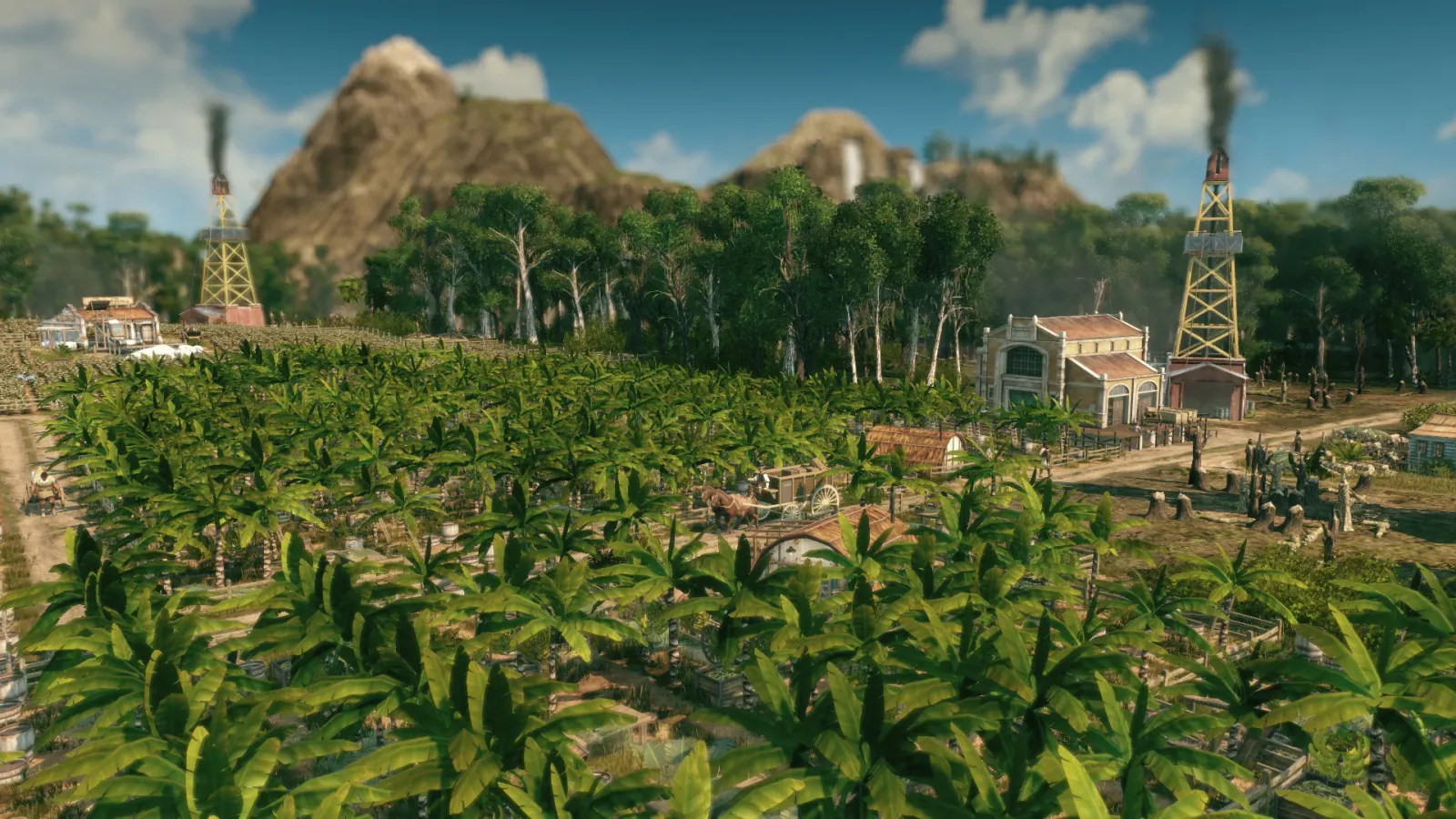
Players lay out an ancient city, run its farms, workshops and trade, keep several classes of resident supplied, and build monuments block by block.
Why it may be useful
Designing and provisioning a monument over years of in-game time gives you a genuine feel for how much ordinary labor a great building represents, though the historical setting is mostly decoration and the game teaches almost nothing specific about Mesopotamia.
Keep in mind
The setting is ancient Mesopotamia but the history is mostly décor; the systems are a designer's invention.
Written 2026-09-15 · editorial assessment, not a measured effect · how we rate →
What the game is
Nebuchadnezzar is an isometric city builder by Nepos Games, out since 2021 on Windows and Linux at a low price. It is openly modeled on the Impressions city builders of the late nineties, the Caesar and Pharaoh line, and it is set in ancient Mesopotamia rather than Rome or Egypt.
The campaign runs more than a dozen missions across the region's history, from the first settlements through to the Persian conquest of Babylon in the sixth century BC, each one a named city with its own terrain and demands. The screen is a warm brown grid of mud-brick houses, irrigation ditches, workshops and temples, with little figures walking between them carrying things.
The part that sets it apart is the monument editor. Ziggurats and other great structures are not placed as a single finished object; you design them, choosing the layout, the colors and the architectural details, and then the city has to supply the bricks and the labor to actually build the thing over many in-game years. The game also ships with full mod support for buildings, goods, production chains, maps and campaigns.
What you actually do
A mission starts with farmland and a few families and ends with a city that works. You place housing, then the things housing needs: water, food from irrigated fields, pottery, cloth, a temple for a specific deity, each produced by a workshop that needs its own inputs delivered by walkers on foot. Housing upgrades when the goods arrive reliably, and a whole district can slide backward when one delivery route is too long. Then the monument arrives as a demand, and the city has to run a surplus for years to feed it. Getting better means laying out a district so the carriers have short routes, and sequencing the monument so it does not starve everything else.
What it exercises
Plans a layout around the walking distance of the people using it
Sequences a long project against the surplus available to fund it
Traces a stalled production chain back to its missing input
Designs a structure within fixed material and labor constraints
Places named ancient cities and their region on a map
Why we rate it Low Worksheet score 44 / 100
FitHow much real knowledge or skill does the play itself make you use?40weight 45%
Fit is scored 40 because the one idea the game really delivers, that a monument is an enormous amount of ordinary labor and food, arrives through the mechanics: a player feels it as years of surplus rather than reads it as a fact. Supply chains and walking distances are equally mechanical, but the score stays modest because the historical content wrapped around those systems is thin.
TransferWill what you practise here work outside the game?32weight 30%
Transfer is scored 32, one of the lower figures among city builders generally, honestly so. What transfers is a sense of pre-industrial scale, how much work a big building represents when everything moves at walking pace. What does not transfer is anything specific about Mesopotamia, because the game teaches almost none of it beyond names on a map.
PracticeDoes the game make you use that skill again and again, as it gets harder?65weight 25%
Practice is scored 65 because the campaign runs to more than a dozen cities that each repeat the same layout and supply reasoning under different terrain, and the monument editor and mod support extend that further. It stays moderate because the missions are finite, and a player who settles on one district pattern can reuse it rather than keep solving the underlying problem fresh.
What the evidence says
Editorial onlyNobody outside our desk has checked this. It is our reading of how the game plays.
The evidence level is Editorial only. What is confirmed comes from the Steam listing: the Nepos Games and Astra Logical credits, the 2021 release, the price, the Windows and Linux support, the campaign of more than a dozen historical missions ending at the Persian conquest of Babylon, the monument editor with control over layout, colors and details, the population-class and deity systems, and the mod support. No study of Nebuchadnezzar was found and none is claimed. The recommendation reflects an editorial reading of what the monument and supply systems make a player feel about pre-industrial labor, not a measured effect on historical knowledge.
Editorial assessment - not a measured scientific effect.
Fit
40/100
Transfer
32/100
Practice
65/100
Why it makes the cut
A commercial city builder in the classic Impressions tradition, sold on its building and layout play.
Editorial only
Editorial: based on the Steam store page's description of the campaign, the monument editor and the production systems, since no independent research on Nebuchadnezzar was found.
Prices are US store listings in USD, last refreshed 2026-09-25; regional prices and sales differ.
Age guidance
Ages 10+
Topics
History & society, Logic & strategy
Play styles
Single-player, Strategy, Simulation
Tags
Ancient Mesopotamia · City building · Monuments
It lands in the low band because the monument system genuinely makes pre-industrial scale visible, but the historical setting barely goes beyond names, so what a player learns about Mesopotamia itself stays thin.