Players lay track, roads, harbors and airports, run lines with timetables and vehicles, and move goods and passengers between growing towns.
Why it may be useful
You are judged on whether a line actually carries what you built it for, so you learn to read a network for its bottleneck rather than its length. The forgiving economy means what you practice is network logic, not anything about how transport projects are actually funded.
Keep in mind
The economy is generous and forgiving, so it teaches network logic rather than anything about real transport finance.
Written 2026-09-15 · editorial assessment, not a measured effect · how we rate →
What the game is
Transport Fever 2 is a transport network simulation by Urban Games, published by Good Shepherd Entertainment, out since 2019 on Windows, macOS and Linux. You start somewhere around 1850 with a little money and a landscape of small towns, and you build the connections between them: track, stations, roads, bus stops, harbors and eventually airports.
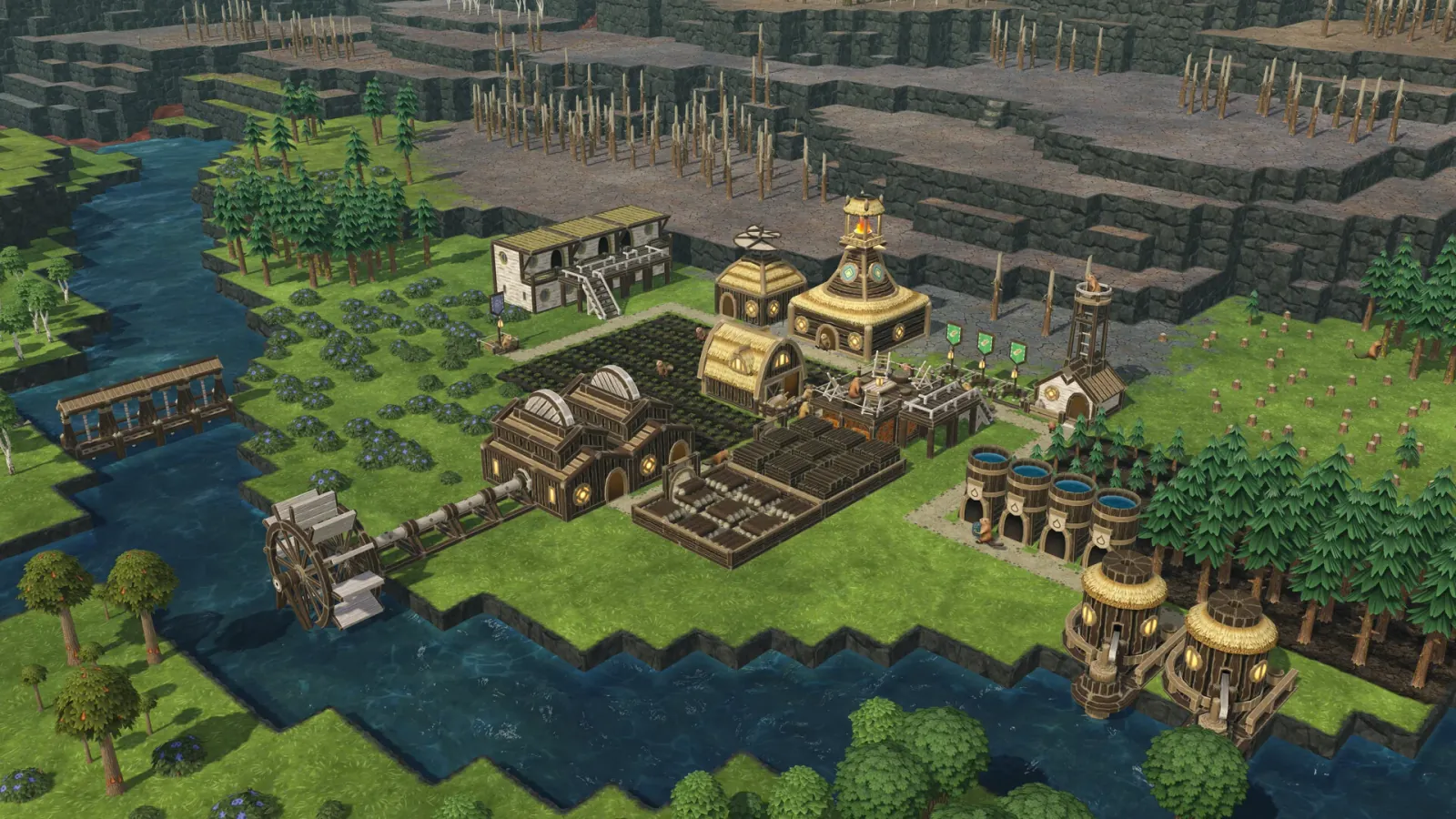
The view is a green three-dimensional landscape you sculpt directly. Track is drawn with curves and gradients that matter, stations are built module by module, and signals decide whether two trains can share a line. Over two hundred vehicles from Europe, America and Asia unlock as the decades pass, so a line that opened with a small steam locomotive ends up running diesel and then electric stock on the same alignment.
There are three campaigns across three continents with more than twenty hours between them, and a free-play mode that most players settle into. Towns grow when they are well connected and industries scale their output to the demand actually reaching them, so the map you built five decades ago stops being the right shape.
What you actually do
A session is a loop of building a line, watching what it carries, and finding out why it carries less than you expected. A freight route looks profitable until the single-track section between two towns backs up, and the fix is either a passing loop, a second track, or a longer train that the station platform cannot hold. A bus line feeds a station that is now on the wrong side of a town that grew. You watch a vehicle's occupancy, adjust frequency, and replace stock as better vehicles arrive. Getting better means thinking in capacity per hour rather than in vehicles, and designing junctions and stations that will still work when traffic doubles.
What it exercises
Reads a network for its bottleneck rather than its length
Matches vehicle capacity and frequency to actual demand
Designs a junction or station for future traffic, not present traffic
Plans a route around terrain, gradient and cost together
Recognizes when an old design has to be rebuilt rather than extended
Why we rate it Moderate Worksheet score 58 / 100
FitHow much real knowledge or skill does the play itself make you use?55weight 45%
At 55 capacity, frequency and bottlenecks are genuinely what the game makes you manage, and a badly designed junction fails visibly. It sits mid-table rather than higher because the economy is generous enough that most problems can be solved by throwing money at more track, which narrows the lesson to one lever rather than the full discipline of network planning.
TransferWill what you practise here work outside the game?45weight 30%
At 45 the intuition that frequency matters more than vehicle size, or that a road widening will not fix congestion by itself, is a real and general habit worth having. It does not go higher because the financial half of real transport never bites here: demand is generous, budgets rarely fail, and nothing forces a player to weigh a line against its actual cost the way a real operator must.
PracticeDoes the game make you use that skill again and again, as it gets harder?80weight 25%
At 80 a free-play map runs for many hours across a century and a half, and every decade's new vehicles invalidate an earlier design and force the same reasoning again, which is genuinely deep repetition. It stops short of the top because a player who finds a junction pattern that works can simply copy it rather than keep solving the problem fresh.
What the evidence says
Editorial onlyNobody outside our desk has checked this. It is our reading of how the game plays.
The evidence level is Editorial only. What is confirmed comes from the Steam listing: the Urban Games and Good Shepherd credits, the 2019 release, Windows, macOS and Linux support, the three campaigns across three continents with over twenty hours of play, the span from 1850 to the present, and the more than two hundred real vehicles. No study of Transport Fever 2 was found and none is claimed. The case for its usefulness is an editorial reading of a simulation that makes capacity and bottlenecks visible, and not a measured effect on anyone's understanding of networks.
Editorial assessment - not a measured scientific effect.
Fit
55/100
Transfer
45/100
Practice
80/100
Why it makes the cut
A commercial transport simulation sold on its sandbox and campaign play, with no educational claim.
Editorial only
This is our own reading of a commercial simulation, based on the current Steam listing; no independent study of Transport Fever 2 exists, so nothing here measures what a player actually understands afterward.
Prices are US store listings in USD, last refreshed 2026-09-25; regional prices and sales differ.
Age guidance
Ages 10+ · ESRB E10+
Topics
Logic & strategy, STEM
Play styles
Single-player, Strategy, Simulation, Sandbox
Tags
1850–today · Railways · Networks
Capacity and bottlenecks are genuinely what the game asks you to manage, but a generous, forgiving economy keeps the harder financial half of real transport planning out of reach entirely.