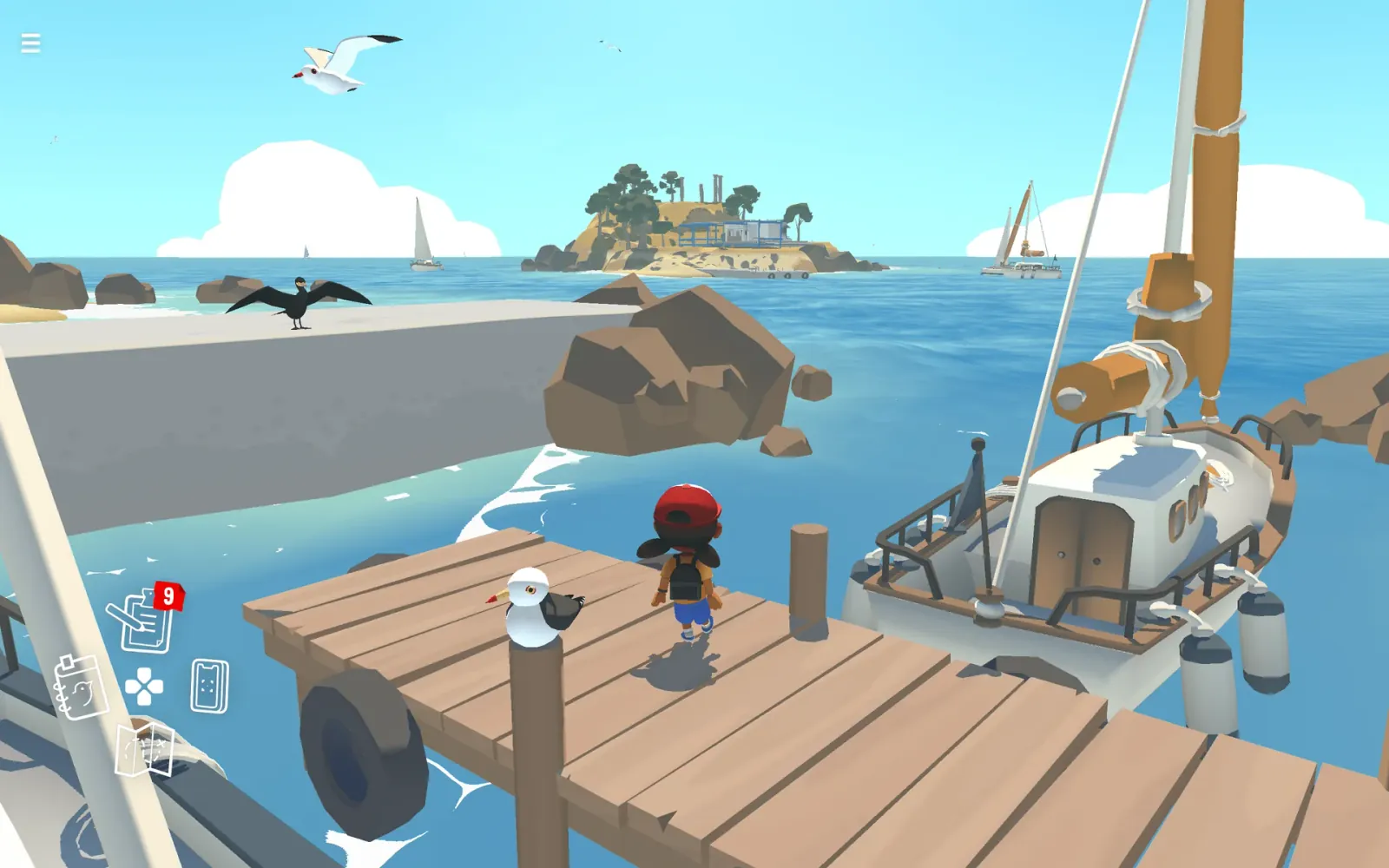
Players choose routes, buy and sell items, manage time and money, respond to story events, and decide how Passepartout navigates people and places around the world.
Why it may be useful
You plan routes against a fixed deadline and a shifting budget, weighing time against money in almost every decision. The planning habit is real, but the world is alternate history, so little of what you learn about places or costs is accurate outside the game.
Keep in mind
It is a steampunk alternative history, not a neutral guide to the real 1872 world; its cultural and political value depends on reflective reading, not factual accuracy alone.
Written 2026-09-15 · editorial assessment, not a measured effect · how we rate →
What the game is
80 Days is an interactive-fiction strategy game from the British studio inkle, first released on iOS in 2014 and later on PC, Mac, Nintendo Switch and Android. It retells Jules Verne as steampunk alternative history, with airships and automata beside real ports and railways. You play Passepartout, the valet, not Fogg.
The world is a globe of individually written cities; inkle's own materials put the count near 150 while other official pages count differently, so treat any total as approximate. In each city you have limited hours before departure. You can explore, talk, shop at the market, and check the departures board, which lists routes out and what each costs in money and in days.
Then you travel, and the trip is written prose with choices threaded through it. A circumnavigation takes a few hours and no two routes are alike. It won BAFTA recognition and a place on TIME's best games of 2014.
What you actually do
Three things move constantly: days, money and the contents of Fogg's suitcase. You buy goods cheaply in one market to sell them dearly in another, because you will need cash for a fast connection later. You choose what to say to the people you meet, and their conversations reveal routes you would not otherwise find. You watch your employer's health, because an exhausted Fogg slows the trip. Every departure is a wager: the cheap steamer that eats eleven days, or the airship that takes four and empties the purse.
What it exercises
Plans a multi-leg route against a hard deadline and a fixed budget
Trades goods between markets and counts what a purchase costs in days, not only money
Compares departures on two axes at once, time against money
Reads a lot of prose quickly and picks out the detail that matters
Hears colonial-era places described by people who live there, not only by travelers
Why we rate it Low Worksheet score 42 / 100
FitHow much real knowledge or skill does the play itself make you use?40weight 45%
Days, money and cargo are the resources, and most conversations turn into a route you can or cannot afford, so planning is genuinely the activity here. The number lands at 40 rather than higher because the choices are mostly logistical: buy low, sell high, pick the faster ticket, and the perspective-taking on offer is heard rather than acted on.
TransferWill what you practise here work outside the game?35weight 30%
Comparing options on time and cost is a real habit, but the geography is deliberately altered, trading is simplified to buying low and selling high, and the game never asks you to justify a decision afterward. What is left, at 35, is a planning instinct rather than knowledge you could use to plan an actual trip.
PracticeDoes the game make you use that skill again and again, as it gets harder?55weight 25%
A run takes a few hours, most cities never appear in a single playthrough, and the game invites another attempt by a different ocean, so the core decision recurs many times in a session. That repetition is why practice, at 55, is the highest of the three, even though the underlying move stays simple throughout.
What the evidence says
Editorial onlyNobody outside our desk has checked this. It is our reading of how the game plays.
The evidence level is Editorial only. inkle's official page and press kit, plus the Steam, Nintendo and App Store listings, confirm what the game is, how it plays, and how it was received. None of that is evidence about what a player gains from it. We found no study of this game and cite none. Those same official materials disagree on counts such as the number of cities, which is why this page avoids exact figures. The meaningfulness case rests only on the visible loop: a fixed deadline, limited money, and routes with published costs in both.
Editorial assessment - not a measured scientific effect.
Fit
40/100
Transfer
35/100
Practice
55/100
Why it makes the cut
The tension of beating the clock and shaping a different route each run works as a game even without a meaningfulness frame.
Editorial only
Our reading of the mechanics, checked against inkle's official page, press kit, and the Steam, Nintendo and App Store listings. No study of this game exists, and official materials even disagree on details such as city counts.
Prices are US store listings in USD, last refreshed 2026-09-25; regional prices and sales differ.
Age guidance
Ages 13+ · ESRB T
Topics
History & society
Play styles
Single-player, Narrative, Strategy
Tags
Interactive fiction · Route planning · Alternative history
Planning a route against a countdown and a budget is genuine practice, but the geography is invented, trading is simplified to buying low and selling high, and no run asks you to justify a choice afterward.