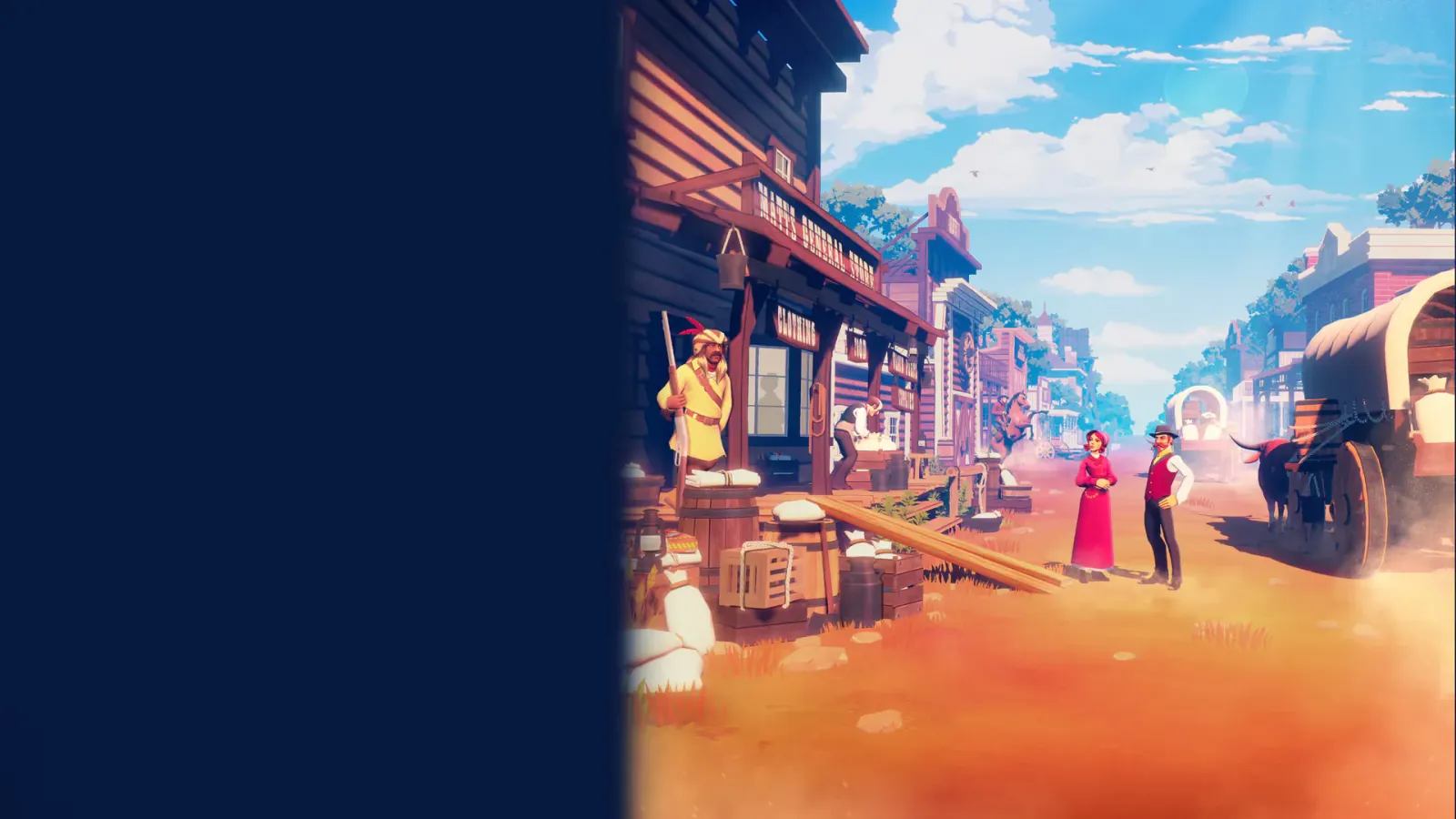
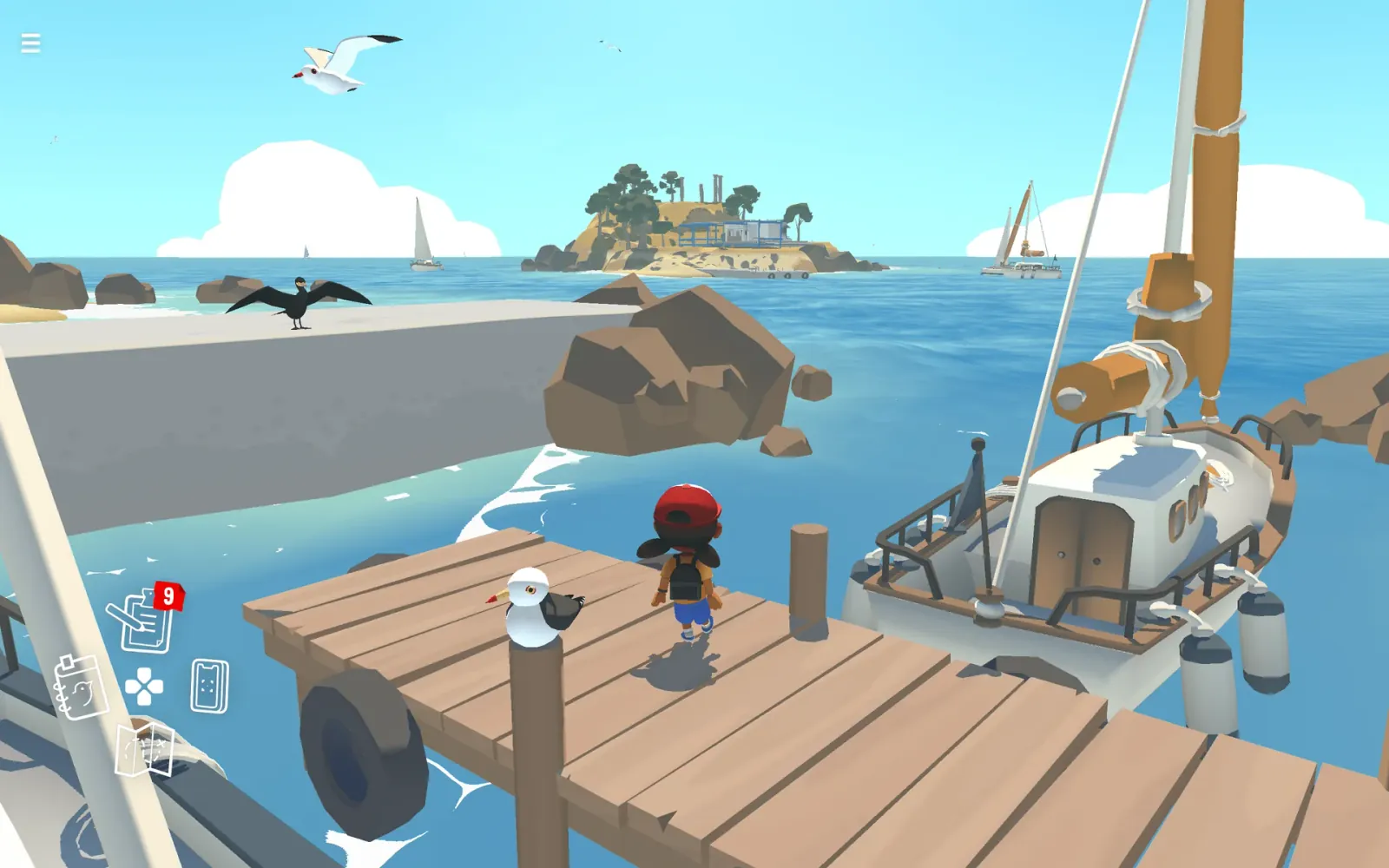
Players move an expanding hole around each scene, swallow objects in the right order, combine them underground for chain reactions, and follow the county's comic fallout.
Why it may be useful
Swallowing the right thing at the right moment makes cause and effect legible: the hole grows, and what was impossible a minute ago becomes easy. Most levels can be cleared roughly in the order things appear though, so the thinking on offer is often optional.
Keep in mind
Its value is limited to playful cause-and-effect reasoning rather than serious systems education.
Written 2026-09-15 · editorial assessment, not a measured effect · how we rate →
What the game is
Donut County is a short physics puzzle game by Ben Esposito, published by Annapurna Interactive in 2018 for PC, consoles and phones. The premise is a joke told backwards: the town has already fallen into a hole, and the residents, stuck 999 feet underground, are arguing about how it happened. Each level is one of their flashbacks.
You do not control a character. You control the hole. Every level is a small, brightly colored diorama seen from above, a back yard, a campsite, a shop, and you slide the hole around underneath it. Anything smaller than the hole falls in, and each thing that falls makes the hole a little bigger. Dialogue between a raccoon and his neighbors runs in text boxes alongside.
It is a one-time purchase on every platform, with no advertising and nothing to buy inside. It is deliberately short, and most players see the credits in an evening.
What you actually do
You move the hole with a stick or a finger and decide what to swallow and in what order. A level usually starts with the hole big enough for a stone and ends with it big enough for a house, so getting there means finding the smallest thing first and working up. Some scenes need more than size. Water poured into the hole will grow a seed you already swallowed, and a rabbit swallowed at the wrong moment eats the plant you needed. Later levels add a catapult that fires whatever is in the hole back out, which turns the hole into a tool for moving things rather than only removing them. Nothing can be failed and nothing is timed.
What it exercises
Orders actions by size, since each one changes what the next can be
Predicts a simple physical result: what falls, what floats, what fits
Notices when two swallowed objects will interact underground
Reads a scene from above and picks out the one usable object
Why we rate it Minimal Worksheet score 18 / 100
FitHow much real knowledge or skill does the play itself make you use?18weight 45%
Scored 18, near the bottom. Cause and effect is the only mechanic, and it is unusually legible: swallow this, the hole grows, now that becomes possible. It stays this low because the puzzle rarely resists. Most levels can be cleared by swallowing things roughly in the order they appear, so working out the sequence is optional rather than something you actually have to do.
TransferWill what you practise here work outside the game?12weight 30%
Scored 12, very close to the floor. Noticing that one action changes what the next can be is worth having, and a young player can see it here clearly. But these are cartoon systems with no rules that hold outside the joke, the game is over in an evening, and almost nothing here demonstrably carries into thinking anywhere else.
PracticeDoes the game make you use that skill again and again, as it gets harder?25weight 25%
Scored 25, the weakest of the three, mostly because of length. The game runs a single evening, each level introduces its idea and moves on before it can be practiced further, and there is little reason to replay a level once solved. The core swallow-and-grow decision does recur across the game, but not nearly often enough to build anything lasting.
What the evidence says
Editorial onlyNobody outside our desk has checked this. It is our reading of how the game plays.
This is Editorial only. The Steam and Nintendo listings, checked in August 2026, alongside the App Store and Google Play pages used for the access links, confirm the developer, the 2018 release, availability across PC, console and mobile, a one-time price on each route, and that there is no advertising or spending inside the game. None of them says anything about learning. This assessment treats cause and effect as the only real mechanic, but keeps the rating low because the puzzles rarely resist and the whole game lasts a single evening. We found no research on this game.
Editorial assessment - not a measured scientific effect.
Fit
18/100
Transfer
12/100
Practice
25/100
Why it makes the cut
Swallowing a level into an ever-growing hole is a game-first joke and puzzle loop that easily stands on its own.
Editorial only
This is our own reading of the mechanics, checked against the Steam and Nintendo listings, which confirm the release, the platforms and the swallow-and-grow premise. Neither source says anything about learning, and no study of this game exists.
Prices are US store listings in USD, last refreshed 2026-09-25; regional prices and sales differ.
Single-player offline play is available.
No current subscription dependency was verified on the checked routes.
Steam verifies current PC availability, Nintendo verifies Switch, and current App Store and Google Play listings verify mobile availability.
Steam directly verifies English, French, German, Spanish (Spain), and Brazilian Portuguese. The App Store separately lists English, French, German, Portuguese, and Spanish among its 11 languages, without a pt-BR variant label.
Premium purchase on the verified Steam, Switch, and App Store routes.
Age guidance
Ages 8+ · ESRB E
Topics
History & society
Play styles
Single-player, Puzzle, Narrative
Tags
Cause and effect · Comic puzzles · Physics
Cause and effect is the only mechanic, and it is unusually legible, but most levels can be solved by swallowing things roughly in the order they appear, so the puzzle rarely makes you actually think.