What the game is
Mission US is a series of free browser games about United States history, produced by The WNET Group, the public broadcaster behind Thirteen in New York, with funding from the Corporation for Public Broadcasting, the National Endowment for the Humanities, the Department of Education's Institute of Education Sciences and private foundations. It has been running since 2010 and now covers eight periods.
Each mission is a separate point-and-click adventure in which you play a young person living through the events, not a general observing them: a printer's apprentice in Boston in 1770, a girl escaping slavery in 1848, a Northern Cheyenne boy in 1866, an immigrant arriving in New York in 1907, a farm child in 1929, a Japanese American teenager in 1941, and young people in the civil rights era of 1960 and at early encounters around 1500.
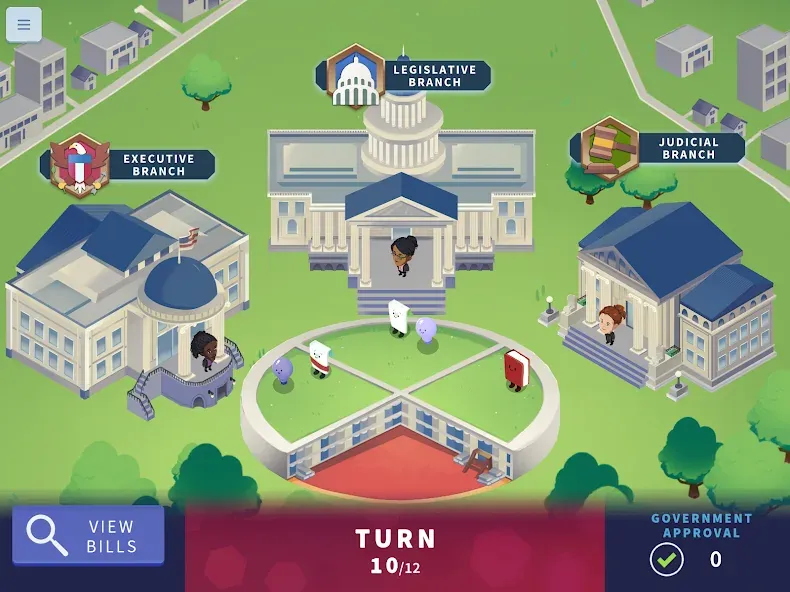
The presentation is illustrated rather than cinematic, with spoken dialogue, hotspots to click and a running set of choices. Missions are split into parts of roughly twenty to thirty minutes and can be paused. Everything is free in a browser, and the site carries a large teacher section of guides, activities, primary source documents and standards alignments. One mission, For Crown or Colony, is also published as a separate iPad app.
What you actually do
You walk your character through scenes and talk to people, and the game keeps stopping to make you choose what to say or do: whether to help a stranger or protect your own position, whether to trust the man offering work, whether to stay quiet when a soldier asks a question. The choices are limited and they do not change history, but they change how the people around you treat you, and the game tracks the person you are turning into.
Alongside the story you collect documents and objects, and a vocabulary tool explains period words as they appear. At the end of a mission an epilogue tells you what became of your character and, more importantly, what happened to real people in that position. Getting better is not about winning; it is about noticing what the choices cost and reading the documents rather than skipping them.
What it exercises
- Takes the perspective of a young person in a specific historical situation
- Weighs a choice against what someone in that position actually risked
- Reads short primary source documents and connects them to the story
- Picks up period vocabulary in context rather than from a list
- Notices that individual choices were bounded by law, poverty and prejudice
Why we rate it Moderate Worksheet score 67 / 100
FitHow much real knowledge or skill does the play itself make you use?75weight 45%
Fit is scored 75 because the history is not a wrapper around a quiz; it is delivered through the choices themselves; a player learns what escaping slavery meant by playing a girl attempting it. It stays short of the top because the branching is modest, so the sense of agency is partly an illusion, and the historical weight rests more on the writing than on the choices.
TransferWill what you practise here work outside the game?70weight 30%
Transfer is scored 70 because the content maps directly onto school history, which is unusual in this catalog, and perspective-taking on documented events is a habit teachers ask for. It is not higher because a two-hour narrative gives a vivid impression of one life rather than a structural understanding of a period, and that impression fades without follow-up reading.
PracticeDoes the game make you use that skill again and again, as it gets harder?50weight 25%
Practice is scored 50, the weakest axis, because these are stories rather than systems: a mission takes a couple of hours and is largely finished afterward. There are eight of them, so a player can spend real time across the series, but nothing brings anyone back to the same skill week after week, and a second playthrough of one mission adds little.
Where it has been used in teaching
Documented cases of this game being used with learners. Each one links to its source.
Education editionThe WNET Group (public media) · Secondary school · 2010
Mission US is an official classroom history program built by the WNET Group for middle school students, offering eight interactive missions covering 1500-1960 with teacher guides and standards alignments; the site reports more than six million registered users and educator testimonials about classroom use.
Mission US ↗StudyEducation Development Center, Inc. (IES-funded) · Secondary school · 2021
Education Development Center ran an IES-funded efficacy study of Mission US, assigning about 70 U.S. schools to use the game's materials with grades 8-10 students for three months alongside regular curriculum, versus standard instruction, measuring history knowledge, document-analysis skills, and historical perspective-taking.
US History Through Young People's Eyes: An Efficacy Study of Mission US ↗
What the evidence says
Research-backedPublished research has studied this game, or the exact mechanic it is built on.
The level is Research-backed. Mission US is a public-broadcasting project built with historians and funded in part by the National Endowment for the Humanities and the Department of Education's research arm, with teacher guides and standards alignments documenting real classroom use. What lifts it past documented use is a federally funded efficacy study: the Education Development Center assigned about seventy U.S. schools to use the game's materials with grades eight through ten for three months alongside regular curriculum, comparing outcomes against standard instruction on history knowledge, document-analysis skills, and historical perspective-taking. That is a measured trial, not a single classroom account, though it covers one age band over one term, not proof that every mission teaches equally well.