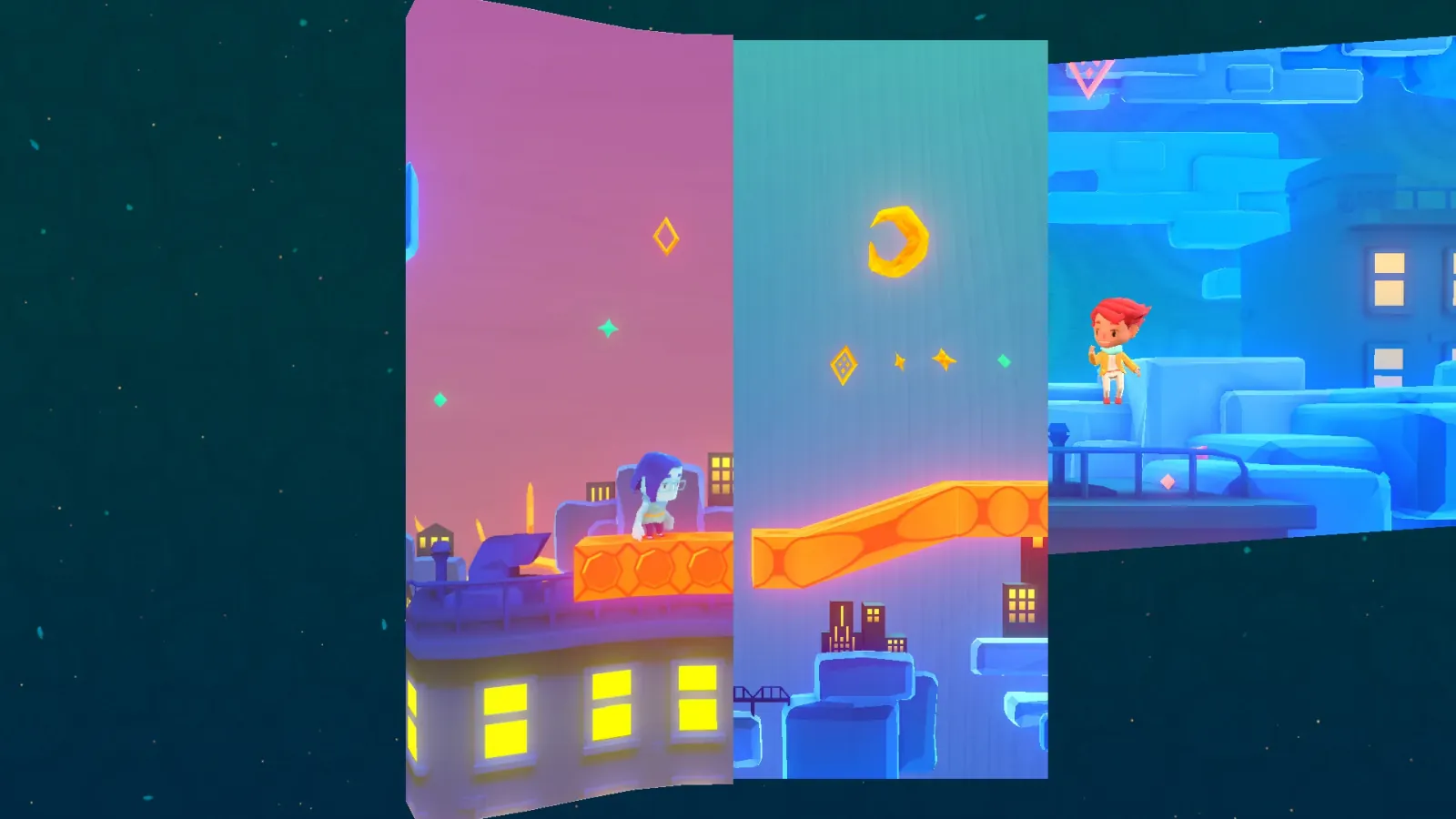
Players replay linked scenes from different perspectives, altering small actions to see how outcomes shift across the same tragic day.
Why it may be useful
Tracing how one small action changes what happens next is the entire puzzle, and it gives brief practice in following a chain of cause and effect. The chain is short and guided, though, so what you get is closer to a well-told story than to a transferable skill.
Keep in mind
Its value lies in consequence and interpretation rather than in grief therapy or broad emotional outcomes.
Written 2026-09-15 · editorial assessment, not a measured effect · how we rate →
What the game is
Last Day of June is a short narrative puzzle released in August 2017 by the Italian studio Ovosonico and published by 505 Games. Steam credits director Massimo Guarini and animator Jess Cope, notes that the game was inspired by Steven Wilson's song Drive Home, classes it as short and story-rich, and rates it PEGI 7 with a warning for fear.
The premise is a car crash. Carl and June are a couple. On the way home from a day at the lake the car goes off the road, and June dies. Carl, now in a wheelchair, finds that June's paintings let him step back into that afternoon and change what the neighbors did with their day.
The look is painterly and deliberately unreal: figures without faces, thick brushwork, a village that could be a memory of one rather than a place. Steam lists ten languages, all with subtitles. It is single player and, on the route verified here, sold on Steam for PC.
What you actually do
You play the same afternoon several times over, once from each neighbor's position, and change one small thing on each run. A boy chases his ball into the road. An old man moves a truck. A hunter takes a different path. Every change alters what is on the road home, and every one produces a different version of the crash rather than preventing it.
So the puzzle is a chain rather than a lock. You watch what your change caused, work out which link produced it, and go back to alter something earlier. Progress means holding four overlapping versions of one afternoon in mind and seeing which action feeds which consequence. There is very little to click; the difficulty is in noticing, and the ending is not something you can beat.
What it exercises
Traces a consequence back through a chain of earlier actions
Replays the same events from another character's position to find new detail
Predicts how changing one action will alter what other people do
Holds several overlapping versions of the same afternoon in mind
Reads a story told through images and gesture rather than exposition
Why we rate it Minimal Worksheet score 19 / 100
FitHow much real knowledge or skill does the play itself make you use?20weight 45%
Fit sits at 20. The consequence chain is real, but it is short, single-solution and firmly guided by the designer, so there is little independent reasoning involved. You are uncovering an authored answer rather than working with any subject matter of your own.
TransferWill what you practise here work outside the game?15weight 30%
Transfer is the lowest score at 15. Following a consequence back to its cause is a real habit in principle, but here it means finding the one link the writer built in, not reasoning about an open situation, so almost nothing about the method carries over to a real decision.
PracticeDoes the game make you use that skill again and again, as it gets harder?20weight 25%
Practice also sits at 20. The core act of tracing a change repeats through every chapter, which is steady for a few hours, but then the game ends. There is one path, the ending cannot be altered, and there is almost no reason to play it again once the chain is understood.
What the evidence says
Editorial onlyNobody outside our desk has checked this. It is our reading of how the game plays.
The evidence level here is editorial only. The cited Steam page confirms the 2017 release, the developer Ovosonico and the publisher 505 Games, the price, the time-loop premise built around June's paintings and a car crash, the PEGI 7 rating with a fear warning, the ten listed languages with subtitles, and that Steam classes it as short. Nothing there addresses what a player takes away. We cite no study and know of none on this game. In particular we make no claim that playing it helps anyone process a real loss; the rating reflects the narrow, guided consequence-tracing the puzzles actually require.
Editorial assessment - not a measured scientific effect.
Fit
20/100
Transfer
15/100
Practice
20/100
Why it makes the cut
PASS - Its time-loop puzzle structure gives it genuine game pull, not just emotional framing.
Editorial only
This rating is editorial only. The single source, the Steam page, confirms what the game contains but says nothing about what a player takes away, and no study of this game exists that we could find.
Prices are US store listings in USD, last refreshed 2026-09-25; regional prices and sales differ.
No subscription requirement was found on the verified PC route.
Steam currently verifies interface support for the listed locales. Full audio and subtitle support are only marked where a current Steam source states them explicitly.
Age guidance
Ages 13+ · ESRB E
Topics
Mind & well-being
Play styles
Single-player, Narrative, Puzzle
Tags
Consequence mapping · Perspective shifts · Cinematic grief story
The consequence chain is short and firmly guided, so there is little room to reason wrongly for long, and once the chain is understood there is almost no reason to play it again.